
Testosterone and Men's Health: What the Hormone Actually Does

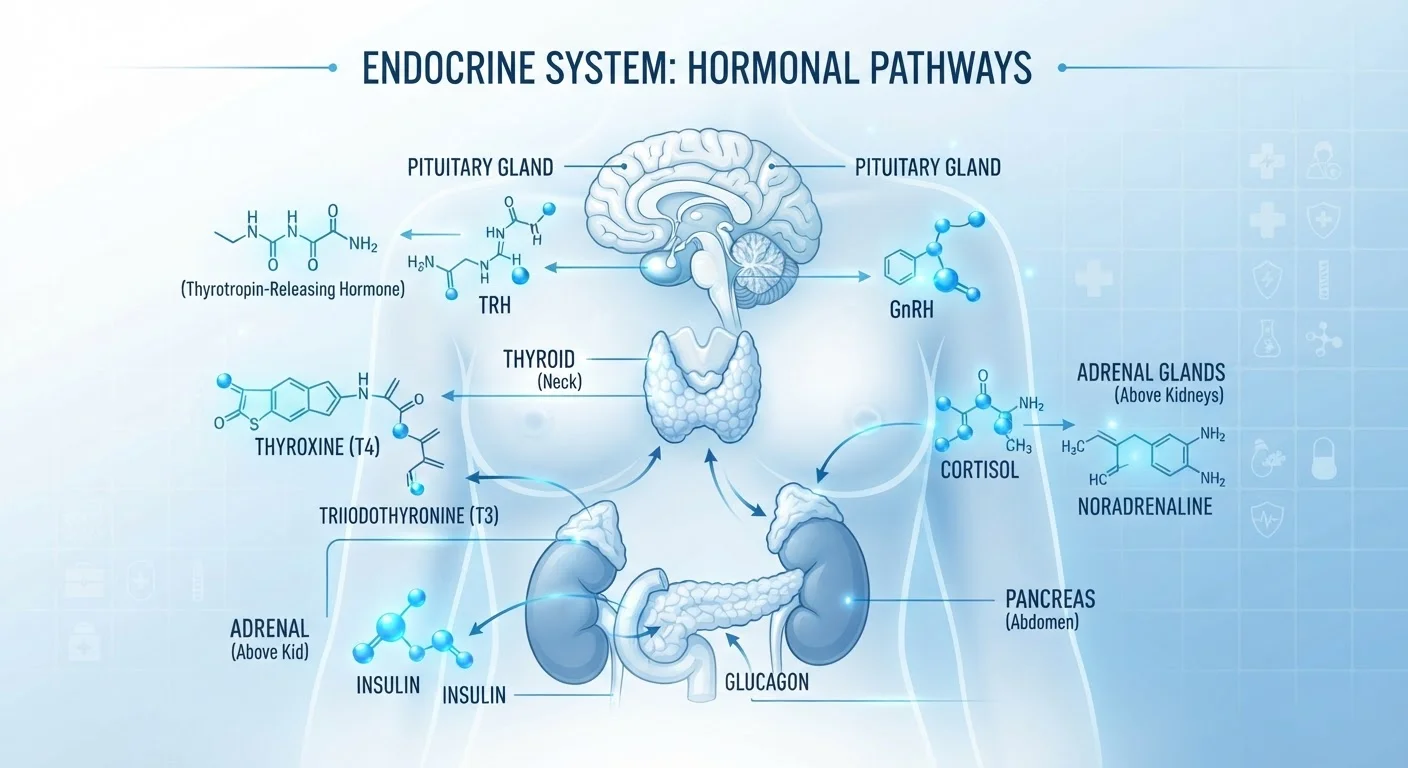
Photo: FeaturingHealth.net | Healthy Living Simplified editorial
Key Takeaways
- Testosterone influences muscle mass, bone density, mood, libido, and red blood cell production.
- Levels naturally decline with age, typically around 1–2% per year after age 30.
- Low testosterone does not automatically require treatment — evaluation by a clinician is essential.
- Lifestyle factors including sleep, exercise, and diet meaningfully influence testosterone levels.
- Both deficiency and excess testosterone carry distinct health risks.
More Than a Sex Hormone
Testosterone is frequently reduced to a symbol of masculinity or a driver of libido — but that framing significantly undersells its biological role. This hormone acts on receptors found throughout the body, influencing systems that have nothing to do with reproduction.
Produced primarily in the Leydig cells of the testes — with a small contribution from the adrenal glands — testosterone is regulated by a feedback loop involving the hypothalamus and pituitary gland. That broader system, known as the hypothalamic-pituitary-gonadal (HPG) axis, is part of the larger hormonal network covered in our guide to the male hormonal system.
Understanding what testosterone actually does — and doesn't do — is the foundation for making sense of symptoms, lab results, and treatment options.
1–2%
Annual testosterone decline after age 30
Research published in clinical endocrinology literature consistently documents this gradual, age-related decline as a normal physiological process.
~40%
Of men over 45 may have low testosterone
A large study published in the International Journal of Clinical Practice estimated that a substantial proportion of middle-aged men fall below clinical thresholds, many undiagnosed.
300–1,000 ng/dL
Typical normal range for adult male testosterone
Reference ranges vary by laboratory and method, but most clinical guidelines place normal total testosterone within this broad band.
Key Functions Across the Body
Muscle and Physical Composition
Testosterone stimulates muscle protein synthesis and inhibits fat storage, which is why changes in body composition — gaining fat or losing muscle without clear lifestyle changes — can sometimes reflect hormonal shifts. It does not directly build muscle on its own; exercise, particularly resistance training, is a necessary co-factor. For a research-grounded look at that relationship, see our article on exercise and male hormones.
Bone Density
Testosterone supports the maintenance of bone mineral density. Men with chronically low testosterone face an elevated risk of osteoporosis over time — a fact that is often underappreciated in discussions of male health.
Mood and Cognition
Testosterone receptors are present in the brain. Research has associated low levels with depressive symptoms, reduced motivation, and difficulty concentrating, though the relationship is complex and bidirectional — chronic stress and poor mental health also suppress testosterone.
Red Blood Cell Production
Testosterone stimulates the kidneys to produce erythropoietin, a hormone that drives red blood cell production. This is one reason testosterone therapy can raise hematocrit levels, which clinicians monitor during treatment.
Sexual and Reproductive Function
Testosterone is essential for libido, erectile function, and spermatogenesis. It works alongside other hormones — including LH and FSH — to regulate sperm production. For context on how these markers are evaluated, see our overview of hormone panel blood tests for men.
“Testosterone is not just a reproductive hormone — it's a systemic regulator that affects the heart, brain, bones, and metabolism. Thinking of it only in terms of libido or muscle is an oversimplification that leads to both missed diagnoses and unnecessary treatment.”
— Dr. Abraham Morgentaler, Urologist and Associate Professor at Harvard Medical School, author of research on testosterone and men's health
How Levels Change Over Time
Testosterone peaks during adolescence and early adulthood, then undergoes a gradual, age-related decline — typically around 1–2% per year after age 30. This is a normal process, not a disease, though its downstream effects become more noticeable for some men in their 40s and 50s.
The degree of decline varies considerably. Factors that can accelerate it include obesity, chronic illness, poor sleep, high psychological stress, and certain medications. Conversely, men who maintain healthy body weight, sleep adequately, and stay physically active tend to sustain more stable levels. Many widely held assumptions about this decline are addressed in our article separating hormonal health myths from evidence.
Sleep Is One of the Strongest Levers
When Levels Fall Outside the Normal Range
Clinically low testosterone — a condition called hypogonadism — is diagnosed when blood levels fall below established reference ranges alongside relevant symptoms. Symptoms alone are insufficient for diagnosis; many overlap with thyroid dysfunction, sleep disorders, depression, and other treatable conditions. (For comparison, thyroid hormones are another common but often overlooked contributor to energy and mood changes.)
High testosterone — whether from exogenous sources like anabolic steroids or, rarely, tumors — carries its own risks, including suppression of natural hormone production, cardiovascular strain, and infertility.
Neither extreme is benign. If you're experiencing symptoms that concern you, a conversation with a qualified healthcare provider is the appropriate first step — not self-supplementation.
Testosterone also interacts with androgens like DHEA in ways that are frequently misunderstood. Our comparison of testosterone and DHEA clarifies how these two hormones differ and why they shouldn't be conflated.
This article is for general informational and educational purposes only and does not constitute medical advice. If you have concerns about your hormone levels or related symptoms, consult a qualified healthcare professional.
Frequently Asked Questions
The content on this site is for informational purposes only and is not a substitute for professional advice. Always consult a qualified professional for guidance specific to your situation.