
The Thyroid's Quiet Role in Men's Energy and Metabolism

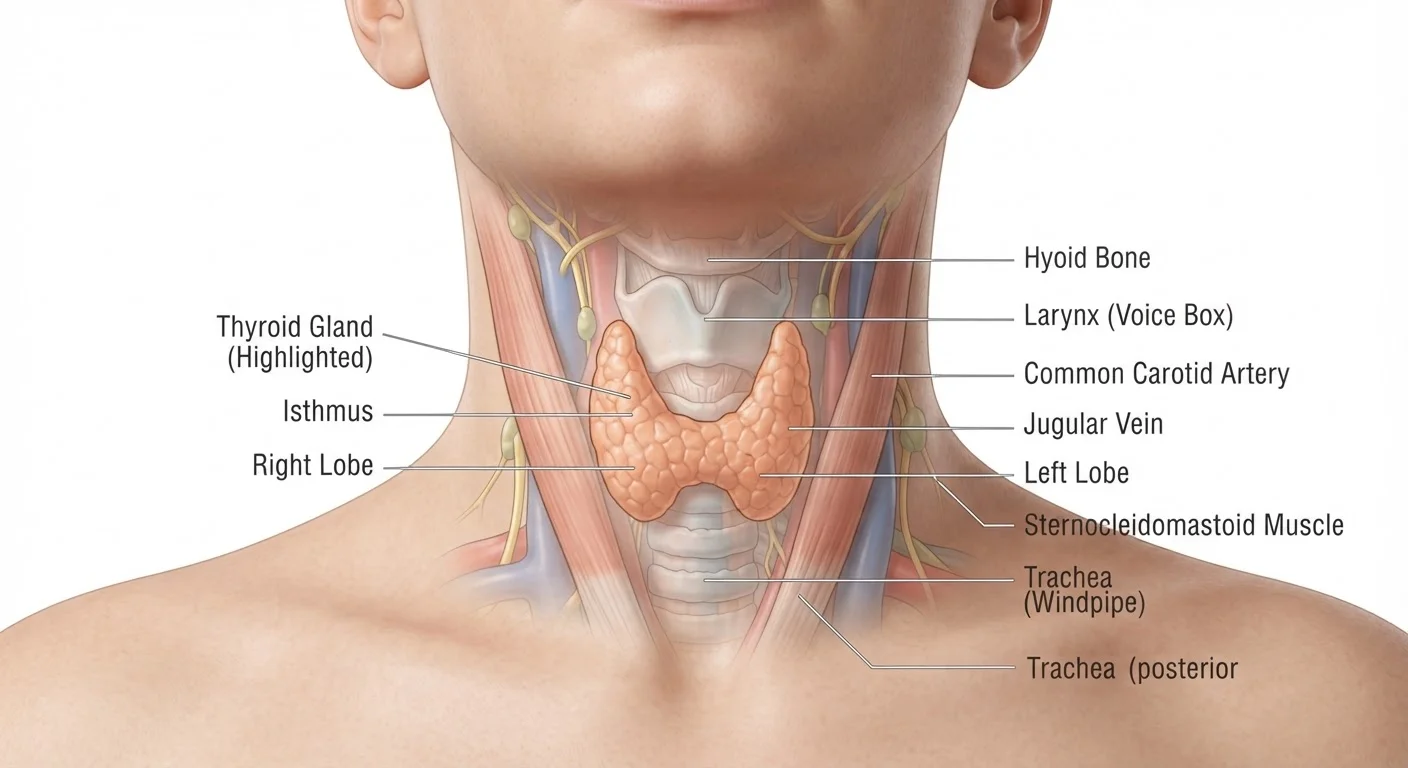
Photo: FeaturingHealth.net | Healthy Living Simplified editorial
Key Takeaways
- Thyroid disorders affect men as well as women, though they are significantly underdiagnosed in male populations.
- Both an underactive (hypothyroidism) and overactive (hyperthyroidism) thyroid produce distinct, recognizable symptom patterns in men.
- Fatigue, unexplained weight changes, mood shifts, and altered heart rate are all potential thyroid-related warning signs.
- A simple blood test measuring TSH, T3, and T4 levels is the standard diagnostic tool.
- Thyroid health is closely interconnected with testosterone, sleep quality, and overall hormonal balance.
- Thyroid conditions are highly treatable — early evaluation by a healthcare provider makes a significant difference.
Why the Thyroid Matters More Than Most Men Realize
The thyroid gland rarely gets attention until something goes wrong — and for men, that gap in awareness has real consequences. Thyroid disorders are estimated to affect roughly 1 in 20 adults, yet men remain significantly underdiagnosed, partly because symptoms like fatigue, weight gain, or mood changes are routinely attributed to stress, aging, or lifestyle rather than hormonal dysfunction.
Understanding how the thyroid works is a practical health investment. As part of the broader male hormonal system, the thyroid doesn't operate in isolation — it communicates continuously with the brain, adrenal glands, and reproductive system. When it's off, the downstream effects can be wide-ranging and easy to misread.
~1 in 20
Adults estimated to have a thyroid disorder
According to the American Thyroid Association, thyroid disease affects an estimated 20 million Americans, with many cases undiagnosed.
60%
People with thyroid disease who are unaware
The American Thyroid Association estimates that up to 60% of those with thyroid disease do not know they have it, underscoring the importance of routine screening.
5–10x
Higher thyroid disorder prevalence in women vs. men
Women are significantly more affected, but this disparity contributes to men's conditions being overlooked and underdiagnosed in clinical settings.
What Thyroid Hormones Actually Do in the Male Body
The thyroid produces two primary hormones: thyroxine (T4) and triiodothyronine (T3). T4 is the more abundant but less active form; most of it converts to T3 in peripheral tissues, where it does the metabolic heavy lifting. Together, these hormones regulate the rate at which cells consume oxygen and generate energy — a process known as the basal metabolic rate.
In men specifically, thyroid hormones influence:
- Energy and metabolism: They set the pace at which the body burns calories at rest. Low thyroid output slows this process; high output accelerates it.
- Cardiovascular function: Thyroid hormones affect heart rate and contractility. Hypothyroidism can slow the heart; hyperthyroidism can trigger a racing or irregular heartbeat.
- Muscle function and body composition: Thyroid deficiency is associated with muscle weakness and increased fat accumulation, particularly around the midsection.
- Mood and cognition: Brain cells are sensitive to thyroid hormone levels. Deficiency is linked to depression, brain fog, and slowed processing speed.
- Reproductive and hormonal health: Thyroid dysfunction can alter sex hormone-binding globulin (SHBG) levels, affecting the bioavailability of testosterone — a connection explored further in our testosterone deep-dive.
Hypothyroidism vs. Hyperthyroidism: Recognizing the Signs
The two primary thyroid disorders produce nearly opposite symptom profiles, which makes clinical pattern recognition important.
Hypothyroidism (underactive thyroid)
This is the more common condition in men. The thyroid produces insufficient hormone, slowing bodily processes. Symptoms include persistent fatigue, unexplained weight gain, cold intolerance, constipation, dry skin, slowed heart rate, low mood, and difficulty concentrating. Hashimoto's thyroiditis — an autoimmune condition — is the leading cause.
Hyperthyroidism (overactive thyroid)
Here, excess hormone production accelerates metabolism. Men may notice unexplained weight loss despite normal or increased appetite, heart palpitations, anxiety, tremors, heat intolerance, and disrupted sleep. Graves' disease, another autoimmune condition, accounts for the majority of cases.
Thyroid Symptoms Often Masquerade as Other Conditions
Because these symptoms overlap with anxiety, depression, cardiovascular conditions, and the natural effects of aging, thyroid disorders in men are frequently missed or delayed in diagnosis. If several of these symptoms resonate, a TSH blood test is a reasonable first step to discuss with a physician.
The Sleep and Stress Connection
Thyroid health doesn't exist in a vacuum. Chronic sleep deprivation and sustained psychological stress both influence the hypothalamic-pituitary-thyroid axis — the control system that governs hormone production. Research suggests that poor sleep can alter TSH secretion patterns, and cortisol (the primary stress hormone) can suppress T3 conversion at the cellular level.
This creates a feedback loop that can be difficult to identify without laboratory testing. Men who are chronically under-sleeping may be compounding hormonal disruption that extends well beyond fatigue. Addressing sleep quality is therefore not just a lifestyle choice — it's a meaningful component of hormonal maintenance.
Prioritize Sleep for Hormonal Regulation
When to See a Doctor and What to Expect
A standard thyroid panel measures TSH, free T4, and often free T3. TSH is the most sensitive initial marker: elevated TSH suggests the pituitary is working harder to stimulate an underperforming thyroid (hypothyroidism), while suppressed TSH points toward overactivity (hyperthyroidism). Antibody testing can identify autoimmune causes.
Thyroid conditions in men are generally well-managed with appropriate medical treatment. Hypothyroidism is typically treated with synthetic levothyroxine; hyperthyroidism may be addressed with medication, radioactive iodine therapy, or, in some cases, surgery. For a broader perspective on how thyroid status intersects with other hormonal signals, see the thyroid-hormone connection and common myths about men's hormonal health.
This article is for informational purposes only and does not constitute medical advice. If you are experiencing symptoms that concern you, consult a qualified healthcare professional for evaluation and diagnosis.
Frequently Asked Questions
The content on this site is for informational purposes only and is not a substitute for professional advice. Always consult a qualified professional for guidance specific to your situation.