
Everyday Foods Mapped to Their Primary Macronutrients

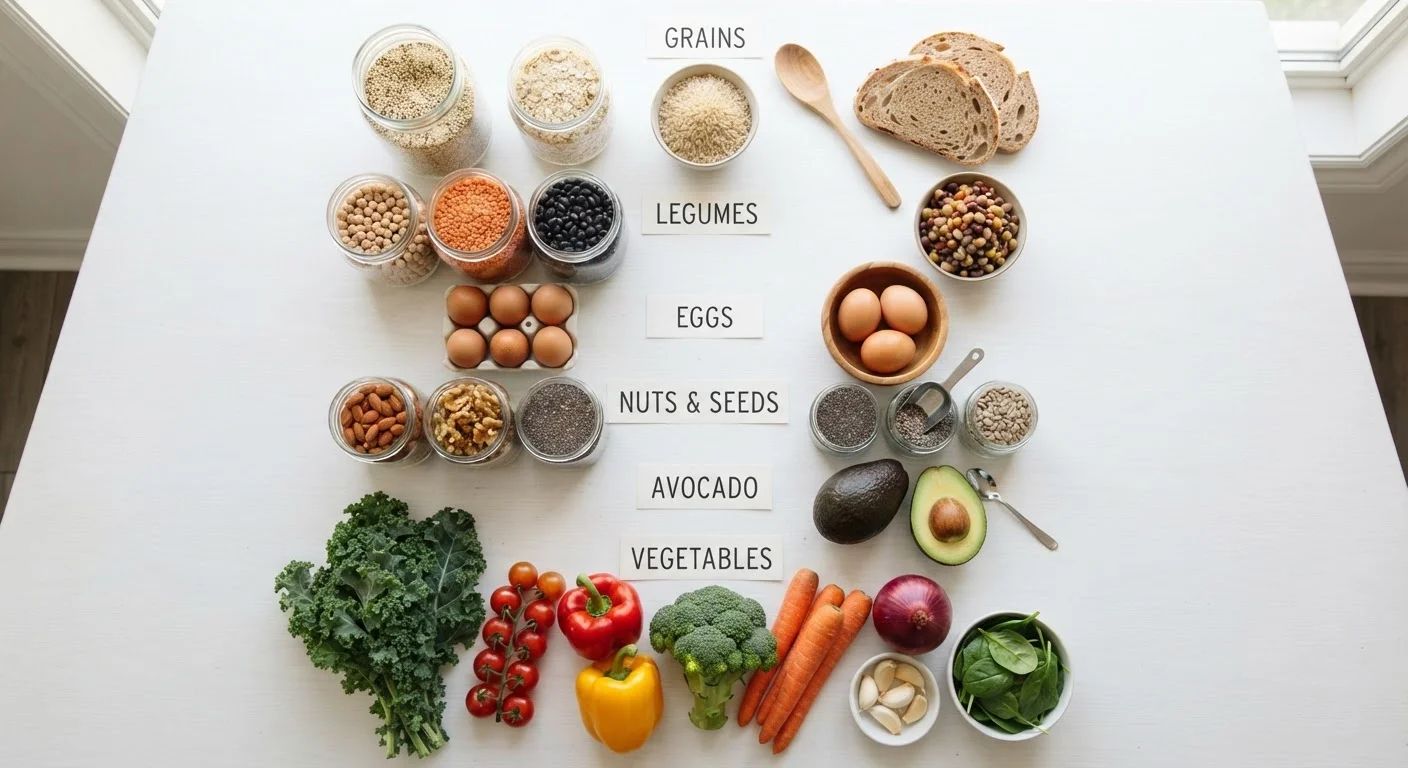
Photo: FeaturingHealth.net | Healthy Living Simplified editorial
Why Mapping Foods to Macronutrients Is Useful
Every food you eat contains some combination of the three macronutrients — carbohydrates, protein, and fat. Understanding which macronutrient dominates a given food helps you build meals with a deliberate balance rather than guessing. This reference guide groups common everyday foods by their primary macronutrient contribution, so you can use it as a quick decision-making tool at the grocery store or when planning a meal.
Note that "primary" does not mean exclusive. Whole milk, for example, contributes meaningful amounts of all three macronutrients. The groupings below reflect which macronutrient makes the largest caloric contribution per typical serving. For a deeper look at what each macronutrient actually does in the body, see Macronutrients Explained.
| Number of macronutrients | 3 — carbohydrates, protein, fat |
| Calories per gram of carbohydrate | 4 kcal (USDA Dietary Guidelines) |
| Calories per gram of protein | 4 kcal (USDA Dietary Guidelines) |
| Calories per gram of fat | 9 kcal (USDA Dietary Guidelines) |
| Most calorie-dense macronutrient | Fat |
| Body's preferred energy fuel | Glucose (from carbohydrates) |
Foods Dominated by Carbohydrates
Carbohydrates are the body's preferred energy source. Foods in this category provide the bulk of their calories from starches, sugars, or fiber.
| Food | Primary Form of Carb | Notable Secondary Nutrient |
|---|---|---|
| Brown rice (cooked) | Starch | Trace protein |
| Rolled oats | Starch + soluble fiber | Trace protein |
| Whole-wheat bread | Starch + fiber | Trace protein |
| Sweet potato | Starch + natural sugars | Vitamin A precursor |
| Banana | Natural sugars + starch | Potassium |
| Lentils | Starch + fiber | Substantial protein |
| Black beans | Starch + fiber | Substantial protein |
Legumes like lentils and black beans are a notable exception to neat categories — they provide significant protein alongside their carbohydrate content, making them particularly efficient whole foods. The quality of carbohydrate matters too: fiber-rich sources such as oats, legumes, and vegetables digest more slowly than refined grains. Learn more about carbohydrate types and how they affect energy levels.
Macronutrient
One of three main classes of nutrients — carbohydrates, proteins, and fats — that the body requires in relatively large amounts to function. Each provides energy, measured in calories.
Starch
A complex carbohydrate made of long chains of glucose molecules. Found in grains, legumes, and root vegetables, starch is broken down into glucose during digestion.
Amino Acids
The building blocks of protein. The body uses twenty amino acids to build and repair tissues, enzymes, and other structures; nine are classified as essential because the body cannot make them itself.
Monounsaturated Fat
A type of unsaturated dietary fat with one double bond in its carbon chain. Common in olive oil, avocados, and many nuts, it is associated with favorable cardiovascular health markers in research.
Polyunsaturated Fat
A type of dietary fat containing multiple double bonds. Includes omega-3 and omega-6 fatty acids. Found in fatty fish, walnuts, and seeds; essential types must come from food.
Dietary Fiber
A type of carbohydrate the body cannot fully digest. It supports digestive regularity, blood sugar stability, and satiety. Found in whole grains, legumes, vegetables, and fruits.
Foods Dominated by Protein
Protein-dominant foods provide most of their calories from amino acids, which the body uses for tissue repair, enzyme production, immune function, and more.
| Food | Protein per Typical Serving | Notable Secondary Nutrient |
|---|---|---|
| Chicken breast (cooked) | ~26 g per 3 oz | Low saturated fat |
| Canned tuna (in water) | ~22 g per 3 oz | Omega-3 fatty acids |
| Eggs (large) | ~6 g per egg | Choline, fat |
| Greek yogurt (plain, low-fat) | ~17 g per 6 oz | Calcium, probiotics |
| Cottage cheese (low-fat) | ~14 g per ½ cup | Calcium |
| Tofu (firm) | ~10 g per 3 oz | Calcium, iron |
| Edamame | ~11 g per ½ cup | Fiber, folate |
Protein Completeness in Plant Foods
Protein servings add up across the day rather than needing to come from a single large source. Spreading intake across meals — a pattern explored in Balancing Macronutrients Across a Day's Worth of Meals — is consistent with how research suggests the body uses dietary protein most efficiently.
Foods Dominated by Fat
Fat-dominant foods provide most of their calories from fatty acids. The type of fat matters for long-term health. Unsaturated fats, found in nuts, seeds, and oils derived from plants or fish, are generally considered the more favorable forms. For a detailed breakdown of fat types, see Saturated, Unsaturated, and Trans Fats.
| Food | Dominant Fat Type | Notable Secondary Nutrient |
|---|---|---|
| Avocado | Monounsaturated | Fiber, potassium |
| Almonds | Monounsaturated | Vitamin E, protein |
| Walnuts | Polyunsaturated (ALA omega-3) | Trace protein |
| Olive oil | Monounsaturated | Fat-soluble vitamins (carrier) |
| Salmon (cooked) | Polyunsaturated (EPA/DHA omega-3) | High protein |
| Cheddar cheese | Saturated | Calcium, protein |
| Whole milk | Saturated | Protein, calcium |
Salmon appears here as a fat-dominant food despite also being an excellent protein source — per calorie, its fat content is proportionally significant. This overlap is common among whole animal foods. You can also explore Nutrients Hidden in Plain Sight for more context on foods that punch above their weight nutritionally.
This article is for general informational and educational purposes only and is not a substitute for professional medical or dietary advice. Consult a qualified healthcare provider or registered dietitian for personalized guidance.
The content on this site is for informational purposes only and is not a substitute for professional advice. Always consult a qualified professional for guidance specific to your situation.