
Balancing Macronutrients Across a Day's Worth of Meals

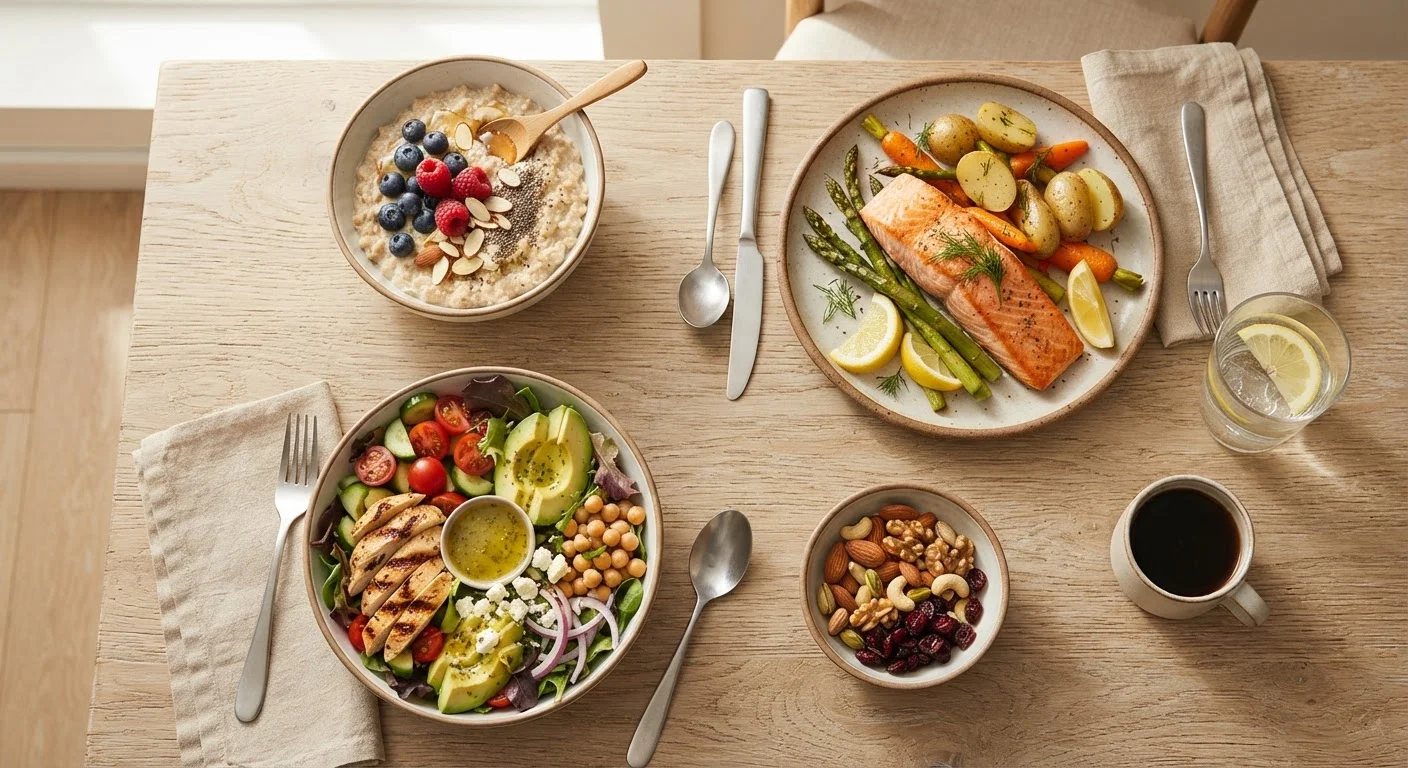
Photo: FeaturingHealth.net | Healthy Living Simplified editorial
Key Takeaways
- Each meal benefits from a mix of all three macronutrients — carbohydrates, protein, and fat.
- Spreading protein intake across the day supports muscle maintenance better than concentrating it at one meal.
- Choosing whole-food sources of each macronutrient improves both nutrition quality and satiety.
- Rigid macro tracking isn't necessary — consistent meal patterns and food variety matter most.
- Individual needs vary with age, activity level, and health status; consult a professional when in doubt.
Why Meal-by-Meal Distribution Matters
Most nutrition guidance focuses on daily totals — how many grams of carbohydrate, protein, or fat you consume across 24 hours. That's a useful starting point, but when and how those nutrients are spread matters too. If you're new to thinking about this, the introduction to macronutrients provides helpful grounding before diving deeper.
Eating most of your carbohydrates at one sitting, or loading nearly all your protein into dinner, creates an uneven metabolic load. Research published in nutritional sciences journals consistently shows that distributing macronutrients more evenly across meals is associated with steadier blood glucose, better appetite regulation, and more consistent energy levels — though individual responses do vary.
Think of each meal as an opportunity to give your body a coordinated supply of fuel, building blocks, and structural support, rather than a series of isolated food events.
Carbohydrates: Timing and Quality Together
Carbohydrates are your body's preferred quick-access fuel. They don't need to be avoided or drastically limited — the research on macro ratios is more nuanced than popular claims suggest. For a fuller look at that evidence, see the macronutrient ratios debate.
The practical priority is choosing carbohydrates that come with fiber, vitamins, and minerals — whole grains, legumes, fruits, and vegetables — rather than refined sources that deliver little beyond quick energy. Including some carbohydrate at each meal, rather than front-loading or back-loading, helps keep energy more stable.
Include a whole-food carbohydrate source at every main meal
Anchor each meal with a protein source, including breakfast
Add a small amount of healthy fat to each meal rather than avoiding it
Pair carbohydrates with protein or fat rather than eating them alone
Use visual plate proportions as a rough guide rather than gram counting
Protein: Spread It Out
Protein is central to muscle repair, immune function, enzyme production, and satiety. One consistent finding across nutrition research is that protein synthesis — the process your body uses to build and maintain tissue — responds better to evenly distributed intake than to one large protein-heavy meal.
Practically, this means aiming for a meaningful protein source at breakfast (eggs, Greek yogurt, cottage cheese, tofu) and lunch, not just dinner. For reference on which everyday foods deliver protein most reliably, the everyday foods macronutrient guide is a useful resource.
“Protein distribution across the day — not just total daily intake — appears to be an important factor in supporting muscle protein synthesis, particularly as people age.”
— Stuart Phillips, Professor of Kinesiology, McMaster University, researcher in protein metabolism and muscle health
Fat: Essential, Not Optional
Dietary fat is frequently mischaracterized — either demonized entirely or celebrated without nuance. The evidence-based view is that fat is essential for absorbing fat-soluble vitamins (A, D, E, and K), supporting cell membranes, and producing hormones. The type and source of fat matters more than the total amount for most people eating within reasonable ranges.
Unsaturated fats found in olive oil, avocados, nuts, seeds, and fatty fish are well-supported by research. Including a moderate amount of fat with meals also slows gastric emptying, which contributes to fuller, longer-lasting satiety. This doesn't require precision measuring — a drizzle of olive oil on vegetables, a small handful of nuts, or a quarter avocado accomplishes this practically.
Putting It Together Across a Full Day
A practical day of balanced macronutrient distribution doesn't require a spreadsheet. Consider a breakfast of oatmeal topped with nuts and a boiled egg — delivering complex carbs, fat, and protein together. Lunch might be a grain bowl with beans, roasted vegetables, and tahini dressing. Dinner could center on a lean protein alongside a starchy vegetable and a salad dressed with olive oil.
Snacks, when needed, work best when they also combine macronutrients — apple slices with peanut butter rather than crackers alone, for instance. The snacking and meal timing trade-offs article explores how snack patterns fit into a broader eating strategy.
Keep in mind that needs shift over time. Physical activity, age, and health conditions all influence how much of each macronutrient your body requires. The guide to shifting macronutrient needs covers this in detail. If you have specific health concerns or conditions, always consult a registered dietitian or qualified healthcare provider before making significant dietary changes.
Special Populations: Seek Professional Guidance
This article is for general informational purposes only and is not a substitute for personalized medical or nutritional advice. Consult a qualified healthcare professional for guidance tailored to your individual needs.
The content on this site is for informational purposes only and is not a substitute for professional advice. Always consult a qualified professional for guidance specific to your situation.