
The Male Hormonal System: What's Actually Going On Beneath the Surface

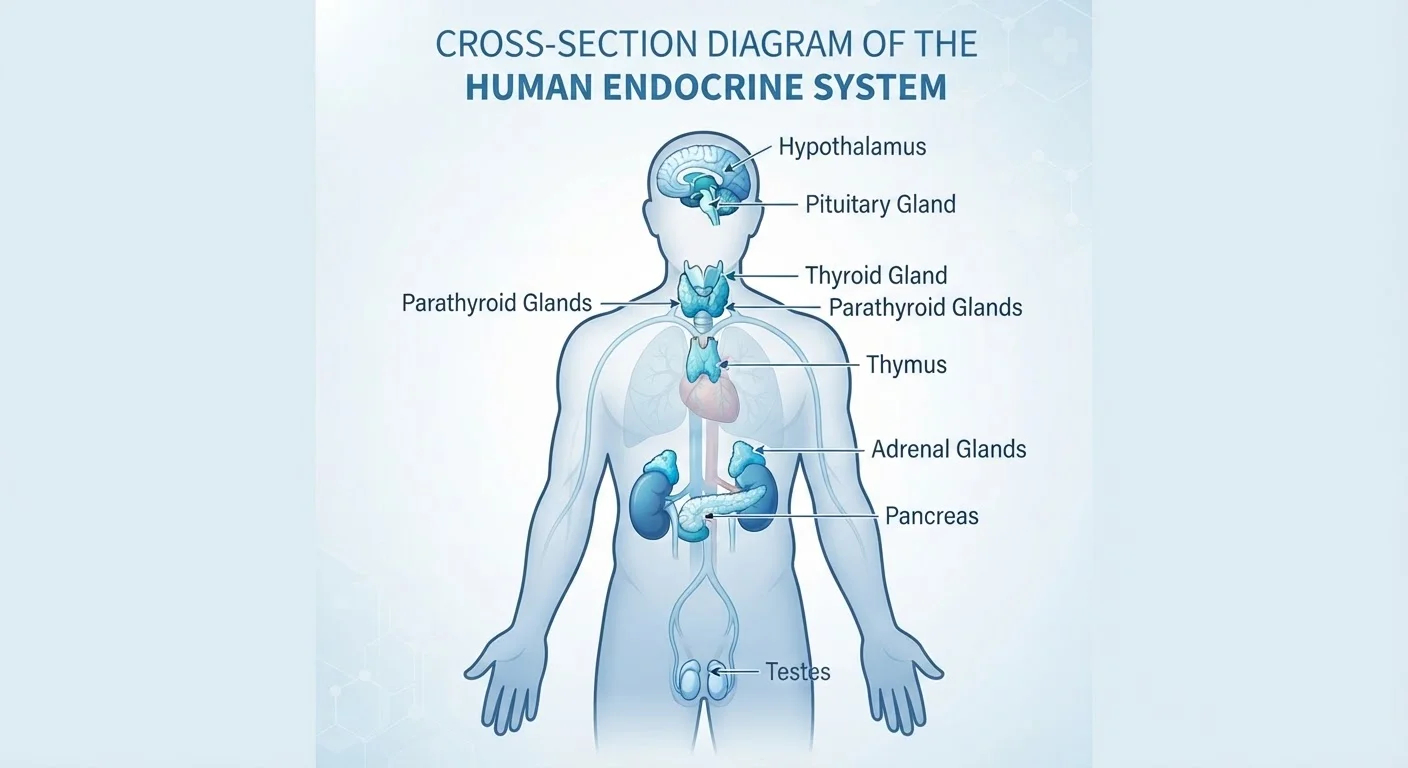
Photo: FeaturingHealth.net | Healthy Living Simplified editorial
Key Takeaways
- Testosterone is just one part of a broader hormonal network that governs men's health.
- The hypothalamus and pituitary gland act as a central control center for hormonal output.
- Cortisol, insulin, and thyroid hormones interact with testosterone and affect energy, mood, and body composition.
- Chronic stress and poor sleep are among the most well-documented disruptors of male hormone balance.
- Hormonal changes are gradual and normal with age — they're not always a sign of a medical condition.
- A qualified healthcare provider is the right resource for evaluating suspected hormonal imbalances.
The Control Center: Hypothalamus and Pituitary Gland
Before testosterone or any other hormone enters the picture, two brain structures set the agenda. The hypothalamus — a small region at the base of the brain — continuously monitors hormone levels in the blood and sends chemical signals downward to the pituitary gland. The pituitary then releases its own hormones that instruct target glands to produce or hold back what the body needs.
In the context of testosterone, this chain works as follows: the hypothalamus releases GnRH, which prompts the pituitary to release LH and FSH. LH signals the testes to produce testosterone; FSH supports sperm production. When testosterone levels are sufficient, the brain detects this and dials back its signals — a classic negative feedback loop. Disruptions anywhere in this chain, whether from stress, illness, or injury, can affect the entire system.
Hormonal Testing Has Limitations
Testosterone: What It Actually Does
Testosterone is produced mainly in the testes, with a small contribution from the adrenal glands. Its roles extend well beyond sex drive. Testosterone supports muscle protein synthesis, bone density maintenance, red blood cell production, and mood regulation. It also influences motivation, cognitive sharpness, and cardiovascular markers.
Crucially, testosterone doesn't act in isolation. The body converts a portion of it into estradiol — a form of estrogen — through a process called aromatization. Estradiol is necessary in men for bone health, joint function, and libido. This is why estrogen is not exclusively a female hormone, and why the male system requires a careful balance rather than simply maximizing any single hormone. Common myths about testosterone — including the idea that more is always better — are worth examining with evidence in hand.
1–2%
Annual testosterone decline after age 30–40
According to research reviewed by the American Urological Association, total testosterone decreases gradually with age in most men, though individual variation is wide.
15%
Testosterone drop linked to one week of sleep restriction
A study published in JAMA found that restricting healthy young men to five hours of sleep per night reduced daytime testosterone levels by 10–15% on average.
~95%
Testosterone produced in the testes
The remaining roughly 5% comes from the adrenal glands, underlining why testicular and adrenal health both matter in evaluating male hormonal status.
The Supporting Cast: Cortisol, Insulin, and Thyroid Hormones
Three other hormones regularly interact with the testosterone axis and deserve attention in any overview of men's hormonal health.
- Cortisol — produced by the adrenal glands in response to stress — is essential for metabolism and immune regulation. However, chronically elevated cortisol suppresses the hypothalamic-pituitary signaling that drives testosterone production, creating a direct antagonistic relationship.
- Insulin — released by the pancreas to manage blood glucose — interacts with sex hormone-binding globulin (SHBG), a protein that carries testosterone through the bloodstream. High insulin levels associated with insulin resistance tend to lower SHBG, altering how much testosterone is biologically active.
- Thyroid hormones (T3 and T4) govern the rate of nearly every metabolic process in the body. Both overactive and underactive thyroid function can affect energy, body composition, mood, and even testosterone metabolism. The thyroid's role in men's health is frequently overlooked but clinically significant.
“Testosterone doesn't operate in a vacuum. It's part of a system, and you can't optimize one hormone without understanding how it interacts with all the others.”
— Dr. Abraham Morgentaler, Urologist and author, Harvard Medical School
What Disrupts the System — and What Supports It
The male hormonal system is resilient but not impervious. Research consistently identifies several factors that can shift hormone levels meaningfully over time:
- Sleep deprivation — Studies show that restricting sleep to five hours per night for one week can lower daytime testosterone levels significantly in young, healthy men, according to research published in the Journal of the American Medical Association.
- Chronic psychological stress — Sustained cortisol elevation interferes directly with the hypothalamic-pituitary-gonadal axis.
- Excess body fat — Adipose (fat) tissue contains aromatase, the enzyme that converts testosterone to estradiol. Higher body fat can shift this balance.
- Physical activity — Resistance training in particular has documented short- and long-term associations with healthy testosterone levels, though extreme overtraining can have the opposite effect.
Understanding these levers is useful context for the evidence-based daily habits that support hormonal balance — from meal timing to light exposure — that can make a measurable difference without supplementation or extreme interventions. Men interested in how fitness strategy intersects with hormone health may also find value in the full picture of men's fitness, which addresses training, recovery, and nutrition through a physiological lens.
Prioritize Sleep for Hormonal Health
This article is for informational purposes only and is not a substitute for professional medical advice, diagnosis, or treatment. If you have concerns about your hormone levels or related symptoms, consult a qualified healthcare provider.
Frequently Asked Questions
The content on this site is for informational purposes only and is not a substitute for professional advice. Always consult a qualified professional for guidance specific to your situation.