
Thyroid Function and Hormonal Health: An Overlooked Connection

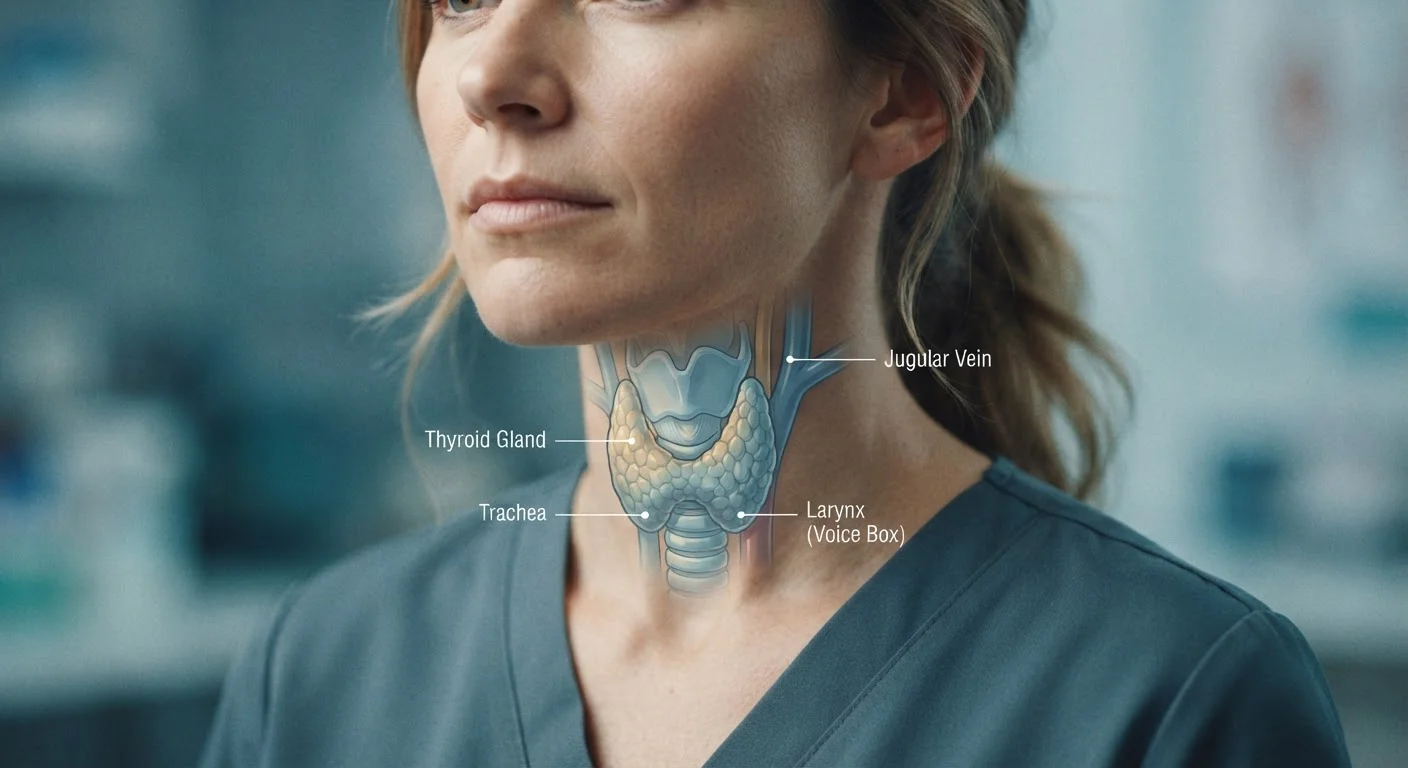
Photo: FeaturingHealth.net | Healthy Living Simplified editorial
Key Takeaways
- The thyroid gland is part of a broader endocrine network, not an isolated organ.
- Thyroid dysfunction can mimic or worsen symptoms of other hormonal imbalances.
- Women are up to 8 times more likely than men to develop thyroid disorders.
- Conditions like PCOS and thyroid disease can occur together and complicate diagnosis.
- A healthcare provider can assess thyroid function with a simple blood test.
Why the Thyroid Is Central to Hormonal Health
The thyroid is a small, butterfly-shaped gland at the base of the throat that produces two primary hormones — thyroxine (T4) and triiodothyronine (T3). These hormones act as metabolic regulators, influencing how nearly every cell in the body uses energy. But their reach extends well beyond metabolism. Thyroid hormones interact with estrogen, progesterone, cortisol, and insulin — meaning that disruptions in thyroid output can ripple outward across the entire endocrine system.
This is why thyroid dysfunction is so frequently mistaken for other hormonal conditions, and why people living with hormonal imbalances are often advised to have their thyroid checked as part of a complete picture. To understand the full scope of women's hormonal wellbeing, it helps to first read our grounded introduction to hormonal health.
8x
Women's higher thyroid disorder risk vs. men
According to the American Thyroid Association, women are approximately 5 to 8 times more likely than men to develop a thyroid condition during their lifetime.
20 million
Americans with thyroid disease
The American Thyroid Association estimates around 20 million Americans have some form of thyroid disease, with up to 60% unaware of their condition.
~60%
Thyroid disease cases that go undiagnosed
Despite its prevalence, a significant proportion of thyroid conditions remain undetected, often because symptoms overlap with other common health concerns.
How Thyroid Dysfunction Mimics Other Hormonal Imbalances
Hypothyroidism — an underactive thyroid — produces symptoms that overlap significantly with other hormonal conditions: fatigue, weight gain, depression, brain fog, heavy or irregular periods, and cold sensitivity. Hyperthyroidism, an overactive thyroid, can cause anxiety, rapid heartbeat, unintended weight loss, and light or absent periods. These shared symptoms make clinical evaluation essential — self-diagnosis based on symptoms alone is unreliable.
The menstrual cycle is one of the most sensitive indicators of thyroid status. Thyroid hormones modulate the production of sex hormone-binding globulin (SHBG), a protein that regulates how estrogen and testosterone circulate in the blood. When T3 and T4 levels are off, SHBG levels shift, and with them, the balance of active reproductive hormones. This is one mechanism through which thyroid disorders can affect fertility and menstrual regularity. Hormonal shifts across a woman's lifespan add further complexity, since thyroid conditions can emerge or worsen during puberty, pregnancy, or perimenopause.
“The thyroid doesn't operate in isolation. It is deeply embedded in the hormonal conversation happening across the entire body — and when it's disrupted, that conversation breaks down in ways that affect energy, mood, fertility, and more.”
— Endocrinology clinical consensus perspective, Reflected in guidelines from the American Thyroid Association and endocrinology clinical literature
The Autoimmune Dimension: Hashimoto's and PCOS
The most common cause of hypothyroidism in the United States is Hashimoto's thyroiditis, an autoimmune condition in which the immune system gradually damages thyroid tissue. Research published in peer-reviewed endocrinology journals has noted a statistically higher prevalence of Hashimoto's among women with polycystic ovary syndrome (PCOS) compared to the general population — though the mechanisms linking them are still being studied.
For a detailed look at how PCOS differs mechanistically from other hormonal conditions, see our article on PCOS and endometriosis. The coexistence of thyroid disease and PCOS can complicate diagnosis significantly, since both conditions share symptoms like irregular cycles, weight changes, and fatigue. This is why comprehensive hormonal panels — rather than single-hormone assessments — are often clinically warranted.
Ask About Thyroid Testing at Your Next Appointment
Supporting Thyroid and Hormonal Health Through Lifestyle
While thyroid conditions typically require medical management, certain lifestyle factors are associated with better hormonal outcomes broadly. Adequate dietary iodine and selenium support thyroid hormone synthesis, and anti-inflammatory dietary patterns have been studied in the context of autoimmune thyroid disease. Our article on nutrition habits that support hormonal balance explores what the evidence actually shows — without overpromising on supplements or trendy diets.
Chronic stress elevates cortisol, which can suppress TSH production and impair conversion of T4 to the more active T3. Sleep quality, physical activity, and stress management all interact with thyroid function indirectly through their effects on the HPA (hypothalamic-pituitary-adrenal) axis. None of these are substitutes for medical treatment, but they represent evidence-informed levers that support overall endocrine health.
This article is for general informational and educational purposes only and does not constitute medical advice. If you have concerns about thyroid function or hormonal health, please consult a qualified healthcare professional for a personalized evaluation.
Frequently Asked Questions
The content on this site is for informational purposes only and is not a substitute for professional advice. Always consult a qualified professional for guidance specific to your situation.