
PCOS and Endometriosis: Understanding Two Distinct Hormonal Conditions

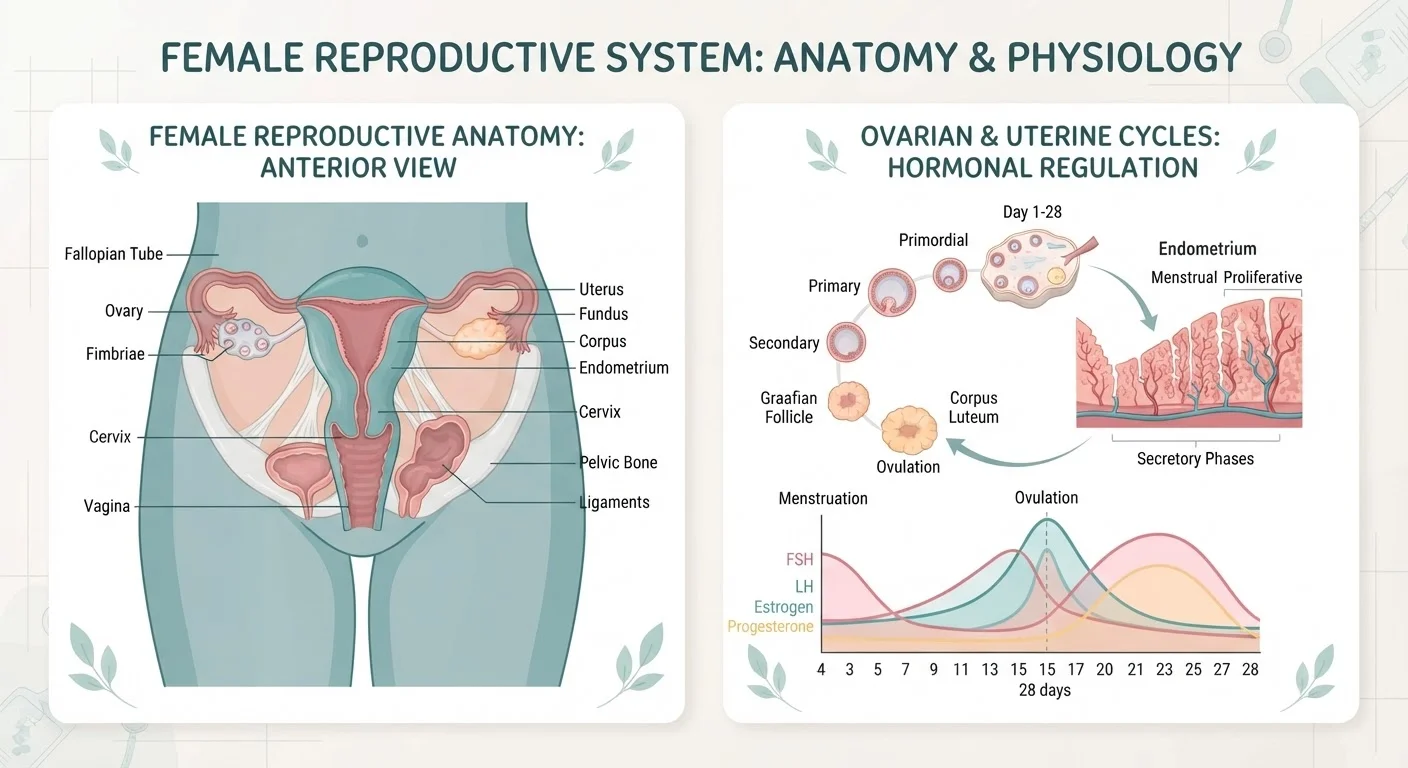
Photo: FeaturingHealth.net | Healthy Living Simplified editorial
Key Takeaways
- PCOS is primarily a hormonal and metabolic disorder; endometriosis is a chronic inflammatory condition involving tissue displacement.
- Both conditions can affect fertility, but through entirely different biological mechanisms.
- Symptoms overlap — including pelvic pain and irregular periods — making professional diagnosis essential.
- It is possible to have both PCOS and endometriosis simultaneously.
- Early, accurate diagnosis improves long-term management outcomes for both conditions.
Two Conditions, Two Different Mechanisms
PCOS and endometriosis are among the most common gynecological conditions affecting women of reproductive age, yet they are frequently conflated — even by patients who have one or both. Understanding what distinguishes them at a biological level is the foundation of effective management.
Polycystic Ovary Syndrome (PCOS) is primarily a metabolic and endocrine disorder. It is characterized by elevated androgens (male-type hormones), irregular or absent ovulation, and often — though not always — the presence of multiple small follicles on the ovaries visible on ultrasound. Insulin resistance plays a significant role in many cases, amplifying androgen production and disrupting the hormonal signals that regulate the menstrual cycle. For a deeper look at how PCOS is commonly mischaracterized, see our evidence-based PCOS explainer.
Endometriosis, by contrast, is a chronic inflammatory condition in which tissue resembling the uterine lining (endometrium) grows outside the uterus — on the ovaries, fallopian tubes, pelvic lining, or in rare cases elsewhere in the body. This tissue responds to hormonal cycles just as the uterine lining does: it thickens, breaks down, and bleeds — but has no exit route. The result is inflammation, scar tissue, and adhesions that can cause significant pain and structural damage over time.
| Criterion | PCOS | Endometriosis |
|---|---|---|
| Primary mechanism | Hormonal/metabolic imbalance | Inflammatory tissue disorder |
| Key hormonal driver | Androgen excess, insulin resistance | Estrogen-driven tissue response |
| Menstrual pattern | Irregular, infrequent, or absent | Often regular but severely painful |
| Defining pain profile | Not a primary feature | Chronic pelvic pain, dyspareunia |
| Fertility impact | Ovulatory dysfunction | Structural damage, adhesions |
| Confirmed by | Bloodwork, ultrasound, clinical criteria | Laparoscopy (gold standard) |
| Can co-occur | Yes — both can be present simultaneously | Yes — both can be present simultaneously |
Symptoms: Where Overlap Creates Confusion
Both conditions can produce irregular menstrual cycles and fertility difficulties, which is why distinguishing them without clinical evaluation is unreliable. However, their symptom profiles diverge meaningfully when examined more closely.
PCOS symptoms often extend beyond the reproductive system. Acne, excess facial or body hair (hirsutism), scalp hair thinning, and difficulty managing weight are common presentations tied to androgen excess and insulin dysregulation. Periods may be infrequent, prolonged, or absent entirely.
Endometriosis symptoms center heavily on pain — often described as significantly worse than typical menstrual cramping. Painful intercourse (dyspareunia), bowel or bladder discomfort during menstruation, and chronic pelvic pain are hallmark signs. Unlike PCOS, pain severity in endometriosis does not always correlate with the extent of tissue involvement; some individuals with minimal lesions experience severe pain, while others with extensive spread report milder symptoms.
Co-occurrence Is More Common Than Recognized
It is worth noting that both conditions are also linked to hormonal pathways that interact with thyroid function. Thyroid dysfunction can mimic or exacerbate both PCOS and endometriosis symptoms — a connection explored in our guide to thyroid and hormonal health.
Diagnosis, Management, and What Comes Next
Neither condition should be self-diagnosed. PCOS is typically confirmed through a combination of bloodwork (measuring hormone and insulin levels), pelvic ultrasound, and clinical assessment of symptoms — using criteria such as the Rotterdam criteria, which require at least two of three defining features. Endometriosis, by contrast, is definitively diagnosed only through laparoscopy, a minimally invasive surgical procedure, though imaging can support clinical suspicion.
~10%
Reproductive-age women affected by endometriosis
The World Health Organization estimates endometriosis affects approximately 10% of women and girls globally during reproductive years.
8–10 years
Average delay in endometriosis diagnosis
Research consistently finds that endometriosis is diagnosed an average of 8–10 years after symptom onset, highlighting the need for greater clinical awareness.
6–12%
Reproductive-age women with PCOS
According to the American College of Obstetricians and Gynecologists, PCOS affects an estimated 6–12% of women of reproductive age in the United States.
Management strategies differ accordingly. PCOS management often focuses on lifestyle approaches that support insulin sensitivity, alongside hormonal therapies that regulate the cycle and address androgen-related symptoms — the right approach depends on individual goals, including whether pregnancy is desired. Hormonal contraception options are frequently discussed in this context.
Endometriosis management prioritizes pain relief and slowing tissue progression. Hormonal therapies, anti-inflammatory approaches, and in some cases surgery to remove lesions are all part of established treatment pathways. Endometriosis is sometimes confused with a related but distinct condition — adenomyosis — and a clinician can help differentiate them.
It is also possible to carry both diagnoses simultaneously. Research suggests the two conditions co-occur at rates higher than chance, though the reasons for this remain an active area of investigation. Anyone experiencing persistent pelvic symptoms, cycle irregularities, or reproductive difficulties should consult a qualified healthcare provider for individualized evaluation.
This article is for informational purposes only and does not constitute medical advice. Always consult a qualified healthcare professional for diagnosis and treatment decisions.
The content on this site is for informational purposes only and is not a substitute for professional advice. Always consult a qualified professional for guidance specific to your situation.