
Hormone Panel Blood Tests for Men: What Each Marker Actually Measures

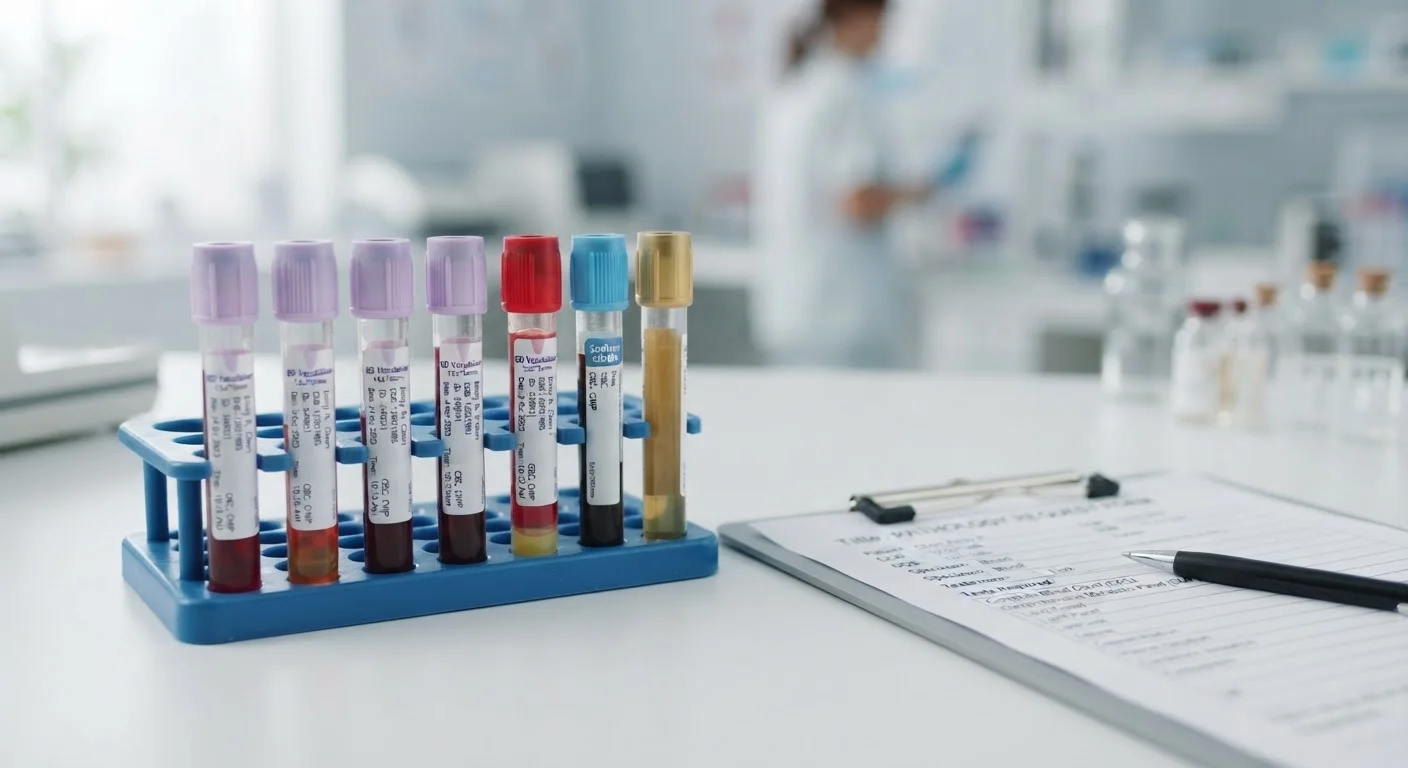
Photo: FeaturingHealth.net | Healthy Living Simplified editorial
Why Men Get Hormone Panels
A hormone panel is a targeted blood test that measures the concentrations of key signalling molecules involved in reproductive function, metabolism, stress response, and overall wellbeing. Clinicians order them when men report symptoms such as persistent fatigue, reduced libido, mood changes, infertility, or unexplained weight shifts — and increasingly as part of routine preventive screening.
Understanding what each marker actually measures helps you engage more meaningfully with your results and your clinician. For broader context on how these hormones interact within the body, see The Male Hormonal System.
| Markers typically included | Total testosterone, free testosterone, SHBG, LH, FSH, oestradiol, cortisol |
| Preferred blood draw time | Morning (7–10 a.m.) — testosterone peaks in early hours (Endocrine Society clinical guidelines) |
| Fasting required | Often recommended, particularly when metabolic markers are added |
| Typical turnaround | 1–5 business days depending on laboratory |
| Common referral reasons | Fatigue, low libido, infertility, mood changes, suspected hypogonadism |
The Core Markers — What Each One Measures
HPG Axis
The hypothalamic–pituitary–gonadal axis — a three-tier hormonal feedback loop in which the hypothalamus signals the pituitary, which in turn signals the gonads to produce sex hormones. Disruption at any level affects the whole system.
Hypogonadism
A clinical condition in which the testes produce insufficient testosterone. It is classified as primary (testicular failure) or secondary (insufficient signalling from the pituitary or hypothalamus).
Aromatase
An enzyme that converts testosterone into oestradiol. Higher levels of body fat generally increase aromatase activity, which can shift the testosterone-to-oestradiol ratio.
SHBG
Sex hormone–binding globulin — a protein produced by the liver that binds sex hormones in the bloodstream, rendering them temporarily inactive. Its concentration directly affects how much free testosterone is available to tissues.
Spermatogenesis
The process by which the testes produce sperm cells. It depends on adequate FSH stimulation and healthy testicular function, and takes approximately 74 days to complete one cycle.
Reference Range
The statistically derived interval that captures results from a healthy reference population. Results outside this range flag a potential abnormality but must be interpreted alongside clinical symptoms.
Total Testosterone
Total testosterone measures all testosterone circulating in the blood — both the portion bound to proteins and the small free fraction. It is the standard first-line marker for assessing androgen status. Reference ranges vary by laboratory and age, but most clinical guidelines place the lower threshold for adult men at roughly 300 ng/dL. To understand the broader physiological roles of this hormone, see Testosterone and Men's Health.
Free Testosterone
Only 1–3% of circulating testosterone is unbound, or "free." This fraction is the biologically active form able to enter cells and exert its effects. A man can have a normal total testosterone level yet still show symptoms of deficiency if free testosterone is low — often because excess binding proteins are sequestering it.
Sex Hormone–Binding Globulin (SHBG)
SHBG is a liver-produced protein that binds testosterone (and oestradiol) tightly, making them temporarily inactive. High SHBG reduces the free fraction available to tissues; low SHBG does the opposite. Conditions such as obesity, insulin resistance, and thyroid disorders can all shift SHBG levels, so it is frequently tested alongside total testosterone to give a complete picture.
Luteinising Hormone (LH)
LH is released by the pituitary gland and travels to the testes, where it signals Leydig cells to produce testosterone. Measuring LH helps clinicians distinguish between primary hypogonadism (a testicular problem, where LH is high as the pituitary tries to compensate) and secondary hypogonadism (a pituitary or hypothalamic problem, where LH is inappropriately low).
Follicle-Stimulating Hormone (FSH)
FSH is also secreted by the pituitary and acts on Sertoli cells within the testes to support sperm production (spermatogenesis). Elevated FSH often points to testicular dysfunction; low FSH suggests a central signalling problem. FSH is a key marker when infertility or poor sperm parameters are a concern.
Oestradiol (E2)
Men produce oestradiol primarily through the conversion of testosterone by an enzyme called aromatase, found in fat tissue, liver, and bone. Oestradiol is essential for bone density, cardiovascular health, and libido in men. Levels that are too high or too low can each cause symptoms, which is why it is included alongside androgens rather than assessed in isolation. For comparison with female hormonal biology, the hormonal cycle overview provides useful context.
Cortisol
Cortisol is the body's primary stress hormone, secreted by the adrenal glands in a distinct daily rhythm — highest in the morning, lowest at night. Chronically elevated cortisol suppresses the HPG axis (hypothalamic–pituitary–gonadal axis), reducing testosterone output. Because its concentration changes substantially throughout the day, timing of the blood draw matters; morning samples are standard.
Timing Affects Your Results Significantly
How Results Are Interpreted — and Their Limits
No single marker tells the whole story. Clinicians interpret hormone panels alongside symptoms, medical history, and sometimes repeat testing, because hormone levels fluctuate with sleep quality, acute illness, time of day, and stress. A result outside the reference range is a starting point for investigation, not a diagnosis in itself.
Reference ranges also differ between laboratories and assay methods, which is why comparing numbers from different providers — or from different time points using different labs — requires caution. For a look at what the broader assessment process involves, see What a Hormonal Health Assessment Actually Involves.
~300 ng/dL
Common lower threshold for total testosterone in adult men
According to Endocrine Society clinical practice guidelines on male hypogonadism.
1–3%
Fraction of total testosterone that is biologically free
The remainder is bound to SHBG or albumin and is not immediately bioavailable to tissues.
~74 days
Duration of one spermatogenesis cycle
FSH is essential throughout this process; disruptions to FSH signalling can impair sperm production within weeks.
Hormone testing sits alongside — not above — other routine health measurements. Metabolic markers such as blood glucose and cholesterol interact meaningfully with hormonal health, as covered in Blood Pressure, Cholesterol, and Blood Sugar.
This article is for informational purposes only and does not constitute medical advice. Always consult a qualified healthcare professional before making any decisions about testing, diagnosis, or treatment.
The content on this site is for informational purposes only and is not a substitute for professional advice. Always consult a qualified professional for guidance specific to your situation.