
The Hormonal Cycle: What Oestrogen, Progesterone, and Testosterone Actually Do

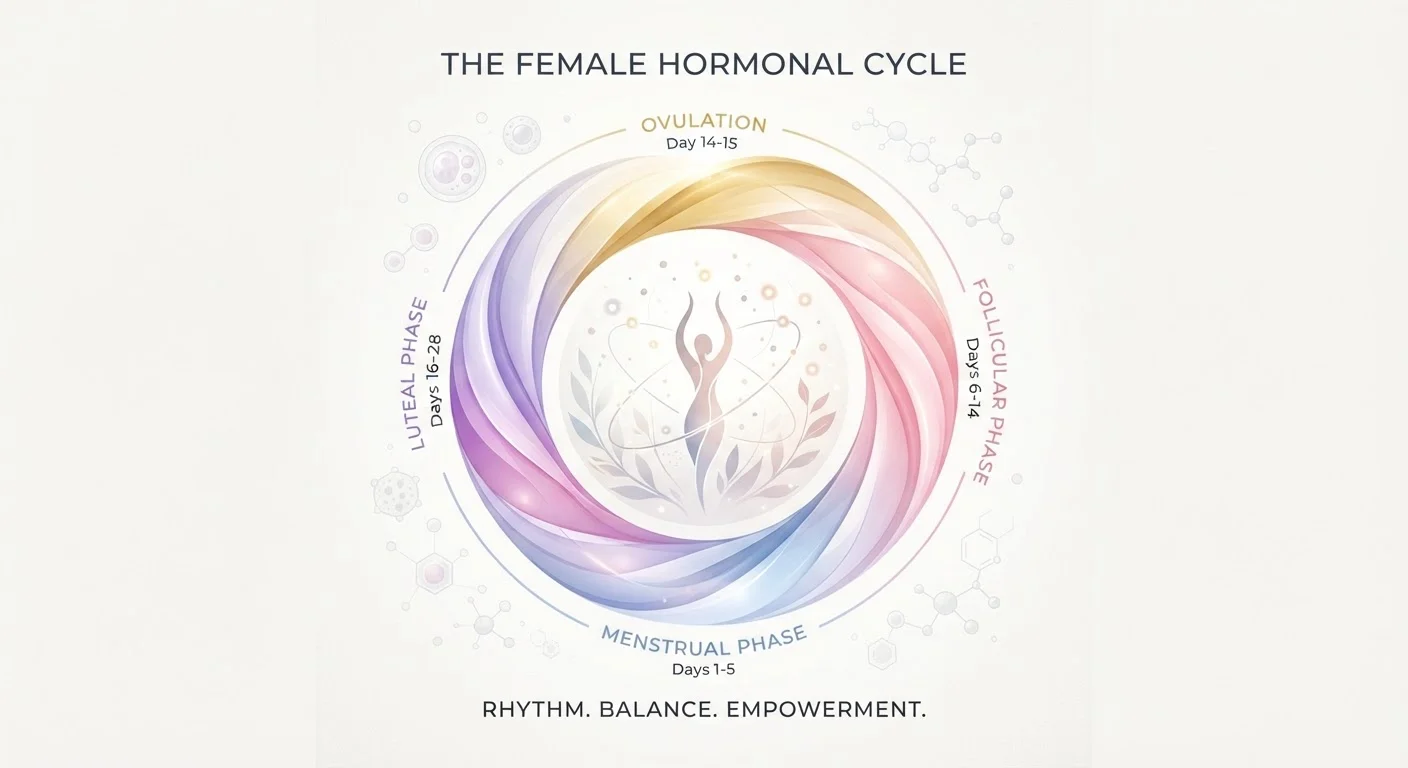
Photo: FeaturingHealth.net | Healthy Living Simplified editorial
Key Takeaways
- Oestrogen, progesterone, and testosterone each serve distinct but overlapping roles in women's health.
- Hormone levels fluctuate naturally across the menstrual cycle, affecting mood, energy, and physical symptoms.
- Testosterone is present in women and plays a meaningful role in libido, muscle strength, and cognition.
- Imbalances in any of these hormones can produce wide-ranging symptoms beyond the reproductive system.
- Understanding your hormonal cycle supports more informed conversations with your healthcare provider.
Oestrogen: Far More Than a Reproductive Hormone
Oestrogen is often reduced to its role in reproduction, but it functions as a systemic regulator affecting nearly every tissue in the body. Produced primarily by the ovaries — with smaller contributions from the adrenal glands and fat tissue — oestrogen exists in three main forms: oestradiol (dominant during reproductive years), oestriol (elevated during pregnancy), and oestrone (the form that persists after menopause).
During the first half of the menstrual cycle (the follicular phase), rising oestrogen stimulates the thickening of the uterine lining and triggers the release of luteinising hormone (LH), which triggers ovulation. But oestrogen's reach is broader than that. It supports bone density by inhibiting bone breakdown, protects cardiovascular health by maintaining healthy cholesterol profiles, and interacts with serotonin receptors in the brain — which is why oestrogen fluctuations are closely tied to mood and anxiety. It also plays a role in skin elasticity, vaginal lubrication, and urinary tract health.
To understand how oestrogen's changes play out across the full cycle, our article The Menstrual Cycle Explained provides a phase-by-phase breakdown.
~28 days
Average length of a menstrual cycle
According to research published in NPJ Digital Medicine (2019), the average cycle length is approximately 29 days, though healthy cycles range from 21 to 35 days.
10–15×
Lower testosterone levels in women vs. men
Clinical endocrinology reference ranges confirm that women's testosterone levels are significantly lower than men's, yet the hormone remains physiologically important in female health.
~90%
Women who report at least one PMS symptom
The American College of Obstetricians and Gynecologists estimates that up to 85% of menstruating women experience at least one premenstrual symptom linked to hormonal fluctuation.
Progesterone: The Balancing Hormone
Progesterone rises after ovulation, produced by the corpus luteum — the temporary structure that forms in the ovary once an egg is released. Its primary reproductive role is to prepare and maintain the uterine lining for potential implantation. If pregnancy does not occur, progesterone drops sharply, triggering menstruation.
Beyond reproduction, progesterone has a calming, stabilising effect on the nervous system. It is a precursor to allopregnanolone, a neurosteroid that acts on GABA receptors — the same receptors targeted by anti-anxiety medications. This is why the luteal phase (when progesterone is high) can feel calmer for some women, while the drop just before menstruation can produce anxiety or emotional sensitivity in others.
Progesterone also counteracts some of oestrogen's proliferative effects on the uterine lining, which is why both hormones must remain in appropriate balance. Relative progesterone deficiency — sometimes called oestrogen dominance — is associated with symptoms including heavy periods, bloating, and mood instability, though this term is not a formal clinical diagnosis and should be evaluated by a qualified clinician.
Track Symptoms Alongside Your Cycle
Testosterone in Women: An Underappreciated Hormone
Testosterone is often framed as a male hormone, but women produce it too — in the ovaries and adrenal glands — and it plays meaningful roles in female physiology. In women, testosterone contributes to libido, muscle mass and strength, bone density, energy levels, and aspects of cognition including focus and motivation.
Testosterone levels in women are roughly 10–15 times lower than in men, but even small changes within that range can produce noticeable effects. Low testosterone in women is associated with reduced sex drive, fatigue, difficulty building muscle, and low mood. Elevated testosterone — as seen in conditions like polycystic ovary syndrome (PCOS) — can cause irregular cycles, acne, and unwanted hair growth.
For a comparative look at how testosterone functions differently in men's physiology, see Testosterone and Men's Health.
When Hormonal Balance Is Disrupted
The interplay between oestrogen, progesterone, and testosterone is dynamic. These hormones don't operate in isolation — they influence each other and respond to signals from the brain, adrenal glands, thyroid, and broader metabolic environment. Chronic stress, for instance, elevates cortisol, which can suppress ovarian hormone production and disrupt cycle regularity.
Symptoms of hormonal disruption vary widely: irregular periods, mood changes, fatigue, skin changes, altered libido, sleep disturbances, and weight fluctuations can all point to shifting hormonal patterns. Because these symptoms overlap with many other conditions, accurate assessment requires clinical evaluation — including blood tests that measure hormone levels at specific points in the cycle.
“Hormones don't just affect reproduction — they are fundamental to how women think, feel, and function every single day. Dismissing symptoms as 'just hormonal' misses an opportunity for meaningful clinical assessment.”
— Dr. Jerilynn Prior, Professor of Endocrinology, University of British Columbia, and founder of the Centre for Menstrual Cycle and Ovulation Research
Hormonal shifts are also highly age-dependent. As women move through their 30s and 40s, the hormonal landscape shifts considerably — a topic covered in depth in our guide on hormonal health from your 20s to your 60s.
This article is for general informational purposes only and does not constitute medical advice. If you have concerns about your hormone levels or menstrual health, please consult a qualified healthcare professional.
Frequently Asked Questions
The content on this site is for informational purposes only and is not a substitute for professional advice. Always consult a qualified professional for guidance specific to your situation.