
The Menstrual Cycle Explained: What Happens in Each Phase

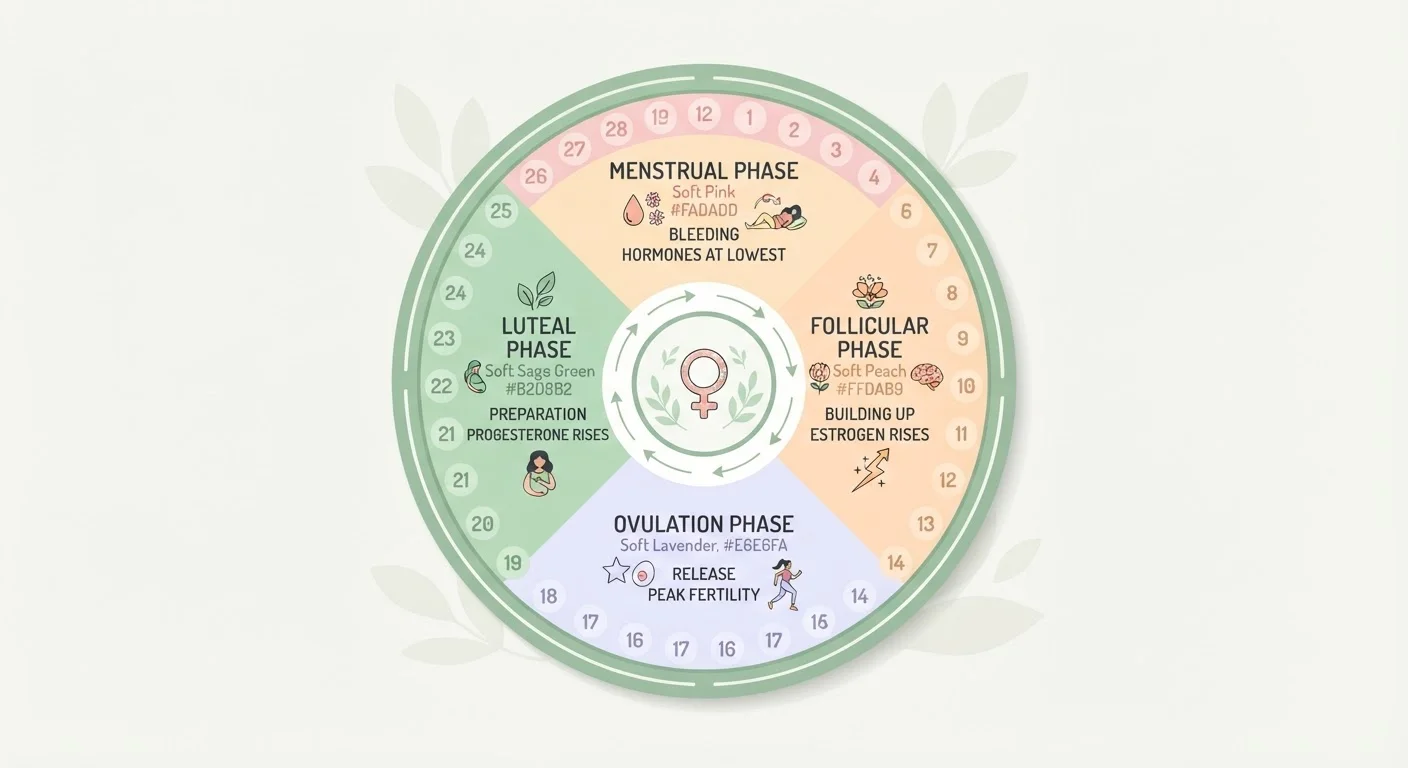
Photo: FeaturingHealth.net | Healthy Living Simplified editorial
Key Takeaways
- The menstrual cycle has four distinct phases, each driven by different hormonal signals.
- Cycle length varies naturally between individuals and can fluctuate from month to month.
- Hormonal shifts across the cycle can influence mood, energy, sleep, and physical performance.
- Tracking your cycle can help identify patterns and support conversations with a healthcare provider.
- Significant changes in cycle regularity or symptoms warrant professional medical evaluation.
Phase 1: The Menstrual Phase
The cycle begins on day 1 of your period — the first day of full menstrual flow. During this phase, the uterine lining (endometrium) that built up in the previous cycle is shed through the vagina. This happens because a pregnancy did not occur, causing oestrogen and progesterone levels to drop sharply, triggering the shedding process.
Menstruation typically lasts between 3 and 7 days. Common experiences during this phase include cramping, bloating, lower back discomfort, and fatigue. These symptoms are caused primarily by prostaglandins — hormone-like compounds that signal the uterine muscles to contract and expel the lining.
Tracking Day 1 Is Key
Importantly, this phase overlaps with the early part of the follicular phase. Your body doesn't operate in strictly separated segments — the phases are part of one continuous hormonal cycle.
Phase 2: The Follicular Phase
The follicular phase begins on day 1 alongside menstruation and continues until ovulation. The pituitary gland releases follicle-stimulating hormone (FSH), which prompts the ovaries to develop several follicles — small fluid-filled sacs each containing an immature egg. Typically, one follicle becomes dominant and continues maturing while the others are reabsorbed.
As the dominant follicle grows, it produces increasing amounts of oestrogen. Rising oestrogen thickens the uterine lining in preparation for a potential embryo and also triggers a positive feedback loop that eventually causes a surge in luteinizing hormone (LH) — the signal that kicks off ovulation.
Many people report feeling more energetic, focused, and socially motivated during the late follicular phase, which is consistent with oestrogen's influence on neurotransmitter activity. This is explored in detail in our article on mid-cycle energy and hormones.
21–35 days
Normal menstrual cycle length range
According to the American College of Obstetricians and Gynecologists, cycle length varies naturally within this range in most reproductive-age individuals.
~12–24 hrs
Window an egg is viable after ovulation
Clinical reproductive medicine guidelines consistently cite this as the typical viability window for a released oocyte.
Up to 5 days
Sperm survival in the reproductive tract
Research in reproductive biology indicates sperm can remain viable for several days, extending the fertile window beyond ovulation day itself.
Phase 3: The Ovulatory Phase
Ovulation occurs roughly at the midpoint of the cycle — around day 14 in a 28-day cycle, though timing varies significantly between individuals. The LH surge triggers the dominant follicle to rupture and release a mature egg (oocyte), which travels down the fallopian tube toward the uterus.
The egg is viable for fertilization for approximately 12 to 24 hours after release. However, sperm can survive in the reproductive tract for up to five days, which means the fertile window extends for several days before and including ovulation day.
Physical signs associated with ovulation can include a brief, sharp pelvic sensation (sometimes called mittelschmerz, meaning "middle pain" in German), a slight increase in basal body temperature, and changes in cervical mucus — which becomes clearer and more elastic around this time. For a deeper look at how these hormones interact, see our article on what oestrogen, progesterone, and testosterone actually do.
Ovulation Timing Varies Widely
Phase 4: The Luteal Phase
After ovulation, the ruptured follicle transforms into a temporary glandular structure called the corpus luteum, which secretes progesterone and some oestrogen. Progesterone is the dominant hormone of this phase: it stabilizes and further prepares the uterine lining to receive a fertilized egg and supports early pregnancy if fertilization occurs.
If no fertilization takes place, the corpus luteum breaks down after approximately 10 to 16 days, causing progesterone and oestrogen levels to fall. This hormonal withdrawal is what triggers the next period, restarting the cycle.
The premenstrual window — typically the final 5 to 10 days of the luteal phase — is when many people experience premenstrual symptoms (PMS): mood shifts, bloating, breast tenderness, sleep changes, and appetite fluctuations. These are linked to progesterone's effects on serotonin and GABA signaling in the brain. Monitoring these patterns over time through cycle tracking can provide valuable insight into your hormonal health.
Physical training may also feel different across phases. If you're interested in how to adapt exercise to your cycle, our article on training around your menstrual cycle covers the evidence in practical detail.
This article is for general informational and educational purposes only and is not a substitute for professional medical advice, diagnosis, or treatment. Always consult a qualified healthcare provider with any questions about your health or menstrual cycle.
Frequently Asked Questions
The content on this site is for informational purposes only and is not a substitute for professional advice. Always consult a qualified professional for guidance specific to your situation.