
Training Around Your Menstrual Cycle: What the Science Actually Says

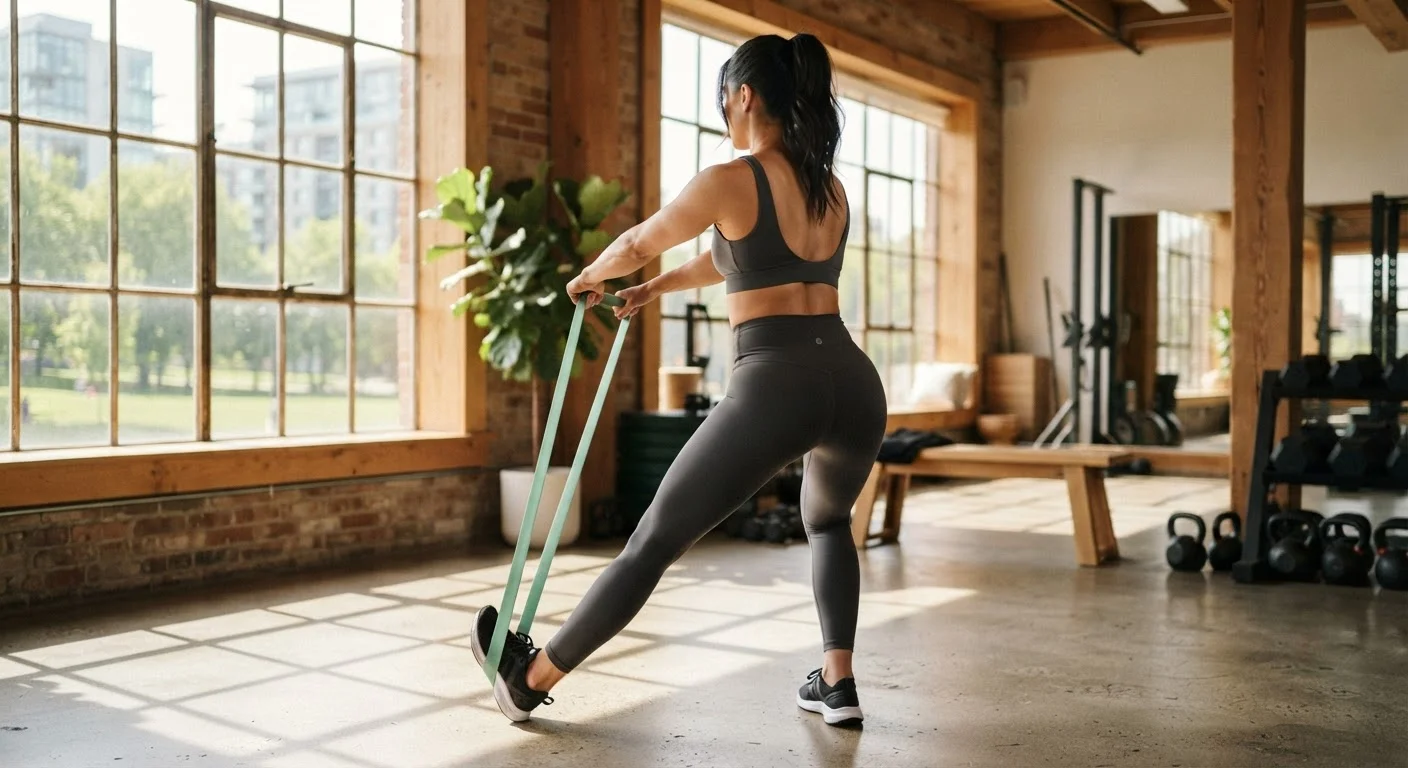
Photo: FeaturingHealth.net | Healthy Living Simplified editorial
Key Takeaways
- Estrogen and progesterone fluctuations across your cycle measurably affect energy, strength, and recovery.
- The follicular phase is generally associated with higher energy and improved exercise tolerance.
- The luteal phase may increase perceived effort and raise core body temperature during workouts.
- Cycle-syncing training is a promising framework, but individual variation is significant.
- Tracking your cycle alongside training data can reveal personal patterns more reliably than population averages.
- Always consult a healthcare professional before making major changes to your exercise routine.
Why Hormones and Exercise Are Connected
The menstrual cycle is governed by a carefully orchestrated rise and fall of hormones — primarily estrogen and progesterone — that don't just regulate reproductive function. These hormones interact with muscle tissue, energy metabolism, cardiovascular response, and even pain perception. Understanding those interactions is the foundation of cycle-informed training.
Research published in journals including Sports Medicine and the British Journal of Sports Medicine has established that hormonal fluctuations influence substrate use (how the body burns carbohydrates versus fat for fuel), perceived exertion, core temperature regulation, and ligament laxity. These are real physiological differences — not subjective impressions.
For a deeper look at how hormonal shifts drive energy changes throughout the month, see our companion piece on why energy crashes mid-cycle.
~50%
Female athletes reporting cycle-linked performance changes
A survey published in the British Journal of Sports Medicine found approximately half of elite female athletes perceived their menstrual cycle affected their training and performance.
2–3°F
Core temperature rise in the luteal phase
Progesterone during the luteal phase raises resting core body temperature by approximately 0.3–0.5°C (roughly 0.5–1°F), affecting heat tolerance and perceived exertion during exercise.
~11%
Greater strength output in follicular vs. luteal phase
Some controlled studies have measured modestly higher peak torque and muscle strength during the follicular phase compared with the late luteal phase in naturally cycling women.
Phase 1: Menstrual Phase (Days 1–5)
During menstruation, both estrogen and progesterone are at their lowest. Many women experience fatigue, cramping, and reduced motivation — and for good reason: prostaglandins (compounds that trigger uterine contractions) can also cause systemic inflammation and discomfort.
Exercise during this phase is not contraindicated; in fact, light to moderate movement can help reduce cramping and improve mood through endorphin release. However, this is generally not the optimal window for pushing personal records.
Movement During Your Period Is Usually Beneficial
Recommended activity: Walking, yoga, gentle cycling, or low-intensity resistance work. Honor your body's signals without abandoning movement entirely.
Phase 2: Follicular Phase (Days 6–13)
As estrogen rises in the follicular phase, research suggests this may be the most performance-favorable window of the cycle. Estrogen has anabolic properties — it supports muscle protein synthesis and may enhance neuromuscular coordination. Studies have found that women demonstrate greater strength gains when resistance training is concentrated in the follicular phase.
Core temperature is typically lower during this phase, which can support endurance performance. Perceived exertion also tends to feel lower relative to objective workload.
Log your workouts alongside your cycle day — not just sets and reps, but how the session felt. After two to three months, patterns become much clearer than any general guideline can predict.
If you notice a consistent dip in motivation or performance in the late luteal phase, schedule deload weeks or active recovery blocks to coincide with that window rather than forcing high-intensity sessions.
Recommended activity: Higher-intensity training, progressive overload in the gym, speed work, and skill-based sessions. This is a strong window for challenging your fitness benchmarks.
Phase 3: Ovulatory Phase (Around Day 14)
The ovulatory phase — typically a window of 24–48 hours around mid-cycle — sees an estrogen surge followed by a luteinizing hormone (LH) spike. Many women report feeling their most energetic and confident during this window.
One important clinical note: elevated estrogen around ovulation has been associated with increased anterior cruciate ligament (ACL) laxity. Some sports medicine research suggests female athletes may face a slightly elevated injury risk during this window, particularly in cutting and pivoting sports. This does not mean avoiding exercise — it means applying sound warm-up and neuromuscular activation protocols consistently.
ACL Injury Risk Around Ovulation: Context Matters
Recommended activity: High-intensity interval training (HIIT), strength sessions, or competitive sport. Continue prioritizing proper warm-up and movement mechanics.
Phase 4: Luteal Phase (Days 15–28)
After ovulation, progesterone rises and estrogen drops slightly, then both decline toward menstruation. This phase is associated with higher resting core temperature (due to progesterone's thermogenic effect), increased carbohydrate cravings, potential fluid retention, and — for many women — the symptoms of premenstrual syndrome (PMS).
Research shows that perceived exertion is generally higher in the late luteal phase relative to equivalent workloads earlier in the cycle. Cardiovascular performance may also be modestly reduced. This isn't a reason to stop training; it is a reason to adjust expectations and recovery protocols.
Watch for Signs of Overtraining in the Luteal Phase
Nutritional support becomes particularly relevant here. Adequate carbohydrate intake before sessions can offset some of the metabolic shifts. See our overview of pre- and post-workout nutrition for women for evidence-based fueling guidance.
Recommended activity: Moderate-intensity steady-state cardio, resistance training with adjusted volume, Pilates, and prioritizing sleep and recovery.
What the Research Still Can't Tell Us
Cycle-syncing training has gained significant popular traction — but it is worth being transparent about what the evidence does and does not support. Most studies in this space are limited by small sample sizes, lack of hormone verification, and significant individual variation in cycle length and symptom experience.
A 2023 systematic review concluded that while hormonal fluctuations demonstrably affect several physiological markers relevant to exercise, the magnitude of those effects varies considerably between individuals. Population-level trends do not reliably predict individual experience.
“We have good evidence that female sex hormones influence muscle function, metabolism, and injury risk — but the translation of that evidence into individualized training prescription is still in its early stages. The key message is that biology matters, and ignoring it is not the same as being unbiased.”
— Dr. Georgie Bruinvels, Researcher in female athlete health and menstrual cycle science
Additionally, hormonal contraceptive use substantially alters the hormonal profile described above. Women using combined oral contraceptives, hormonal IUDs, implants, or injections will have a different hormonal environment and may not experience the same phase-based variation. Cycle-informed training frameworks were largely developed on naturally cycling women and may not translate directly.
For those navigating the hormonal transitions of perimenopause, fitness strategies during perimenopause addresses how shifting hormones affect exercise tolerance differently in that life stage.
Practical Steps for Cycle-Informed Training
The most actionable approach is to gather your own data before restructuring your entire program. Use a cycle tracking app or journal — not just to log dates, but to note perceived energy, workout performance, recovery quality, and mood alongside cycle day.
Tracking your cycle as a health monitoring tool explores how this data can reveal patterns that are personally meaningful rather than relying solely on population averages.
- Start with observation: Track for at least two to three full cycles before making training adjustments.
- Adjust volume and intensity, not your entire program: Cycle-syncing works best as fine-tuning, not a complete overhaul.
- Communicate with your coach or trainer: A knowledgeable fitness professional can help integrate cycle awareness into periodized programming.
- Respect individual variation: If your experience does not match the phase-based model, that is valid. Use what reflects your physiology.
Cycle-informed training is an evidence-grounded framework — but it is a starting point, not a prescription. The goal is to use biological patterns as information, not as rigid rules.
This article is for informational and educational purposes only and does not constitute medical advice. Consult a qualified healthcare professional before making significant changes to your exercise routine, particularly if you have an underlying health condition, are pregnant, or are postpartum.
The content on this site is for informational purposes only and is not a substitute for professional advice. Always consult a qualified professional for guidance specific to your situation.