
Women's Fitness

Fitness Approaches That Support Women During Perimenopause

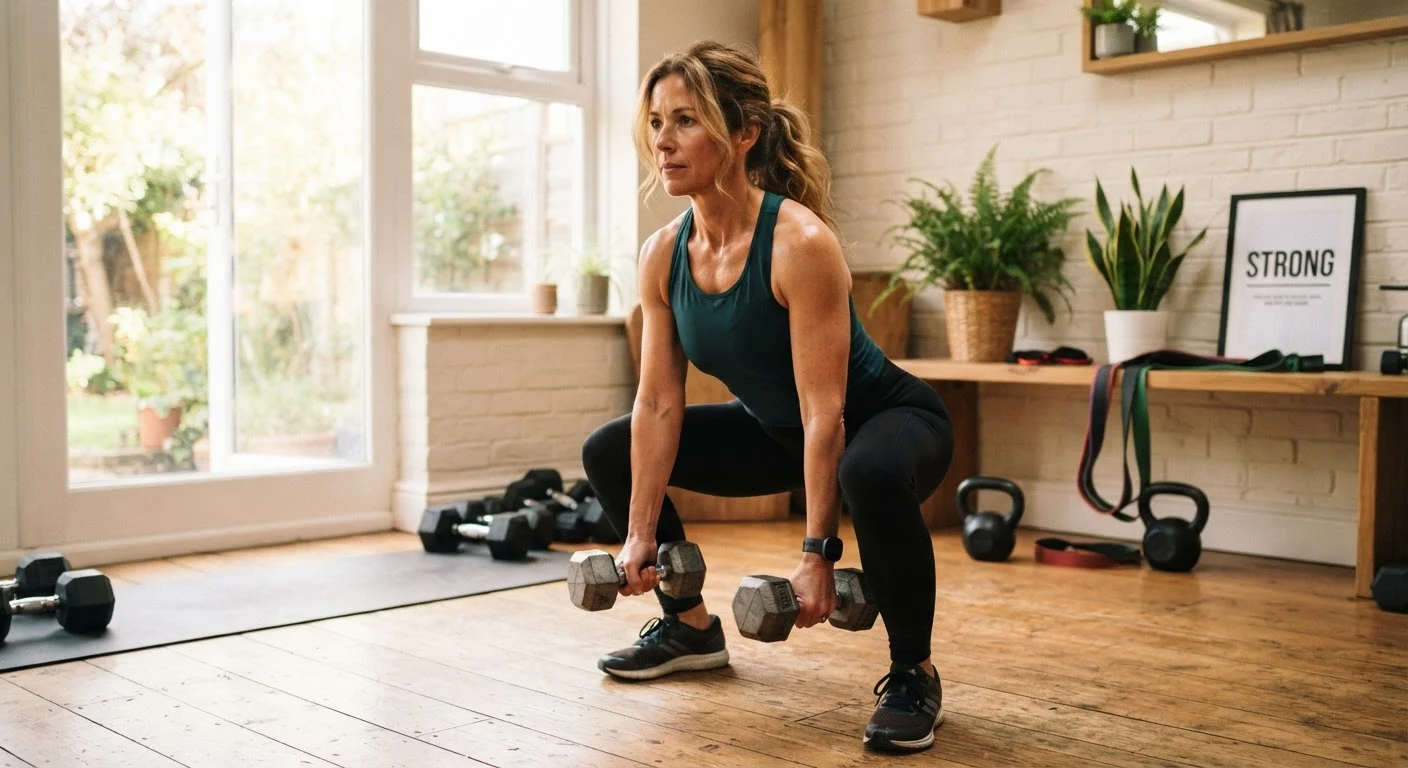
Fitness Approaches That Support Women During Perimenopause

Photo: FeaturingHealth.net | Healthy Living Simplified editorial

How changing hormone levels during perimenopause affect exercise tolerance, body composition, and recovery — and which training strategies align with those shifts.

Key Takeaways

  • Declining estrogen during perimenopause accelerates muscle loss and reduces bone density, making resistance training especially important.
  • Recovery time often increases during perimenopause — programming rest strategically is not optional, it's essential.
  • High-intensity interval training can be effective but should be balanced with adequate recovery to avoid compounding hormonal stress.
  • Protein intake and sleep quality directly influence how well perimenopausal women respond to exercise.
  • Pelvic floor and core function deserve dedicated attention during this life stage, not just as an afterthought.

What Perimenopause Does to Exercise Physiology

Perimenopause — the transitional phase preceding menopause, typically spanning several years in a woman's 40s — involves fluctuating and gradually declining levels of estrogen and progesterone. These hormonal shifts don't just affect mood and sleep; they directly alter how the body responds to physical training.

Estrogen plays a meaningful role in maintaining muscle protein synthesis, supporting collagen integrity in tendons and ligaments, and moderating the inflammatory response to exercise. As levels become erratic and trend downward, women may notice that recovery takes longer, body composition shifts toward more fat mass and less lean tissue, and joint discomfort becomes more frequent. Understanding these mechanisms is the foundation for adapting training intelligently — not exercising less, but exercising differently. For context on how hormones shape exercise capacity across the cycle more broadly, see our guide to training around the menstrual cycle.

Perimenopause Timelines Vary Significantly

Perimenopause typically begins in the mid-to-late 40s but can start earlier or later. The duration ranges from a few months to more than a decade. Hormonal fluctuations during this phase are irregular rather than linear, which means symptoms — and exercise responses — can vary considerably from week to week. This variability is normal and should inform how rigidly you adhere to any fixed training plan.

Best Practices for Perimenopausal Fitness

The following evidence-informed practices reflect what exercise science and clinical women's health guidance support for this life stage. These are general principles, not personal prescriptions — always consult a qualified healthcare provider before making significant changes to your exercise routine, particularly if you have existing health conditions.

1

Prioritize resistance training at least two to three times per week

Declining estrogen accelerates sarcopenia (age-related muscle loss) and reduces bone mineral density. Resistance training is one of the most evidence-supported interventions for counteracting both. Building and maintaining lean muscle mass also supports metabolic health, which often shifts during this transition.
Example: A twice-weekly full-body strength program using compound movements — squats, deadlifts, rows, and presses — addresses multiple muscle groups efficiently and places the mechanical load on bone tissue that stimulates density maintenance. See also our reference guide on bone density and exercise.
2

Use high-intensity interval training selectively and with adequate recovery

HIIT can be effective for cardiovascular fitness and metabolic health, but intense training without sufficient recovery elevates cortisol — a stress hormone that, when chronically elevated, can worsen hormonal imbalance and disrupt sleep. The key is dose: beneficial in moderation, counterproductive when overdone.
Example: Two HIIT sessions per week, each no longer than 25–30 minutes, with at least 48 hours between them and lower-intensity movement on alternate days, strikes a reasonable balance for most perimenopausal women. Compare approaches further in our overview of HIIT vs. steady-state cardio for women.
3

Build deliberate recovery into your weekly training schedule

Soft tissue repair, hormonal regulation, and neuromuscular adaptation all occur during rest — not during training. Perimenopausal women often find that what worked in their 30s now leads to persistent fatigue or injury if recovery is not deliberately programmed. This is physiology, not a fitness failing.
Example: Planning one full rest day and one active recovery day (such as a 30-minute walk or gentle yoga) between harder sessions prevents the cumulative load that blunts progress and increases injury risk.
4

Include targeted pelvic floor and core work as a training non-negotiable

Declining estrogen affects connective tissue throughout the body, including the pelvic floor. Symptoms such as stress urinary incontinence — leaking during impact exercise — become more common during perimenopause and are frequently undertreated simply because women don't realize training can help. Core and pelvic floor integrity also supports performance across all other exercise types.
Example: Incorporating diaphragmatic breathing, pelvic floor activation exercises, and controlled loaded movements like dead bugs and hip bridges builds functional stability. Our guide to pelvic floor health and exercise covers this in practical depth.
5

Monitor subjective training load and adjust based on sleep and stress

During perimenopause, sleep disturbance is common and directly compromises recovery capacity. Pushing through high-intensity training on poor sleep repeatedly elevates inflammation and cortisol, creating a cycle that is counterproductive to both fitness and hormonal health. Training responsively — not rigidly — is a skill, not a compromise.
Example: Using a simple daily readiness check (rating sleep quality, energy, and mood on a 1–5 scale before training) helps identify patterns and informs whether to proceed with a planned hard session or shift to moderate-intensity movement that day.

Getting Started Without Overwhelm

For women new to structured exercise or returning after a break, the adjustment required during perimenopause can feel daunting. The practical entry points below are designed to be genuinely achievable. Our practical guide to starting resistance training after 40 offers a grounded introduction to building strength during this life phase.

high Add one bodyweight strength session this week — even 20 minutes of squats, lunges, and push-ups builds the foundation for muscle and bone health.
high Track your sleep for seven days using a journal or wearable to identify patterns that may be undermining your recovery and training response.
medium Replace one moderate-intensity cardio session with a 20-minute walk on a day when energy is lower — active recovery supports hormonal balance without adding stress load.
medium Add a 5-minute pelvic floor activation sequence to your existing warm-up — this requires no equipment and builds a habit around an often-neglected area.

Nutrition and sleep are not separate from fitness — they are part of the same system. Adequate protein supports muscle retention, and consistent sleep is essential for hormonal regulation and tissue repair. See our guide to pre- and post-workout nutrition for women for evidence-based fueling strategies that complement these training approaches.

This article is for general informational and educational purposes only and does not constitute medical advice. Consult a qualified healthcare professional for guidance specific to your health history and needs.

Women'S Health Editorial Team

FeaturingHealth.net | Healthy Living Simplified

Women's Health Editorial Team is the collective byline for our editorial team and contributor network. Articles published under this byline or an editorial pen name are researched, written, and reviewed according to our editorial standards for clarity, consistency, and independence before publication.

Hormonal HealthReproductive HealthWomen's Fitness
View author profile

The content on this site is for informational purposes only and is not a substitute for professional advice. Always consult a qualified professional for guidance specific to your situation.