
Blood Pressure, Cholesterol, and Blood Sugar: The Three Numbers Worth Knowing

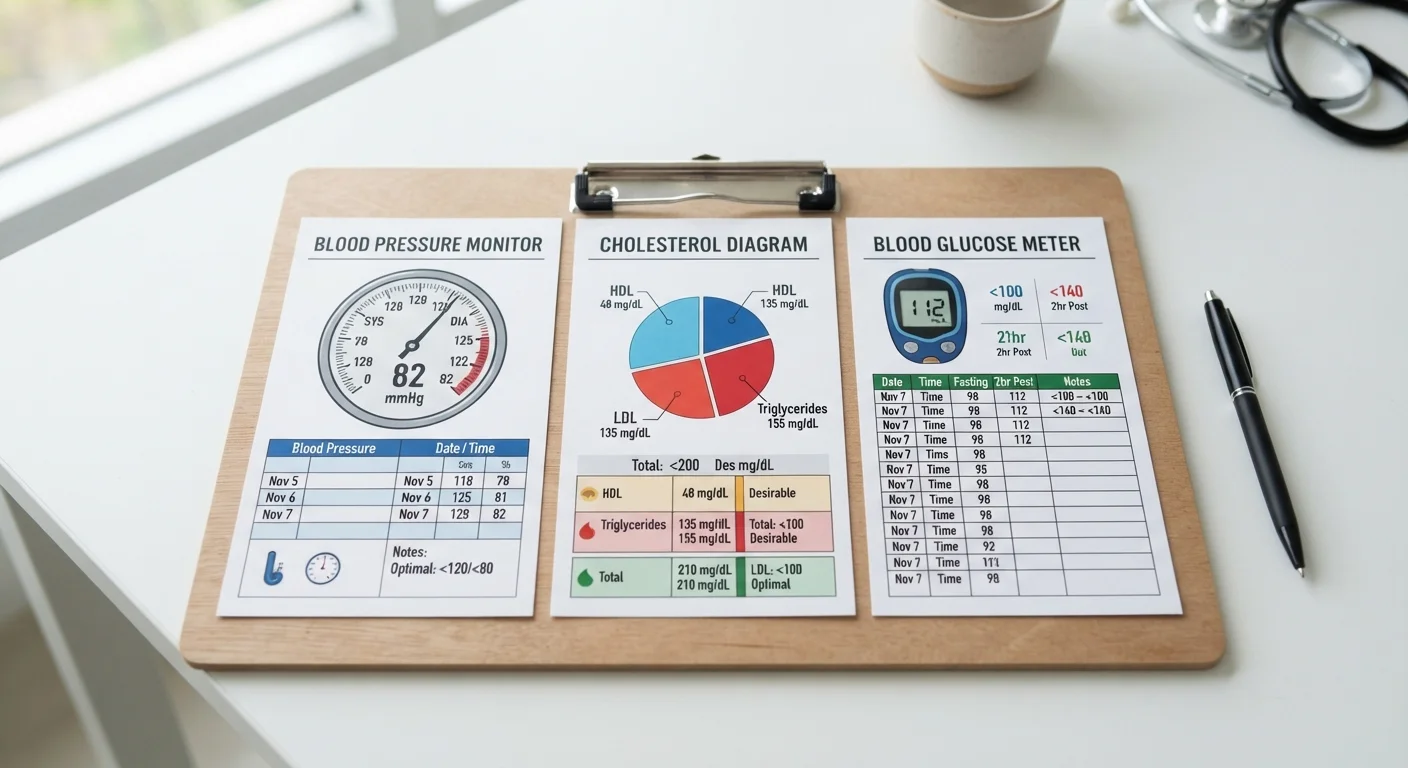
Photo: FeaturingHealth.net | Healthy Living Simplified editorial
Key Takeaways
- Blood pressure, cholesterol, and blood sugar can all be abnormal long before any symptoms appear.
- Guidelines recommend screening intervals based on age, baseline results, and individual risk factors.
- Each number has established reference ranges, but clinical context shapes how results are interpreted.
- Lifestyle factors — diet, physical activity, sleep, and smoking — influence all three measurements.
- A healthcare provider is the right person to interpret your results and recommend next steps.
Why These Three Numbers Matter
Most serious cardiovascular and metabolic conditions — heart attack, stroke, type 2 diabetes, chronic kidney disease — share a common upstream story. Long before a clinical event occurs, measurable changes in blood pressure, cholesterol, and blood sugar quietly signal that the body's systems are under stress. Screening catches that signal early.
Together, these three measurements form the backbone of preventive cardiovascular assessment in primary care. None requires complex technology. All three can be checked at a routine visit. And all three are modifiable — meaning that identifying an abnormality creates a genuine opportunity to act.
Understanding what each number actually measures, and what the reference ranges reflect, puts you in a much stronger position to have informed conversations with your clinician about your own results.
~47%
U.S. adults with hypertension
According to the CDC, nearly half of American adults have high blood pressure, and many are unaware of it.
~12%
U.S. adults with diabetes
The CDC estimates about 38 million Americans have diabetes, with type 2 accounting for the vast majority of cases.
~86 million
Adults with prediabetes in the U.S.
The CDC reports that more than 1 in 3 U.S. adults have prediabetes, and most do not know it.
~94 million
U.S. adults with high total cholesterol
CDC data indicate that roughly 38% of American adults have total cholesterol levels above 200 mg/dL.
Blood Pressure: The Force Behind the Flow
Blood pressure measures the force your blood exerts against artery walls as the heart pumps. It is expressed as two numbers: systolic (pressure when the heart contracts) over diastolic (pressure when the heart rests between beats), measured in millimeters of mercury (mmHg).
According to American Heart Association and ACC guidelines, a reading below 120/80 mmHg is considered normal. Sustained readings at or above 130/80 mmHg meet the definition of hypertension. Because arteries and the heart compensate silently for years, many people with hypertension have no symptoms — which is why the USPSTF recommends screening for all adults 18 and older.
Elevated blood pressure over time damages artery walls, accelerates atherosclerosis (plaque buildup), and increases the risk of heart attack, stroke, and kidney disease. Frequency of re-screening is guided by your baseline reading and risk factors — discuss the right interval with your clinician.
Cholesterol: Not Just One Number
A standard lipid panel measures several components, each telling a different part of the story:
- Total cholesterol: the overall sum of all cholesterol in the blood.
- LDL (low-density lipoprotein): often called "bad" cholesterol because high levels are associated with arterial plaque accumulation.
- HDL (high-density lipoprotein): often called "good" cholesterol because it helps transport cholesterol away from arteries for processing.
- Triglycerides: fats in the blood; elevated levels are an independent cardiovascular risk factor.
Optimal LDL targets are not a single universal threshold — they depend on an individual's overall cardiovascular risk profile, including whether heart disease or diabetes is already present. This is why results must be interpreted in clinical context, not matched against a chart in isolation.
Cholesterol levels are influenced by diet, physical activity, genetics, and body weight. Understanding how to read a nutrition label can help you identify saturated and trans fats that tend to raise LDL cholesterol.
Blood Sugar: A Window Into Metabolic Health
Blood glucose tests reveal how effectively your body processes sugar. Two tests are most commonly used:
- Fasting plasma glucose (FPG)
- A single measurement taken after an overnight fast. A result below 100 mg/dL is normal; 100–125 mg/dL indicates prediabetes; 126 mg/dL or above on two separate occasions meets the diagnostic threshold for diabetes.
- HbA1c (glycated hemoglobin)
- Reflects average blood sugar over approximately two to three months. An HbA1c below 5.7% is normal; 5.7–6.4% indicates prediabetes; 6.5% or above indicates diabetes.
The USPSTF recommends blood sugar screening for adults aged 35–70 who are overweight or obese. Chronically elevated blood sugar damages blood vessels and nerves over time, contributing to the same cardiovascular risks as high blood pressure and cholesterol — which is why all three are often assessed together.
Blood sugar is closely linked to other hormonal systems. For readers interested in the broader metabolic picture, the relationship between insulin resistance and hormonal health is worth exploring.
“Preventive cardiology is fundamentally about identifying risk before it becomes disease. The beauty of blood pressure, lipid, and glucose screening is that these are among the most modifiable risk factors we know of.”
— Preventive Cardiology Consensus Position, Reflected across guidelines from the American College of Cardiology and American Heart Association
How the Three Numbers Interact — and What to Do Next
Blood pressure, cholesterol, and blood sugar do not operate in isolation. Insulin resistance — a state where cells respond poorly to insulin — tends to raise blood sugar and triglycerides while lowering HDL cholesterol, simultaneously placing upward pressure on blood pressure. This clustering of risk factors is sometimes called metabolic syndrome, and it substantially increases cardiovascular risk beyond what any single abnormal result suggests.
This interconnection means your clinician will typically look at these numbers together, alongside factors such as age, smoking status, family history, and body weight, when estimating overall cardiovascular risk.
If any of your results fall outside normal ranges, the appropriate next step is a conversation with a qualified healthcare provider — not self-treatment. Lifestyle changes, including dietary adjustments, physical activity, sleep quality, and smoking cessation, influence all three measurements. Evidence-linked daily habits show consistent associations with reduced risk across all three domains.
This article is for general informational and educational purposes only and does not constitute medical advice. Always consult a qualified healthcare professional for guidance about your individual health, test results, or any medical decisions.
Frequently Asked Questions
The content on this site is for informational purposes only and is not a substitute for professional advice. Always consult a qualified professional for guidance specific to your situation.