
Insulin, Testosterone, and Body Fat: Untangling a Complex Hormonal Triangle

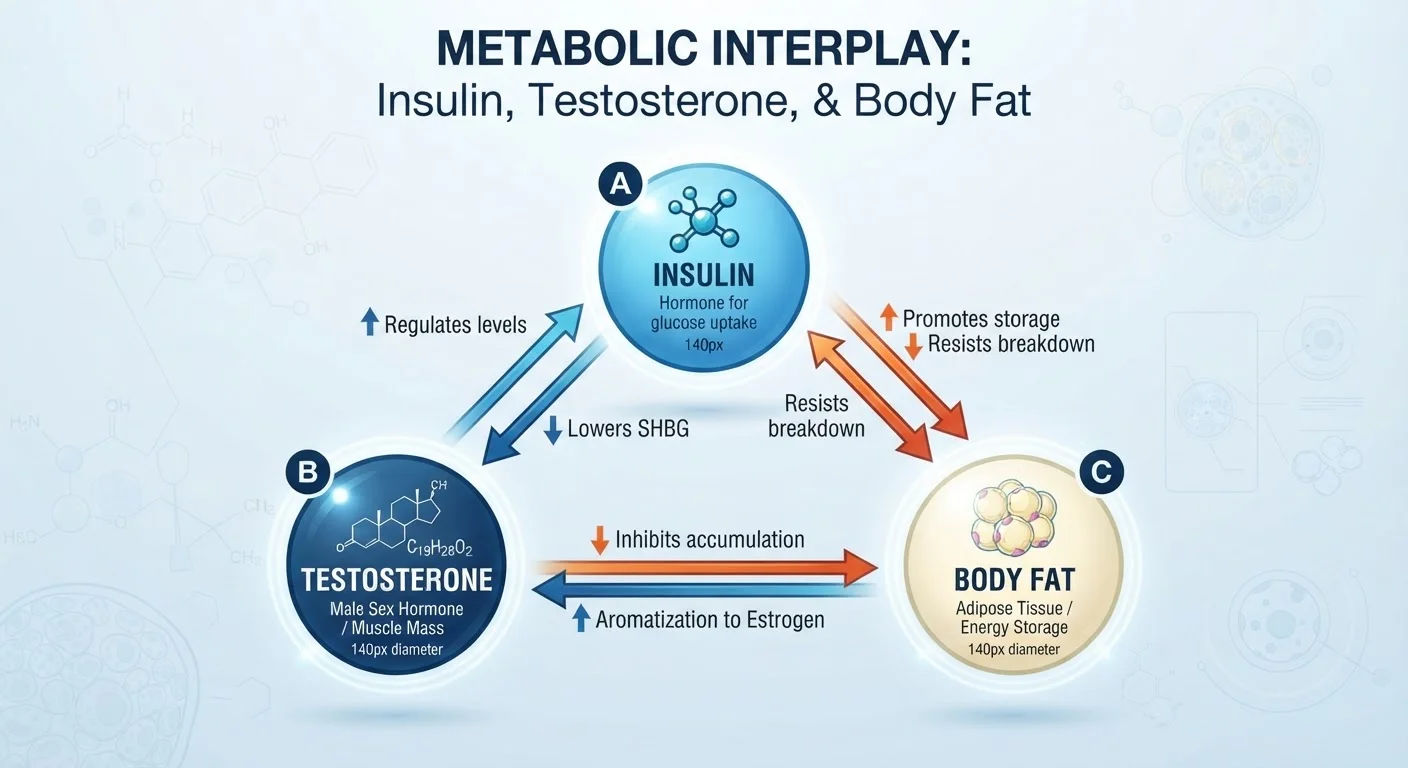
Photo: FeaturingHealth.net | Healthy Living Simplified editorial
Key Takeaways
- Excess visceral fat promotes insulin resistance and reduces bioavailable testosterone through multiple hormonal pathways.
- Low testosterone can make it harder to maintain lean muscle mass, which in turn affects insulin sensitivity.
- Insulin resistance suppresses sex hormone-binding globulin, further reducing free testosterone in the bloodstream.
- Lifestyle changes — particularly exercise and diet quality — can positively influence all three factors simultaneously.
- Always consult a qualified healthcare provider before assuming any hormonal imbalance or pursuing treatment.
How the Three Factors Connect
Insulin, testosterone, and body fat are not independent variables. They interact through overlapping physiological pathways, forming what researchers often describe as a self-reinforcing cycle. Understanding how the cycle works — and where it can break down — is the first step toward doing something constructive about it.
Insulin is a hormone produced by the pancreas that regulates blood glucose. When cells become less responsive to insulin's signaling — a condition known as insulin resistance — the pancreas compensates by producing more. Elevated insulin levels are associated with increased fat storage, particularly in the visceral region. Visceral fat, unlike fat stored beneath the skin, is hormonally active and directly influences testosterone metabolism.
For a broader look at how men's key hormones coordinate with one another, see how the male hormonal system works.
~40%
Prevalence of low testosterone in obese men
Research published in clinical endocrinology journals has found that hypogonadism (low testosterone) is approximately twice as common in obese men compared to those of healthy weight.
2–3x
Greater insulin resistance risk with low testosterone
Multiple observational studies have found that men with clinically low testosterone are significantly more likely to have insulin resistance or type 2 diabetes than men with normal testosterone levels.
15–20%
Visceral fat reduction linked to testosterone improvement
Studies examining structured weight-loss interventions in overweight men suggest that meaningful reductions in visceral fat are associated with measurable increases in serum testosterone.
What Visceral Fat Does to Testosterone
Visceral adipose tissue expresses significant quantities of an enzyme called aromatase. Aromatase converts testosterone into estradiol, a form of estrogen. In men with higher levels of visceral fat, this conversion can reduce circulating testosterone while elevating estrogen — a hormonal shift with real downstream consequences for muscle mass, energy, mood, and metabolic function.
Additionally, insulin resistance suppresses the liver's production of sex hormone-binding globulin (SHBG) — a protein that binds to testosterone in the bloodstream. Lower SHBG typically means more testosterone is unbound and available, but in the context of insulin resistance, total testosterone tends to fall simultaneously, often leaving overall bioavailable testosterone reduced rather than improved.
To understand what testosterone actually governs in the male body, including muscle, bone density, and mood, see our article on what testosterone actually does.
What Lower Testosterone Does to Body Composition
Testosterone plays a meaningful role in maintaining lean muscle mass and regulating fat distribution. When levels decline — whether from age, lifestyle factors, or metabolic disruption — the body tends to shift toward greater fat accumulation and reduced muscle tissue. Since skeletal muscle is a primary site for glucose uptake, this compositional shift further impairs insulin sensitivity, continuing the cycle.
This is why treating one element of the triangle in isolation often produces limited results. A man whose low testosterone is addressed pharmacologically but who does not also improve diet quality, activity levels, and sleep may see diminished returns compared to someone who addresses lifestyle factors concurrently.
Address Lifestyle Before Assuming a Hormonal Disorder
Sleep is an often-overlooked factor in this equation. Evidence links poor sleep to reductions in testosterone, elevated cortisol, and worsened insulin sensitivity — sometimes within days of sustained disruption. See how sleep affects testosterone and insulin for a deeper look at this connection.
Evidence-Based Levers Worth Pulling
The same lifestyle interventions that support insulin sensitivity also tend to reduce visceral fat and, in some research contexts, modestly improve testosterone. This convergence is clinically useful: you do not need separate strategies for each problem.
- Resistance training: Builds and preserves skeletal muscle, improving glucose disposal and reducing the muscle-loss risk associated with lower testosterone. The evidence for its metabolic benefits is strong.
- Aerobic exercise: Consistently associated with reductions in visceral fat and improvements in insulin sensitivity. Even moderate-intensity activity performed regularly produces measurable results over time.
- Diet quality: Diets lower in ultra-processed foods and refined carbohydrates are associated with better insulin function. Adequate protein supports muscle retention. No single dietary pattern has been proven superior for all men.
- Sleep: Chronically short or poor-quality sleep measurably affects both testosterone and insulin signaling. Prioritizing sleep quality is a legitimate hormonal health strategy.
For a research-grounded breakdown of how different exercise types interact with male hormones, see exercise and male hormones. You may also find it useful to understand what routine metabolic markers — including blood sugar — reveal by reading about the three numbers worth knowing.
Age Complicates the Picture
This article is for informational purposes only and does not constitute medical advice. If you have concerns about your hormonal health, metabolic function, or body composition, consult a qualified healthcare provider who can assess your individual circumstances.
Frequently Asked Questions
The content on this site is for informational purposes only and is not a substitute for professional advice. Always consult a qualified professional for guidance specific to your situation.