
Reading a Nutrition Label: What Each Section Is Actually Telling You

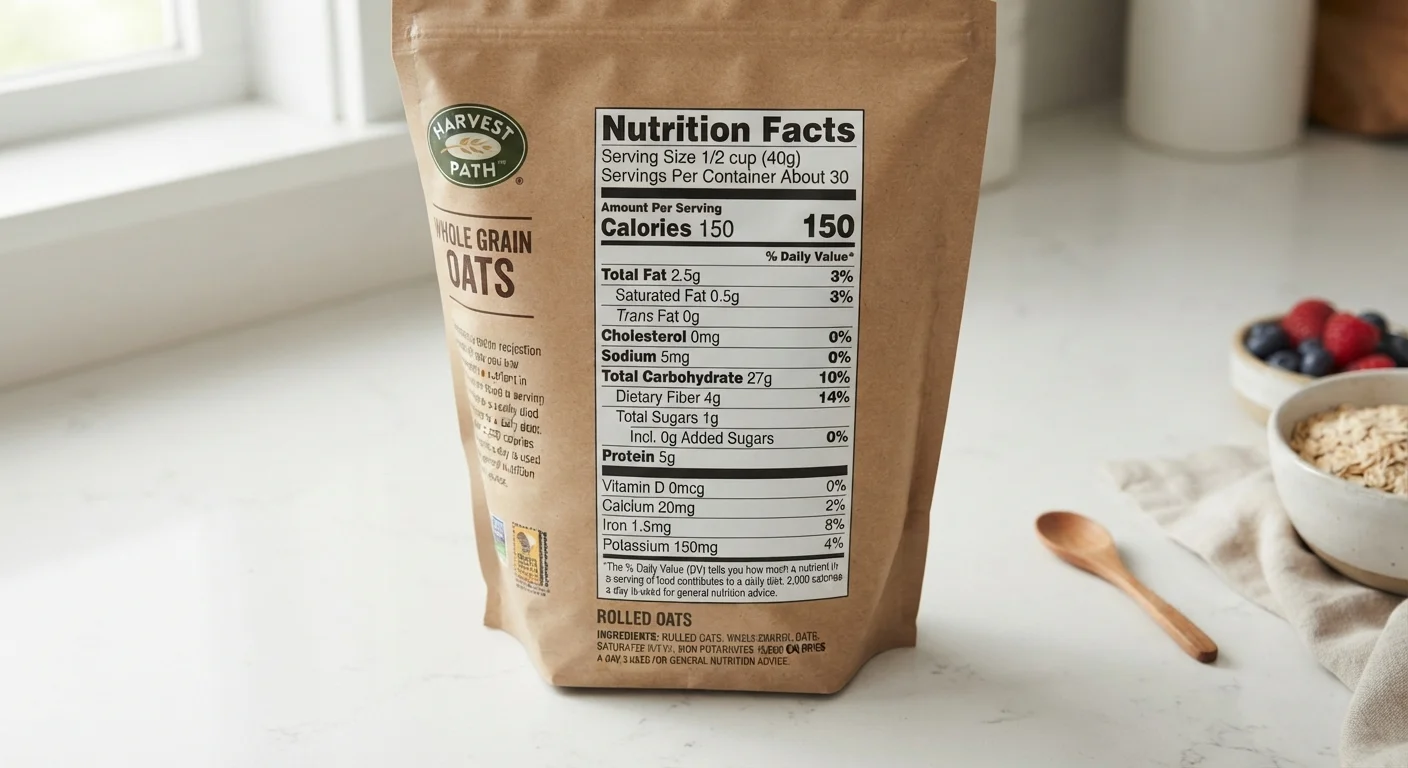
Photo: FeaturingHealth.net | Healthy Living Simplified editorial
Why the Nutrition Facts Label Exists
The Nutrition Facts label is a federally mandated panel that appears on nearly all packaged foods sold in the United States. The FDA requires it so consumers can make informed choices — not marketing departments. Unlike front-of-package claims such as "natural" or "light" (which are largely unregulated — see our article on when 'healthy' labels mean very little), the Nutrition Facts panel follows a standardized format with legally defined numbers.
The label was significantly updated in 2016 to reflect current nutritional science, adding things like added sugars and updating serving sizes to better reflect how people actually eat. Understanding each section of this label gives you a reliable, consistent tool for comparing foods and building more informed daily habits.
| Label format governed by | U.S. Food and Drug Administration (FDA) |
| Most recent major update | 2016 (phased implementation through 2020) (FDA Nutrition Facts Label Update) |
| %DV 'high' threshold | 20% or more per serving (FDA guidance) |
| %DV 'low' threshold | 5% or less per serving (FDA guidance) |
| Required micronutrients listed | Vitamin D, Calcium, Iron, Potassium (FDA Nutrition Facts Label regulations) |
| Reference calorie baseline for %DV | 2,000 calories per day (FDA standard) |
Section-by-Section Breakdown
Serving Size and Servings Per Container
This is the most critical starting point. All the numbers on the label apply to one serving — not the whole package. If a bag of chips lists 150 calories per serving but contains 3 servings, eating the whole bag means 450 calories. Serving sizes are now set by the FDA based on typical consumption amounts, so they more closely reflect realistic portions.
Calories
Calories measure the energy a food provides. The number shown is per serving. Rather than fixating on hitting a specific daily number, use calories as a relative signal — comparing similar products or gauging how energy-dense a food is relative to its nutrient content. For a deeper look at how macronutrients contribute to calorie totals, see our macronutrient label walkthrough.
Macronutrients: Fat, Carbohydrates, and Protein
These three categories make up the bulk of the label. Each is broken into subcategories worth noting:
- Total Fat includes saturated fat and trans fat listed separately. Saturated fat is worth monitoring; trans fat should be as close to zero as possible.
- Total Carbohydrate includes dietary fiber and total sugars, with added sugars called out distinctly. Added sugars are those introduced during processing — not naturally occurring ones in fruit or dairy.
- Protein is listed as a single figure with no required subcategories.
For context on what these nutrients do in your body, our introduction to macronutrients is a useful starting point.
Micronutrients: Vitamins and Minerals
The label is required to show Vitamin D, Calcium, Iron, and Potassium — nutrients many Americans fall short on. These are expressed as a percentage of the Daily Value. For a plain-language explanation of why these nutrients matter, visit our piece on what vitamins and minerals actually do.
% Daily Value (%DV)
The %DV column shows how much of a nutrient one serving contributes toward a reference daily intake based on a 2,000-calorie diet. A general rule of thumb: 5% DV or less is low; 20% DV or more is high. Use %DV to quickly gauge whether a food is a meaningful source of a nutrient — or a significant contributor to something you're watching, like sodium.
Daily Value (%DV)
A reference number set by the FDA indicating how much of a nutrient one serving of a food contributes to a standard daily intake. It is based on a 2,000-calorie diet and is meant to help consumers compare foods and understand nutritional context.
Added Sugars
Sugars introduced to a food during processing or preparation, as opposed to sugars naturally present in ingredients like fruit or dairy. The Nutrition Facts label lists added sugars separately to help consumers distinguish between the two.
Saturated Fat
A type of dietary fat found primarily in animal products and some plant oils. It is listed separately on the label because high intake has been associated with increased LDL cholesterol levels, according to established dietary guidelines.
Trans Fat
A type of fat formed through industrial hydrogenation of vegetable oils. It is listed on the Nutrition Facts label, and dietary guidance broadly recommends keeping intake as low as possible.
Dietary Fiber
The indigestible portion of plant-based foods. It is listed under Total Carbohydrate on the label and is associated with digestive health and a feeling of fullness.
Serving Size
The standardized amount of food to which all label values apply, set by the FDA based on typical consumption patterns. It is not a recommendation of how much to eat, but a reference unit for interpreting the label's numbers.
Using the Label as a Practical Tool
The label's real value is in comparison. When choosing between two similar products, align them on the same serving size, then scan sodium, added sugars, saturated fat, and fiber — those four often reveal the most about a food's overall nutritional profile. A clear understanding of portions makes the serving size section even more meaningful in practice.
Keep in mind that the label reflects nutritional content, not overall diet quality. A single food doesn't need to be "perfect" — what matters more is the pattern across your meals. For more on that framing, our explainer on what a balanced diet actually means provides useful perspective.
This article is for general informational purposes only and is not a substitute for personalized medical or dietary advice. If you have specific health conditions or nutritional concerns, consult a qualified healthcare professional or registered dietitian.
The content on this site is for informational purposes only and is not a substitute for professional advice. Always consult a qualified professional for guidance specific to your situation.