
Portion Awareness: A Plain-Language Guide to Understanding How Much You're Eating

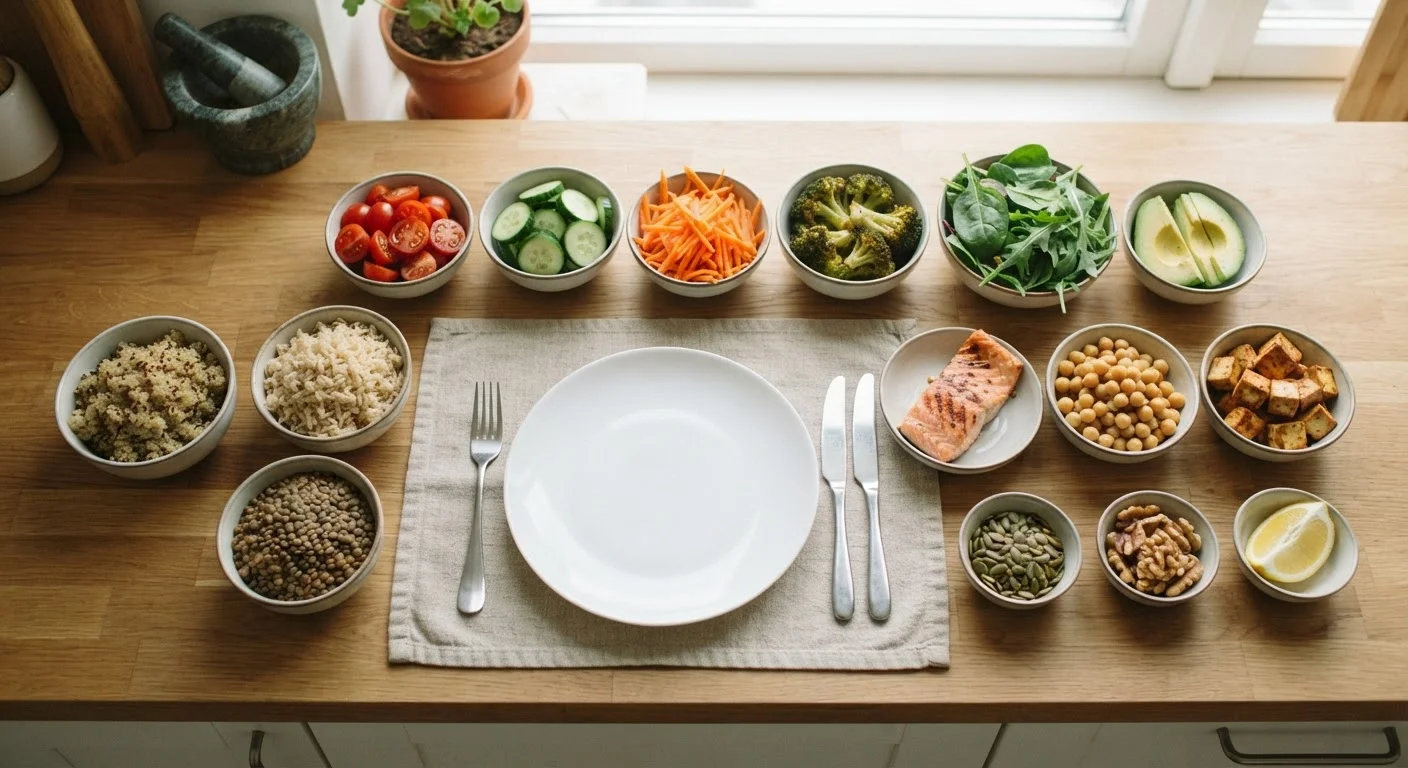
Photo: FeaturingHealth.net | Healthy Living Simplified editorial
Key Takeaways
- A serving size is a standardized reference amount; a portion is how much you actually eat.
- Restaurant and packaged food portions have grown significantly over the past few decades.
- Hand-based visual guides offer a practical, portable way to estimate portions without measuring tools.
- Plate size, packaging, and distraction are environmental factors that silently increase how much you eat.
- Portion awareness is a skill built gradually — it doesn't require strict tracking or calorie counting.
Serving Size vs. Portion Size: Not the Same Thing
These two terms are often used interchangeably, but they describe different things. A serving size is a standardized reference amount established by the FDA and printed on nutrition labels — it's meant to reflect how much people typically consume in one sitting. A portion is the actual amount of food you choose to eat, which may be more or less than that reference.
Consider a bag of chips labeled as having a serving size of one ounce. If you eat two ounces, you've had one portion but two servings — and the calorie and sodium numbers double accordingly. Understanding this distinction is the starting point for reading food information more accurately. See our guide to reading nutrition labels for a fuller breakdown of how label numbers are structured.
Serving size
A standardized reference amount set by the FDA and printed on nutrition labels to help consumers understand nutritional content per defined quantity of food.
Portion
The amount of food you actually choose to eat at one time, which may be more or less than the labeled serving size.
Portion distortion
The gradual normalization of oversized food portions, making larger-than-needed amounts feel like a standard or appropriate serving.
Unit bias
The unconscious tendency to treat whatever amount of food is presented — a full plate, a whole package — as one appropriate serving, regardless of actual size.
Satiety cues
Internal signals from your body, such as a feeling of comfortable fullness, that indicate you've had enough to eat.
Why Portions Have Grown — and Why It Matters
Over the past several decades, the typical portion size in American restaurants and packaged foods has increased substantially. Research published through institutions like the National Institutes of Health has documented what's often called portion distortion — the gradual normalization of larger-than-necessary food amounts, to the point where oversized portions feel standard.
A restaurant entrée today may contain two to three times what a dietary reference serving would suggest. This matters because humans tend to eat what's in front of them, a phenomenon sometimes called the unit bias — the unconscious assumption that whatever amount is presented constitutes one appropriate serving.
Restaurant Portions Are Not Dietary Recommendations
None of this means restaurants or packaged foods are inherently problematic. Awareness is the goal — knowing that external portion cues don't always reflect your individual nutritional needs helps you make more deliberate choices.
Practical Tools for Estimating Portions Without a Scale
You don't need a food scale to develop a reasonable sense of portion sizes. The most portable tool you own is your hand. Because hand size tends to scale with body size, these estimates work reasonably well as general guides:
- A cupped palm ≈ ½ cup of cooked grains, beans, or cut fruit
- A closed fist ≈ 1 cup — useful for raw vegetables, salad, or broth-based soup
- The palm of your hand (flat, no fingers) ≈ 3 ounces of protein like chicken, fish, or tofu
- Your thumb ≈ 1 tablespoon — helpful for nut butters, oils, and dressings
- A thumb tip ≈ 1 teaspoon, relevant for butter or concentrated sauces
Visual comparisons to common objects also help: a deck of cards for three ounces of meat, a tennis ball for one cup of pasta, a golf ball for two tablespoons of peanut butter. These aren't exact, but they give you a calibrated mental reference that can be applied anywhere — at home, at a restaurant, or when reading a nutrition label. Pairing this skill with an understanding of what macronutrients are and why they matter helps you see how portion size affects the nutritional composition of a meal.
Try a One-Week Calibration Exercise
Environmental Cues That Influence How Much You Eat
How much you eat is shaped not just by hunger but by your surroundings. Behavioral nutrition research has identified several consistent environmental factors:
- Plate and bowl size
- Larger dishware tends to prompt larger portions. The same amount of food looks smaller — and feels less satisfying — on an oversized plate compared to a standard one.
- Package size
- Eating directly from a large container makes it harder to track how much you've consumed. Transferring a portion to a bowl or plate creates a visual stopping point.
- Distracted eating
- Eating while watching television or scrolling a screen consistently correlates with eating more than intended, partly because attention is diverted from internal fullness signals.
- Social setting
- People tend to eat more in group settings, often mirroring the pace and quantity of those around them — a well-documented social influence on food intake.
Adjusting these environmental factors requires no willpower or restriction — just modest, deliberate setup. This behavioral approach complements the principles explored in mindful and intuitive eating.
Building Lasting Portion Awareness
Portion awareness isn't a diet — it's a skill. Like any skill, it develops through repeated, low-pressure practice rather than strict rule-following. A useful starting point is to spend one or two weeks occasionally measuring foods you eat regularly: a bowl of cereal, a serving of pasta, a handful of almonds. Most people find the results genuinely surprising, and that surprise tends to recalibrate their default assumptions in a lasting way.
From there, the goal is not to measure forever but to carry that mental calibration forward. Combine visual estimation with attention to hunger and satiety cues — noticing when you feel comfortably full rather than stuffed. For readers who want to connect portion awareness to broader meal planning, understanding how common foods map to macronutrients provides useful practical context.
Portion awareness works best as one part of an overall approach to eating — not a replacement for enjoying food, but a foundation for understanding it better.
This article is for general informational and educational purposes only and does not constitute medical or dietary advice. Consult a qualified healthcare professional or registered dietitian for guidance specific to your individual health needs.
Frequently Asked Questions
The content on this site is for informational purposes only and is not a substitute for professional advice. Always consult a qualified professional for guidance specific to your situation.