
Reading a Nutrition Label for Macronutrients Without Getting Confused

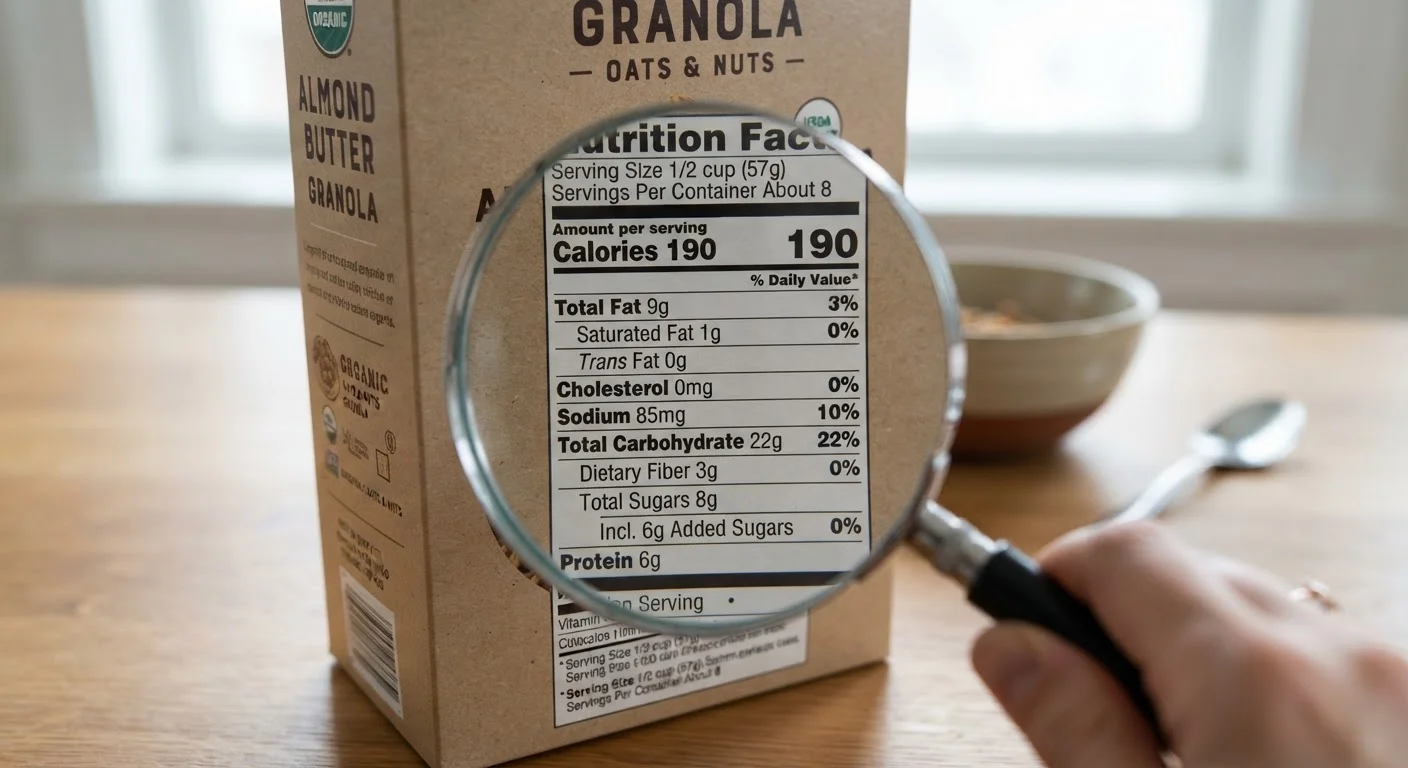
Photo: FeaturingHealth.net | Healthy Living Simplified editorial
Key Takeaways
- The Nutrition Facts label lists three macronutrients: total fat, total carbohydrate, and protein.
- Serving size controls all the numbers — always check it before reading anything else.
- Percent Daily Value (%DV) is based on a 2,000-calorie reference diet and helps gauge relative amounts.
- Subcategories like saturated fat, dietary fiber, and added sugars offer important detail within each macronutrient.
- Labels reflect what's in a product, not whether it fits your personal eating pattern — context always matters.
Why the Macronutrient Rows Are Worth Your Attention
The Nutrition Facts label is organized to give you a lot of information in a small space — which is exactly why it can feel overwhelming. Most of the label's real utility, especially for everyday eating decisions, lives in three rows: Total Fat, Total Carbohydrate, and Protein. These are the three macronutrients, the energy-providing nutrients your body uses in the largest amounts.
If you want a grounded introduction to what each macronutrient does in the body before diving into label-reading, see what carbs, proteins, and fats actually do. And if you're newer to thinking about nutrition overall, this starting-point guide for everyday eaters offers useful context.
The label also covers micronutrients — vitamins and minerals — but those appear lower on the panel. For a contrast between macro and micronutrient information on labels, explore our Vitamins & Minerals hub. This article focuses specifically on the macronutrient section.
What you will need
Step-by-Step: Reading Each Macronutrient Row
Follow these steps the next time you pick up any packaged food. The process takes less than a minute once it becomes habit, and it gives you a reliable, consistent read on what you're actually eating.
Serving Size Is Not the Whole Package
Find and Read the Serving Size
At the very top of every Nutrition Facts panel, you will see Serving Size and Servings Per Container. All the numbers below — including every macronutrient — apply to one serving, not necessarily the whole package.
Check how many servings are in the container and estimate how much of it you typically eat. If a bag of crackers lists a serving as 28g (about 15 crackers) but you usually eat 30, your actual macronutrient intake is roughly double what the label shows for one serving.
Locate Total Fat and Its Subcategories
Below the calorie count, Total Fat is the first macronutrient listed, measured in grams. Directly underneath it, indented, you will find two important subcategories: Saturated Fat and Trans Fat.
Saturated fat is worth noting because most dietary guidelines recommend keeping it relatively limited — the %DV next to it helps you gauge this quickly. Trans fat has no established safe level; aim for 0g wherever possible. Unsaturated fats (the difference between total fat and the subcategories) are not always broken out but are generally considered more favorable by nutrition science.
Read Total Carbohydrate and Its Breakdown
Total Carbohydrate is the second macronutrient block and includes three subcategories: Dietary Fiber, Total Sugars, and Added Sugars.
Dietary fiber counts toward total carbohydrates but behaves differently in the body — it supports digestive health and generally does not spike blood sugar. Added sugars (a mandatory line since the FDA's 2016 label update) tells you how much sugar was added during processing, separate from sugars occurring naturally in the food. This distinction matters: a yogurt with 12g of total sugar and 0g added sugar is quite different from one with 12g total and 10g added.
Check Protein
Protein is the third macronutrient, listed in grams. Unlike fat and carbohydrates, protein does not always carry a %DV on the label — this is only required when a product makes a protein-related claim (such as "high in protein").
The gram amount is the most useful number here. Most adults need roughly 0.8 grams of protein per kilogram of body weight as a general population reference, though individual needs vary. Compare the protein grams to the overall calorie count to understand whether a food is a meaningful protein source or more of a carbohydrate- or fat-dominant choice. See common foods grouped by their primary macronutrient for a practical reference.
Interpret Percent Daily Value in Context
The %DV column tells you what share of a standard daily reference amount one serving provides. The reference is a 2,000-calorie diet — a benchmark set for general labeling purposes, not a recommendation for every person.
Use %DV for quick comparisons between products and for identifying whether a food is a significant source of a macronutrient. It is less precise for individuals whose calorie needs differ substantially from 2,000, but it remains a useful directional signal for most adults.
Put the Numbers in the Context of Your Whole Day
A single food's macronutrient content only becomes meaningful when you consider what else you eat. A meal high in carbohydrates is not inherently problematic if the rest of your day is balanced. Conversely, a food labeled "low fat" may still be high in added sugars — a pattern worth recognizing. See why front-of-pack health claims can be misleading for more on this.
Think of each label as one data point in your overall eating pattern, not a verdict on a food's worthiness.
Use %DV as a Quick Compass
Common Pitfalls and How to Avoid Them
Even careful label readers run into a few recurring traps. Here are the most common ones and how to sidestep them:
- Treating %DV as a personal target: The 2,000-calorie reference diet is a standardized benchmark, not a universal prescription. Use %DV for comparison and awareness, not as a precise personal goal.
- Ignoring subcategories: Total carbohydrate and total fat each contain subcategories that tell a more complete story. A food with 30g of total carbs but 8g of fiber is meaningfully different from one with 30g of total carbs and 0g of fiber.
- Assuming a low number means unlimited: "Low fat" or "reduced sugar" on the front of a package refers to the label's claim rules, not necessarily to whether the amount is trivial. Always check the actual gram amounts. A full section-by-section label breakdown can help you navigate the entire panel with confidence.
Labels Inform — They Don't Prescribe
For a broader understanding of how much you're eating relative to what labels show, this plain-language guide to portion awareness is a practical companion read.
This article is for informational purposes only and is not a substitute for personalized medical or dietary advice. Consult a qualified healthcare professional or registered dietitian for guidance specific to your health needs.
The content on this site is for informational purposes only and is not a substitute for professional advice. Always consult a qualified professional for guidance specific to your situation.