
Testosterone vs. DHEA: Two Androgens, Very Different Roles

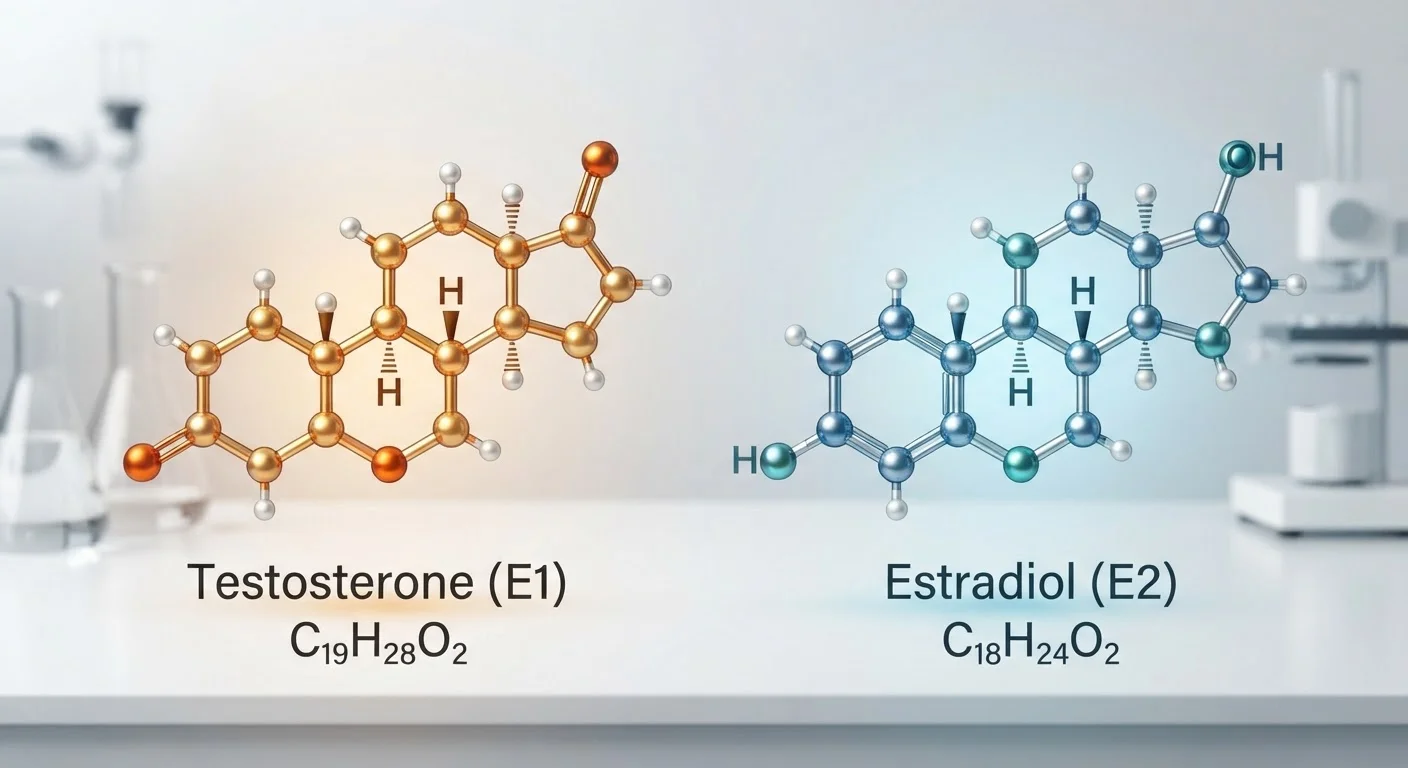
Photo: FeaturingHealth.net | Healthy Living Simplified editorial
Key Takeaways
- Testosterone is the dominant androgen driving male physical and reproductive characteristics.
- DHEA is produced by the adrenal glands and serves as a precursor to both testosterone and estrogen.
- DHEA levels decline steeply with age, while testosterone declines more gradually.
- The two hormones operate in different biological tiers and serve overlapping but distinct functions.
- Neither hormone should be supplemented without medical guidance and laboratory testing.
What Each Hormone Actually Is
Both testosterone and DHEA belong to the androgen family — steroid hormones that influence male characteristics — but they occupy very different positions in the body's hormonal hierarchy.
Testosterone is the primary male sex hormone, produced mainly in the testes via the hypothalamic-pituitary-gonadal (HPG) axis. It binds directly to androgen receptors throughout the body, driving effects on muscle tissue, bone density, sperm production, libido, and mood. For a deeper look at its systemic role, see what testosterone actually does.
DHEA — short for dehydroepiandrosterone — is produced primarily by the adrenal glands, with smaller contributions from the gonads and brain. It is a precursor hormone: the body converts it downstream into testosterone, estradiol, and other active steroids depending on tissue type and enzymatic activity. DHEA itself has relatively weak androgenic activity; its influence depends largely on what it becomes after conversion.
| Criterion | Testosterone | DHEA |
|---|---|---|
| Primary production site | Testes (mainly) | Adrenal glands (mainly) |
| Hormonal tier | Active end-hormone | Precursor hormone |
| Receptor activity | Direct androgen receptor binding | Weak direct; acts via conversion |
| Age-related decline | ~1–2% per year after late 30s | Steep drop from mid-20s onward |
| Key functions | Muscle, bone, libido, sperm, mood | Precursor to testosterone and estrogen |
| Clinical measurement | Total and free testosterone | DHEA-sulfate (DHEA-S) |
| Regulatory status (US) | Controlled — prescription only | Available OTC as supplement |
How Their Levels Change Over Time
One of the sharpest differences between these two hormones is the trajectory of their decline with age.
DHEA peaks in a person's mid-20s and then falls steadily — by age 70, circulating DHEA levels may be just 10–20% of peak values. This steep decline, sometimes referred to as adrenopause, is one reason DHEA has attracted interest as a biomarker of biological aging.
Testosterone follows a slower, more gradual trajectory. In men, levels typically begin declining at roughly 1–2% per year from the late 30s onward. This process — sometimes called late-onset hypogonadism — is real, but more modest than the dramatic DHEA drop.
10–20%
DHEA remaining by age 70 vs. peak
Research published in endocrinology literature consistently shows DHEA-S levels fall to a fraction of youthful concentrations by the eighth decade of life.
~1–2%
Annual testosterone decline in aging men
Studies including data from the Baltimore Longitudinal Study of Aging indicate a gradual yearly decline in serum testosterone beginning in a man's late 30s.
50+
Tissues where DHEA conversion occurs
DHEA is converted to active sex hormones in peripheral tissues including adipose, liver, skin, and brain, making its systemic effects highly context-dependent.
Understanding these timelines matters clinically. A man with symptoms of hormonal decline may have low DHEA, low testosterone, or both — and distinguishing between them requires laboratory testing, not guesswork. For context on separating fact from myth in men's hormonal health, see common myths about male hormones.
Biological Roles and Clinical Relevance
Because testosterone acts directly on androgen receptors, its effects are well-characterized: it promotes muscle protein synthesis, maintains bone mineral density, supports red blood cell production, and is essential to spermatogenesis. Clinically, low testosterone (hypogonadism) is defined by measurable blood levels combined with specific symptoms.
DHEA's role is more diffuse. Its conversion to active androgens and estrogens happens peripherally — in fat tissue, skin, liver, and the brain — meaning its effects vary by individual and tissue context. Some research suggests DHEA may have independent effects on immune function, mood, and cognitive performance, though the evidence remains less conclusive than for testosterone.
DHEA Is Not a Testosterone Booster
Exercise interacts with both hormones differently. Resistance training is associated with acute testosterone responses, whereas DHEA dynamics are less directly studied in exercise contexts. The research on exercise and male hormones offers a nuanced breakdown of what the evidence supports.
Should You Be Tested or Supplemented?
Both hormones can be measured through standard blood tests — total and free testosterone is routinely assessed in clinical practice; DHEA-sulfate (DHEA-S) is the measured form of DHEA in circulation and is considered a stable, reliable marker.
Supplementation is a different matter. Testosterone replacement therapy (TRT) is a regulated medical treatment prescribed for diagnosed hypogonadism — not a general wellness tool. DHEA is available as an over-the-counter supplement in some countries (including the United States), though it is a controlled substance in others. Despite its accessibility, DHEA supplementation is not without risks: it can alter the balance of downstream hormones, including estrogen, and effects vary widely between individuals.
Neither hormone should be supplemented without consulting a qualified healthcare provider, baseline laboratory testing, and ongoing monitoring. Self-prescribing based on symptoms alone carries meaningful risk. This content is general health information and is not a substitute for personalized medical advice.
This article is for informational purposes only and does not constitute medical advice. Always consult a qualified healthcare professional before making any decisions related to hormonal health, testing, or supplementation.
The content on this site is for informational purposes only and is not a substitute for professional advice. Always consult a qualified professional for guidance specific to your situation.