
Why Habits Are So Hard to Break — and What Neuroscience Says About It

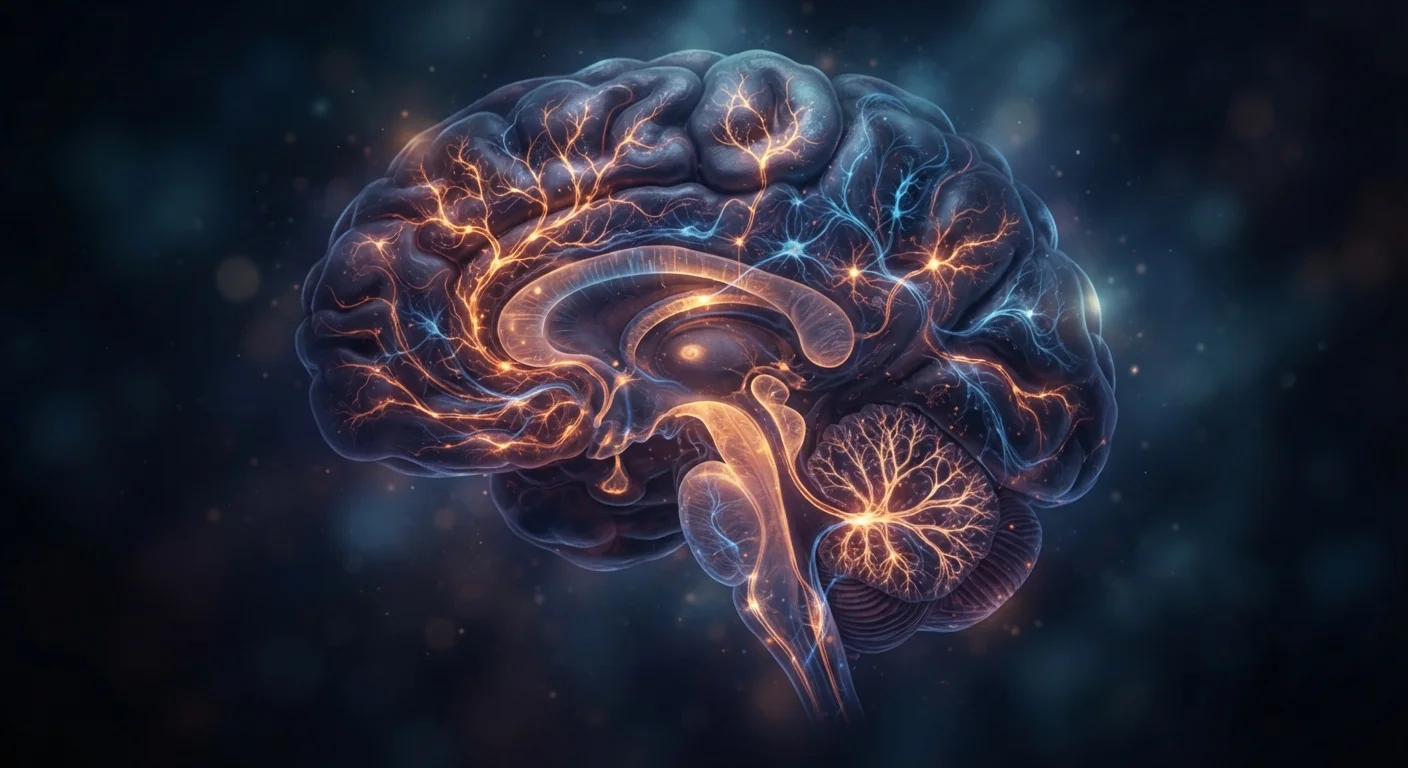
Photo: FeaturingHealth.net | Healthy Living Simplified editorial
Key Takeaways
- Habits are stored in the basal ganglia, which operates largely outside conscious awareness.
- Once formed, a habit's neural pathway does not disappear — it can only be overridden by a competing one.
- Cues in your environment automatically trigger habitual responses, often before your conscious mind engages.
- Willpower alone is insufficient for lasting habit change because it draws on limited prefrontal resources.
- Understanding the neuroscience of habits makes change strategies more targeted and more effective.
How the Brain Turns Behavior Into Habit
Every time you repeat a behavior in a consistent context, your brain quietly strengthens the neural pathway associated with it. This process — called synaptic consolidation — is the brain's way of converting effortful actions into efficient routines. Think of it like a footpath through tall grass: the more you walk it, the more clearly it is defined.
The key player in this process is the basal ganglia, a cluster of structures deep in the brain linked to procedural learning, pattern recognition, and reward. As a behavior becomes habitual, responsibility for executing it shifts away from the prefrontal cortex — the brain region involved in deliberate thinking — and into the basal ganglia. The result is a behavior that runs with minimal conscious input.
This is efficient by design. Automating routine tasks frees up cognitive resources for novel problems. But it also means that once a behavior is encoded as a habit, it is no longer under the same conscious control as a deliberate choice. To understand the full architecture of this process, see our guide to the habit loop.
40–45%
Share of daily actions that are habitual
Research published in the journal Psychological Science estimates that roughly 40–45% of everyday behaviors are performed habitually rather than through deliberate decision-making.
66 days
Average time for a new habit to form
A study published in the European Journal of Social Psychology found that, on average, it took 66 days for a new behavior to become automatic — with wide variation depending on the individual and behavior.
Why Habits Don't Simply Disappear
One of the most important — and humbling — findings in habit neuroscience is this: habits are not erased, they are overwritten. The neural pathway encoding an old behavior remains physically intact in the brain even after months or years of not performing it. What changes is the strength of competing pathways.
Research using animal models has shown that after a habit is suppressed, its original neural circuitry can be reactivated by the right cue — particularly under conditions of stress or fatigue. This explains why someone who quit smoking years ago might feel a powerful urge in a specific setting, such as a social situation where they once smoked regularly.
This has a direct implication for anyone trying to change behavior: the goal is not to destroy an old habit but to build a new, stronger competing response to the same cues. Understanding why bad habits lock in is the first step toward disrupting them strategically.
“Habit is the enormous flywheel of society, its most precious conservative agent. It alone is what keeps us all within the bounds of ordinance, and saves the children of fortune from the envious uprisings of the poor.”
— William James, 19th-century psychologist and philosopher, foundational figure in habit research
The Role of Cues, Reward, and Automatic Responding
Habits are not stored as isolated behaviors — they are stored as complete cue-routine-reward sequences. The cue is a trigger that the brain learns to associate with a particular outcome. Once that association is established, encountering the cue alone can initiate the habitual response automatically, before conscious thought occurs.
Dopamine — a neurotransmitter involved in anticipation and reward — plays a central role here. Research suggests the brain begins releasing dopamine in anticipation of a reward once a cue is recognized, not just when the reward arrives. This creates a motivational pull toward the habitual behavior that can feel like craving or compulsion.
This is why relying on willpower alone is so ineffective: by the time you consciously decide to resist, the automatic response has already been activated. Environmental strategies — like changing the cues themselves — address the habit at an earlier point in the chain. Our article on redesigning your environment explores exactly how to do that.
What This Means for Changing Habits in Practice
Neuroscience doesn't offer a shortcut to habit change, but it does clarify why certain approaches work and others fail. Three evidence-informed principles follow directly from the brain mechanisms described above.
- Target the cue, not just the behavior. Because habits fire automatically in response to cues, reducing exposure to those cues — or replacing them — removes the trigger before the urge begins. This is the logic behind environment redesign as a behavior change tool.
- Substitute rather than suppress. Attempting to stop a behavior without replacing it leaves the original cue-reward association intact. Inserting a new routine between the cue and the reward builds a competing pathway that, over time, can become dominant.
- Expect a non-linear timeline. Research on habit timelines shows that the process varies widely depending on behavior complexity, context, and individual differences. Progress is rarely a straight line, and setbacks do not erase gains.
For a broader view of the behavioral science principles underlying these strategies, see what behavioral science actually tells us about forming lasting habits.
This article is for informational purposes only and is not a substitute for professional medical or psychological advice. If you are struggling with a compulsive behavior or habit that significantly impacts your wellbeing, please consult a qualified healthcare provider.
Frequently Asked Questions
The content on this site is for informational purposes only and is not a substitute for professional advice. Always consult a qualified professional for guidance specific to your situation.