
Redesigning Your Environment to Make Unhealthy Habits Harder

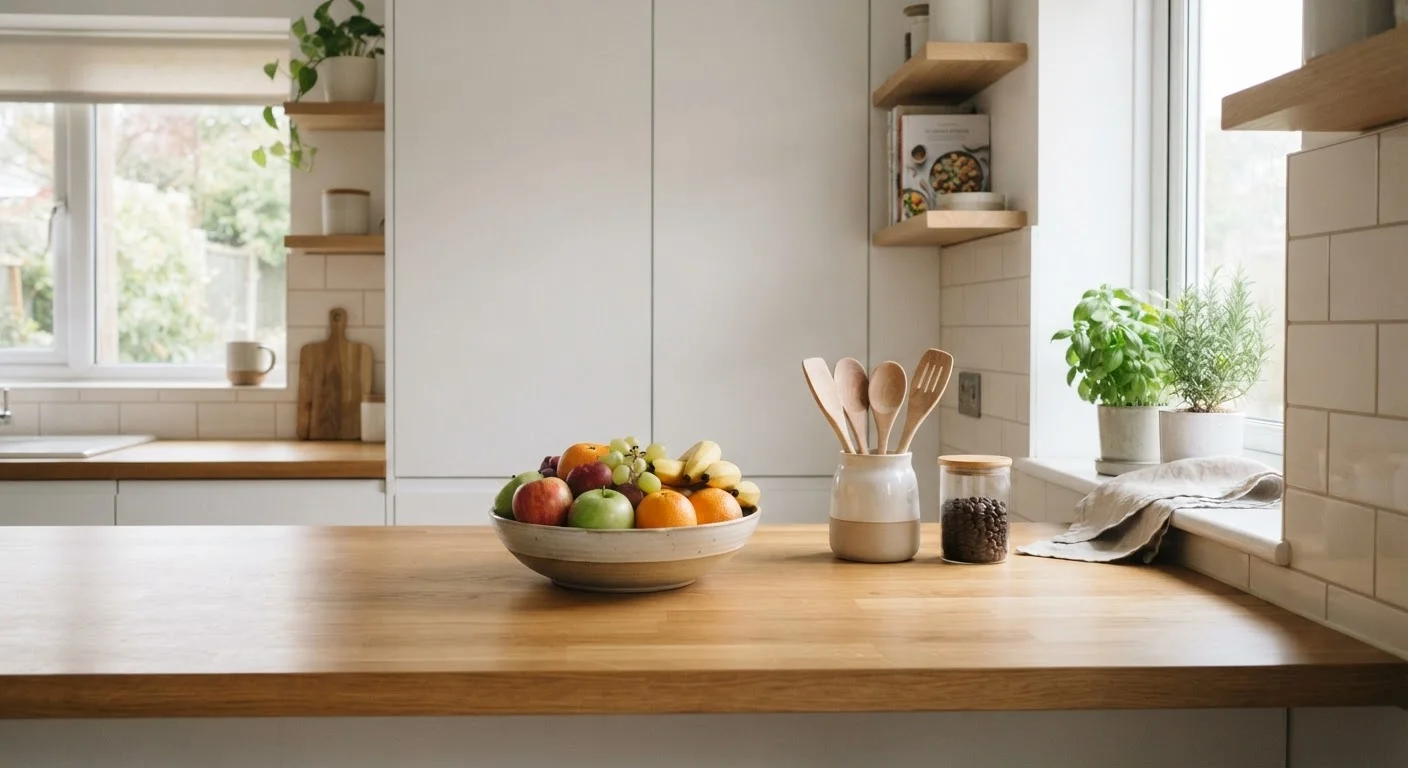
Photo: FeaturingHealth.net | Healthy Living Simplified editorial
Key Takeaways
- Your physical environment shapes behavior more than willpower alone — redesigning it reduces reliance on self-control.
- Adding friction to unhealthy habits makes acting on them feel effortful enough to pause before following through.
- Small, specific changes — like relocating objects or altering visual cues — produce measurable behavioral shifts.
- Environment design works best alongside other habit-change strategies, not as a standalone fix.
- Consistency in your redesigned space reinforces new patterns without constant conscious effort.
Why Your Surroundings Are Running the Show
Behavioral researchers have long recognized that the environments we inhabit quietly nudge our choices — often before conscious decision-making kicks in. A bowl of candy on a desk gets eaten. A gym bag left at the door gets used. These aren't accidents; they reflect how powerfully context shapes behavior.
This concept — sometimes called choice architecture — suggests that the arrangement of your physical space acts as a silent script, making certain behaviors easier and others harder. When unhealthy habits persist despite genuine motivation to change, the environment is frequently the overlooked variable. As the habit loop explains, cues embedded in your surroundings automatically trigger routine behaviors before you've made a conscious choice.
The good news: you can rewrite that script. By deliberately adding friction — obstacles that increase the effort required to engage in an unwanted behavior — you interrupt the automatic chain that drives bad habits. This guide walks you through how to audit and redesign your environment with that goal in mind.
What you will need
Step-by-Step: Redesigning Your Space
These steps work across common habit domains — eating, screen time, sedentary behavior, and more. Apply the framework to whichever area you're targeting first. For guidance on what to replace a habit with, see our article on behavior substitution vs. habit elimination.
Identify the habit and its primary cue
Before you can add friction, you need to know exactly what you're targeting. Name the specific behavior (e.g., reaching for your phone first thing in the morning, snacking on chips while watching TV) and identify the environmental cue that reliably precedes it — a visual prompt, a location, a time of day, or a nearby object.
Write it down in this format: "When I [cue], I automatically [habit]." This precision prevents vague, scattershot changes that don't address the actual trigger.
Remove or relocate the trigger object
The most direct form of friction is physical distance. If a cue object is out of sight and requires effort to retrieve, the automatic chain is broken at its first link. Move the object to a less accessible location — a high shelf, a closed cabinet, a different room, or even a car trunk.
Research on food placement consistently shows that visibility strongly predicts consumption frequency. The same principle applies beyond food: a TV remote stored in a drawer, a gaming controller kept in a closet, or cigarettes left in a car rather than a pocket all create meaningful pause points.
Add a physical barrier between you and the habit
Beyond relocation, add steps that must be completed before the habit can begin. Examples include: placing junk food in an opaque container inside a high cupboard (two extra steps), requiring a password on a streaming service used for avoidance behavior, or unplugging a device after each use so starting it requires deliberate action.
Each additional step adds decision points — moments where a competing intention can surface and redirect behavior.
Replace visual cues with healthier alternatives
Nature abhors a vacuum, and so does a habit loop. When you remove a cue, the space it occupied often gets filled by the next most available prompt. Actively replace the removed cue with a visual anchor for a healthier behavior instead.
Put a water bottle where the soda used to sit. Place a book on the pillow where your phone used to charge. Set out your workout clothes the night before. This strategy aligns with environment design that makes good habits automatic, working both sides of the equation simultaneously.
Test, observe, and adjust over one week
After making your changes, observe what actually happens over seven days. Note: Did the habit frequency decrease? Did you find workarounds that neutralized the friction? Did new unintended cues emerge?
Treat this as a low-stakes experiment, not a pass/fail test. Adjust barrier placement or add a second friction point if needed. For building the replacement behavior into a lasting routine, our practical walkthrough for building a new habit offers structured next steps.
Start With One Space, One Habit
Common Pitfalls and How to Avoid Them
Environment redesign is powerful but not foolproof. A few patterns tend to undermine results:
- Redesigning everything at once: Broad sweeping changes are hard to sustain and easy to undo during stressful periods. Pick one habit, make two or three targeted changes, and stabilize before expanding.
- Forgetting digital environments: Apps, notification settings, and browser tabs are environments too. Apply the same friction principle — move a distracting app off your home screen, use website blockers during focused hours.
- Assuming redesign replaces all other effort: Environmental changes reduce the activation energy for bad habits; they don't eliminate the underlying urge. Pair this approach with other strategies — cognitive behavioral techniques address the thought patterns that drive behavior from the inside.
Friction Alone Won't Address Every Habit
If your efforts to change have stalled or backfired before, it may be worth reading about why habit change attempts sometimes backfire before proceeding.
This article is for informational purposes only and is not a substitute for personalized advice from a qualified healthcare professional. If your habits are connected to a health condition, please consult your doctor or a licensed mental health provider.
The content on this site is for informational purposes only and is not a substitute for professional advice. Always consult a qualified professional for guidance specific to your situation.