
Strength Training vs. Cardio: Weighing the Benefits for Women's Long-Term Health

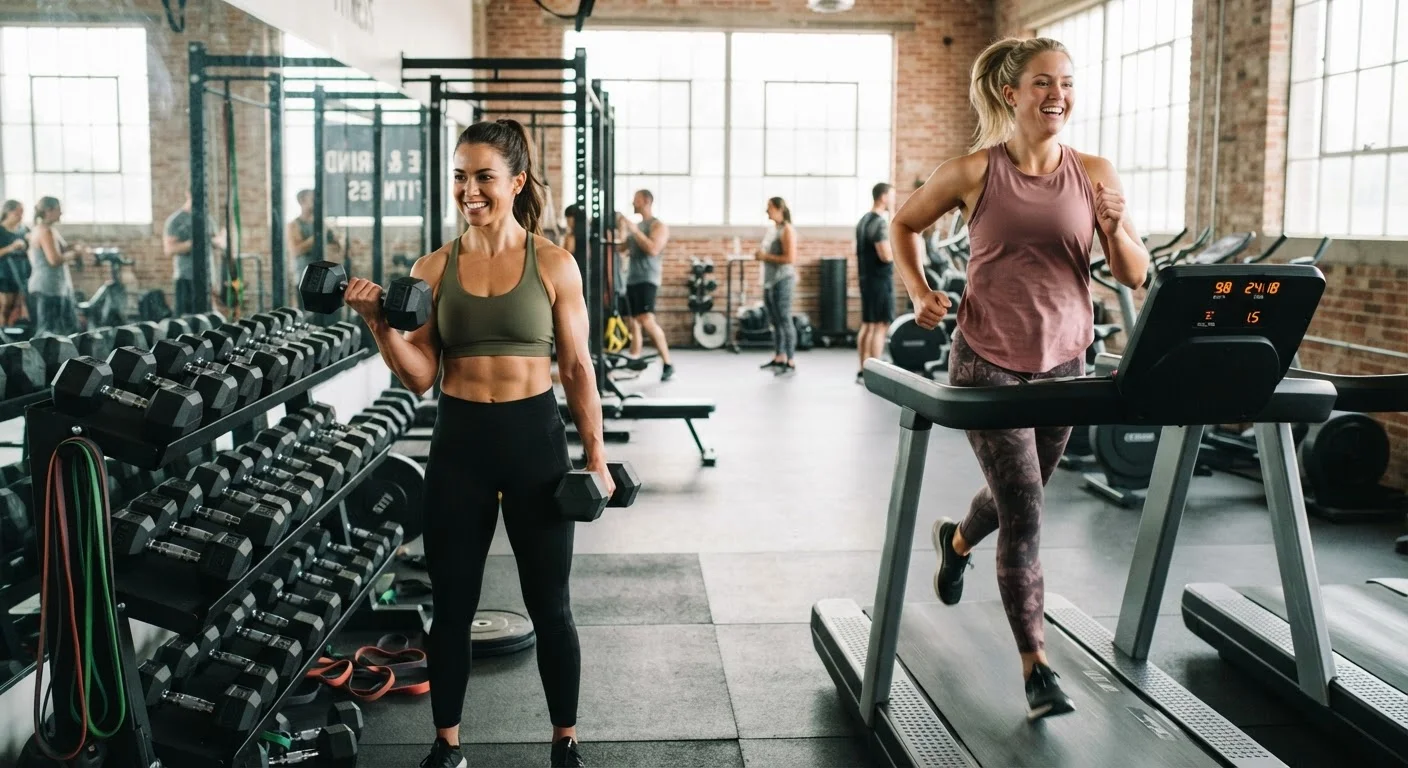
Photo: FeaturingHealth.net | Healthy Living Simplified editorial
Key Takeaways
- Strength training is essential for preserving bone density and muscle mass, both of which decline with age in women.
- Cardiovascular exercise reduces risk of heart disease, the leading cause of death among women in the US.
- The two modalities address different physiological needs — most women benefit from incorporating both.
- Hormonal changes at perimenopause and beyond make resistance training especially important for women over 40.
- Current guidelines support at least 150 minutes of moderate aerobic activity and two strength sessions weekly.
What Each Modality Actually Does
Strength training — also called resistance training — involves working muscles against an opposing force, whether that is free weights, machines, resistance bands, or bodyweight. The primary adaptations include increased muscle mass and strength, improved bone mineral density, better joint stability, and enhanced insulin sensitivity. These changes develop gradually and compound significantly over years.
Cardiovascular exercise encompasses any sustained, rhythmic activity that elevates heart rate: walking, running, cycling, swimming, and rowing, among others. Its core adaptations include a stronger, more efficient heart, lower resting blood pressure, improved lung capacity, and favourable changes in blood lipids. For a closer look at how lower-intensity options fit in, see what low-impact exercise actually does for women's cardiovascular fitness.
Understanding these distinct mechanisms matters because the benefits do not fully overlap — which is precisely why framing this as an either-or question can mislead women about what their bodies need.
Head-to-Head: Key Health Outcomes
The comparison below reflects what current evidence supports for each modality across outcomes that are particularly relevant to women's long-term health.
| Criterion | Strength Training | Cardiovascular Exercise |
|---|---|---|
| Bone density | Strong direct benefit | Moderate (weight-bearing only) |
| Muscle mass preservation | Primary mechanism | Minimal direct effect |
| Heart health | Modest benefit | Strong direct benefit |
| Metabolic rate | Increases resting metabolism | Minimal lasting effect |
| Blood pressure | Moderate improvement | Clinically significant improvement |
| Mood and mental health | Meaningful benefit | Strong, well-documented benefit |
| Blood sugar regulation | Strong effect via muscle uptake | Strong effect during activity |
| Functional independence with age | Direct, critical benefit | Supportive but secondary |
One nuance worth noting: women's musculoskeletal and hormonal physiology means the case for strength training is especially strong. Women's muscles respond differently to strength training than men's, and understanding those differences helps explain why resistance work is not optional for long-term wellbeing — it is foundational.
The Hormonal Dimension Women Need to Know
Oestrogen plays a significant protective role in muscle preservation, bone maintenance, and cardiovascular health. As oestrogen levels decline during perimenopause and after menopause, women face accelerated muscle loss (sarcopenia), declining bone density, and increased cardiovascular risk — often within a compressed timeframe.
1–2%
Annual bone density loss after menopause
The National Osteoporosis Foundation estimates women can lose up to 20% of bone density in the five to seven years following menopause.
~1% per year
Rate of muscle mass loss after age 30
Research published in the Journal of Cachexia, Sarcopenia and Muscle notes that without intervention, adults can lose 3–8% of muscle mass per decade, accelerating after 60.
#1
Cause of death in US women
The CDC consistently identifies heart disease as the leading cause of death for women in the United States, underscoring the importance of cardiovascular fitness.
Resistance training directly counteracts two of those three risks — bone and muscle loss — in ways that cardio alone cannot match. Cardiovascular exercise, meanwhile, helps manage the blood pressure and lipid changes that accompany oestrogen withdrawal. This is why women in their 40s and beyond benefit most from a combined approach. If you are just beginning, starting resistance training after 40 offers a grounded, practical entry point.
This article is for general informational purposes only and does not constitute medical advice. Consult a qualified healthcare provider before beginning any new exercise programme, especially if you have existing health conditions or are navigating hormonal changes.
Building a Programme That Includes Both
The US Department of Health and Human Services Physical Activity Guidelines recommend adults aim for at least 150–300 minutes of moderate-intensity aerobic activity per week, plus muscle-strengthening activities on two or more days. These are not competing targets — they are designed to be combined.
A practical framework for most women might include two to three resistance sessions weekly, structured around foundational movements. Movement patterns worth prioritising in any women's strength programme — including hinge, squat, push, pull, and carry — provide the most functional return on training time. Cardio can be distributed across remaining days, with intensity calibrated to individual goals and recovery capacity.
If your cardio preferences lean toward higher intensity, the evidence comparing HIIT versus steady-state cardio for women is worth reviewing — hormonal response and recovery considerations differ meaningfully between formats.
Concurrent Training: A Well-Supported Approach
The most sustainable programme is one built around what a woman can consistently maintain, progressively build on, and genuinely enjoy — not the one that looks optimal on paper.
The content on this site is for informational purposes only and is not a substitute for professional advice. Always consult a qualified professional for guidance specific to your situation.