
Why Women's Muscles Respond Differently to Strength Training

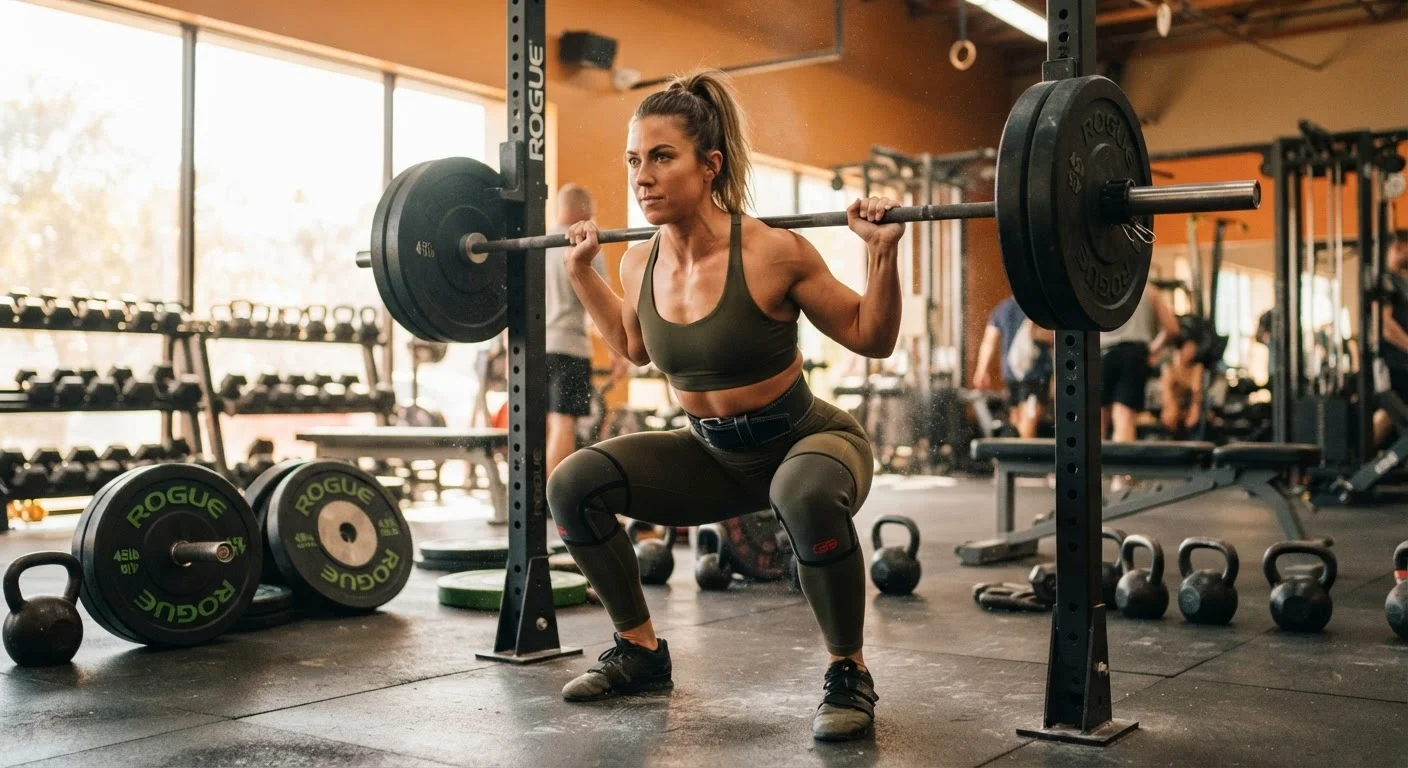
Photo: FeaturingHealth.net | Healthy Living Simplified editorial
Key Takeaways
- Women build strength effectively through resistance training, though muscle hypertrophy typically progresses more slowly than in men.
- Lower testosterone levels are the primary reason women gain less muscle mass relative to their body weight.
- Estrogen plays a protective role in muscle repair and may reduce post-exercise soreness.
- Women tend to have a higher proportion of slow-twitch muscle fibers, supporting endurance and fatigue resistance.
- Hormonal fluctuations across the menstrual cycle can influence training performance and recovery.
- Strength training provides critical long-term benefits for women, including improved bone density and metabolic health.
The Hormonal Foundation: Why Testosterone Is Only Part of the Story
The most well-documented difference between male and female muscle adaptation is hormonal. Men circulate roughly 10 to 20 times more testosterone than women, and testosterone is a potent anabolic signal that accelerates muscle protein synthesis — the process by which the body builds new muscle tissue after exercise. This biochemical gap explains why men, on average, gain muscle mass more rapidly when following a comparable training program.
However, framing this solely as a testosterone deficit undersells women's physiology. Estrogen, which is far more prevalent in women, has meaningful anabolic and protective properties of its own. Research indicates that estrogen helps stabilize muscle cell membranes, supports collagen synthesis in connective tissue, and may reduce exercise-induced muscle damage. This can translate to less severe delayed-onset muscle soreness (DOMS) and a degree of structural resilience during resistance training. Women also produce growth hormone in comparable or sometimes higher quantities than men during exercise, partially compensating for lower testosterone levels.
“Women are not simply small men. Their hormonal milieu, muscle fiber characteristics, and recovery patterns create a distinct physiological context that should shape how we study and prescribe exercise for them.”
— Dr. Stacy Sims, Exercise physiologist and researcher specializing in sex differences in sport and nutrition
Muscle Fiber Composition and Endurance Advantage
Human skeletal muscle is composed of two primary fiber types: Type I (slow-twitch) and Type II (fast-twitch). Type I fibers are highly fatigue-resistant and rely primarily on aerobic metabolism, making them suited for sustained effort. Type II fibers generate more force rapidly but tire more quickly.
Research consistently shows that women tend to have a higher proportion of Type I fibers relative to men, particularly in the lower body. This gives women a measurable advantage in muscular endurance — the ability to sustain submaximal efforts for longer periods before fatigue sets in. It also means women may recover between sets faster than men training at equivalent relative intensities, a finding with practical implications for programming rest intervals and training volume.
For strength and hypertrophy, Type II fibers are the primary drivers of muscle size. Women's relatively lower Type II fiber content is one structural reason maximum muscle cross-sectional area tends to be smaller, even with consistent heavy training. That said, women absolutely recruit and develop Type II fibers through resistance training — the adaptation simply follows a different trajectory.
10–20×
More testosterone in men than women
This hormonal gap, documented across multiple endocrinological studies, is the primary driver of differences in maximal muscle hypertrophy between sexes.
~27–35%
Women's relative strength vs. men in upper body
Research published in sports science literature indicates women's upper body absolute strength averages roughly 50–60% of men's, narrowing to about 65–75% for lower body — gaps largely attributable to lean mass differences.
Higher
Type I fiber proportion in women's lower body
Multiple muscle biopsy studies have confirmed women tend to have a greater proportion of slow-twitch, fatigue-resistant fibers in the quadriceps and other lower-body muscles compared to men.
How the Menstrual Cycle Shapes Training Response
One dimension of women's strength training that male-centric research has historically overlooked is the influence of the menstrual cycle. Hormonal fluctuations across the follicular and luteal phases create meaningful variation in energy availability, neuromuscular output, and recovery capacity.
During the follicular phase — roughly the first two weeks of the cycle, beginning with menstruation — rising estrogen supports muscle protein synthesis and may enhance strength output. Some emerging research suggests this is an opportune window for higher-intensity or higher-volume sessions. The luteal phase, governed by elevated progesterone, is often associated with increased perceived exertion, elevated core body temperature, and a greater susceptibility to fatigue.
Track Your Cycle Alongside Your Training
This doesn't mean training should stop during the luteal phase — it means adjusting expectations and recovery strategies is a legitimate evidence-informed approach. Individual responses vary considerably, and tracking personal patterns over several cycles is more informative than any generalized prescription. For a broader look at how resistance and cardiovascular exercise compare across women's health outcomes, see our guide to strength training vs. cardio for women.
Training Effectively: What the Science Supports
Understanding these physiological differences should inform training design — not discourage it. Women respond robustly to progressive overload, the gradual increase in resistance or volume over time. Strength gains in the early months of training are driven largely by neuromuscular adaptations (the nervous system becoming more efficient at recruiting muscle fibers), which occur at similar rates in women and men.
Compound movements — squats, deadlifts, rows, presses — remain the cornerstone of effective resistance training for women, just as for men. Volume tolerance may differ, and programming should account for recovery demands, particularly when hormonal fluctuations are a factor. Nutrition, specifically adequate protein intake, is equally critical for supporting muscle repair and adaptation.
Strength training also carries significant long-term health benefits that are particularly relevant for women. Resistance exercise is one of the most effective interventions for maintaining bone density across a woman's lifespan, reducing fracture risk as estrogen levels decline with age. For those curious how age further modifies these dynamics, strength training after 40 offers a useful contrasting perspective on hormonal and recovery shifts over time.
This article is for general informational and educational purposes only and does not constitute medical advice. Always consult a qualified healthcare professional before beginning a new exercise program or if you have any health concerns.
Frequently Asked Questions
The content on this site is for informational purposes only and is not a substitute for professional advice. Always consult a qualified professional for guidance specific to your situation.