
Strength Training in Your 40s: What Changes and What Doesn't

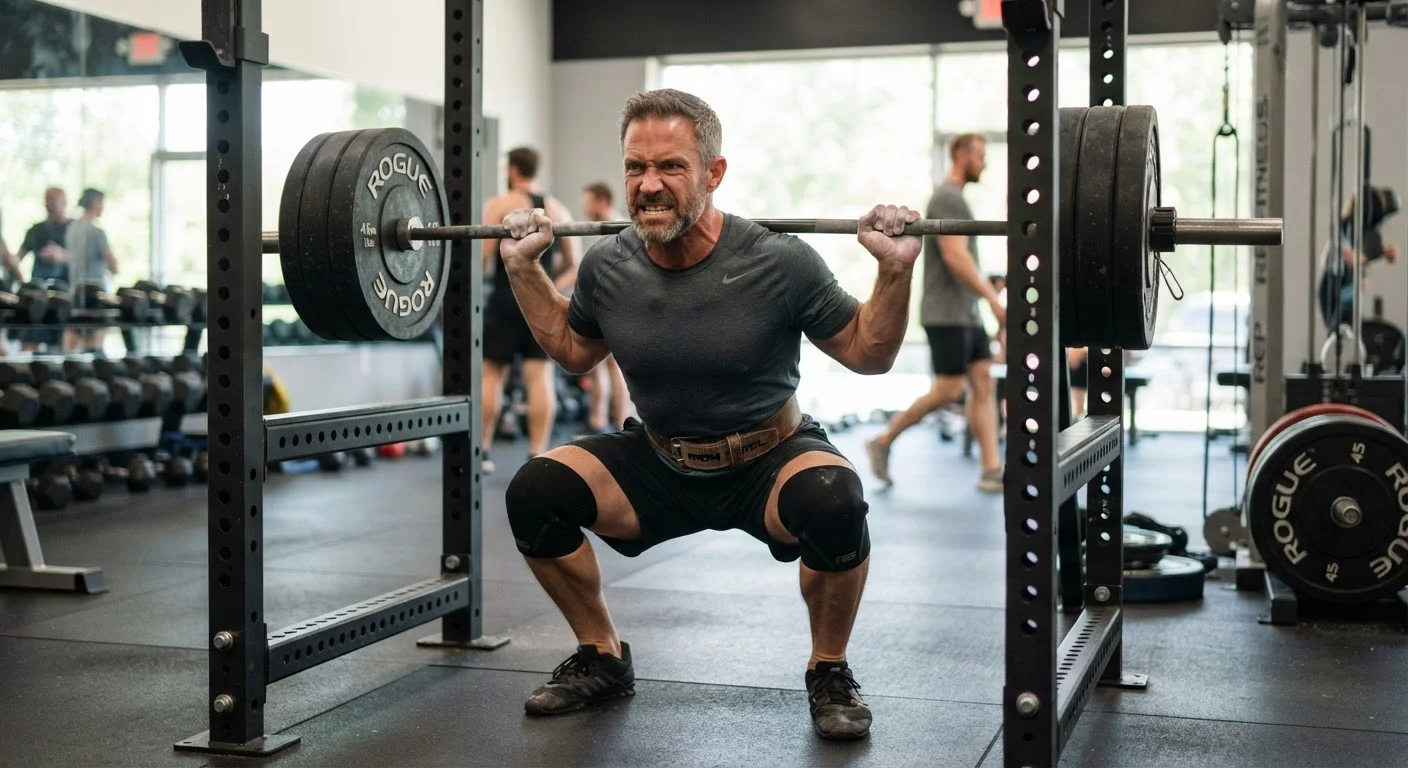
Photo: FeaturingHealth.net | Healthy Living Simplified editorial
Key Takeaways
- Muscle can still be built effectively in your 40s with consistent progressive overload.
- Recovery takes longer after 40, making rest and sleep non-negotiable training variables.
- Testosterone declines gradually with age but does not eliminate the capacity for strength gains.
- Injury risk rises when volume and intensity are increased too quickly — periodization matters more.
- Protein intake needs often increase after 40 to support the same rate of muscle protein synthesis.
- Consulting a healthcare provider before significantly changing your training is always advisable.
What Actually Changes After 40
The biology of muscle building doesn't fundamentally switch off at 40 — but several physiological variables shift in ways that demand attention. Understanding what changes helps you train smarter rather than just training harder.
Recovery slows down. After intense training, inflammatory markers take longer to resolve, and connective tissue — tendons and ligaments — regenerates more gradually than in your 20s. Ignoring this leads to overuse injuries that sideline progress entirely.
Muscle protein synthesis becomes less efficient. Older muscle tissue shows a blunted anabolic response to the same protein dose that would maximally stimulate a younger lifter. This is sometimes called "anabolic resistance" and is well-documented in exercise physiology literature. The practical fix is higher protein intake and training with sufficient intensity to override that blunted signal.
Hormonal shifts are real but often overstated. Testosterone declines gradually — not dramatically — and most men in their 40s retain adequate hormonal capacity for strength adaptation. The decline matters more over decades than over a few years. For a clear-eyed look at what's myth versus evidence on this topic, see Men's Hormonal Health: Separating Common Myths from the Evidence.
How This Differs for Women
What Doesn't Change: The Core Principles Hold
Progressive overload — systematically increasing the demand placed on muscles over time — remains the primary driver of strength adaptation at any age. Your muscles still respond to mechanical tension, metabolic stress, and muscle damage through the same fundamental cellular pathways they did at 25.
Compound movements like squats, deadlifts, rows, and presses remain among the most effective tools available. They recruit large muscle groups, stimulate hormonal responses, and build functional strength that transfers to daily life. These movements don't become less effective after 40; they simply require more meticulous execution and warm-up.
Consistency also remains the dominant variable. Men who train regularly through their 40s accumulate a substantial physiological advantage over those who stop and restart. The compounding effect of sustained training outweighs any age-related decline in recovery speed or hormonal output.
“Resistance training is one of the most powerful tools we have for preserving muscle mass, bone density, and metabolic health as men age — and the evidence shows it's never too late to start or continue.”
— Stuart Phillips, Professor of Kinesiology, McMaster University, and researcher in protein metabolism and aging
How to Adapt Your Programming Intelligently
The most productive adjustment men can make after 40 is treating recovery as a training variable — not an afterthought. This means building deload weeks into your program every four to six weeks, prioritizing 7–9 hours of sleep, and not treating consecutive hard sessions as a badge of toughness.
Volume before intensity. If you're returning to lifting or ramping up, increase total weekly sets before increasing load. Tendons and joints adapt more slowly than muscle, and loading them too fast is a common injury vector for men in their 40s.
Periodization pays off more. Structured programs that cycle between higher-volume and higher-intensity phases manage cumulative fatigue better than doing the same thing every week. Linear periodization or simple wave-loading schemes work well for most lifters at this stage.
Integrate conditioning strategically. Cardiovascular fitness and muscular strength are not mutually exclusive goals. The evidence on concurrent training shows that with sensible programming, both can be developed simultaneously — a topic covered thoroughly in Aerobic Fitness vs. Muscular Strength: Do Men Have to Choose?.
Prioritize Warm-Up Time After 40
1–2%
Annual muscle mass loss without resistance training after 40
Sarcopenia research consistently estimates this rate of decline in untrained middle-aged adults, making strength training one of the most impactful preventive interventions available.
~1%
Annual testosterone decline rate after age 30
The American Urological Association notes that testosterone declines gradually with age, though the rate and impact vary substantially between individuals.
1.6–2.2g/kg
Daily protein target per kilogram of bodyweight for older lifters
A range supported by multiple systematic reviews examining muscle protein synthesis in adults over 40 engaged in resistance training.
This article is for general informational and educational purposes only and does not constitute medical advice. Always consult a qualified healthcare professional before making significant changes to your exercise routine, especially if you have an existing health condition or injury.
Frequently Asked Questions
The content on this site is for informational purposes only and is not a substitute for professional advice. Always consult a qualified professional for guidance specific to your situation.