
High-Intensity Interval Training vs. Steady-State Cardio for Women

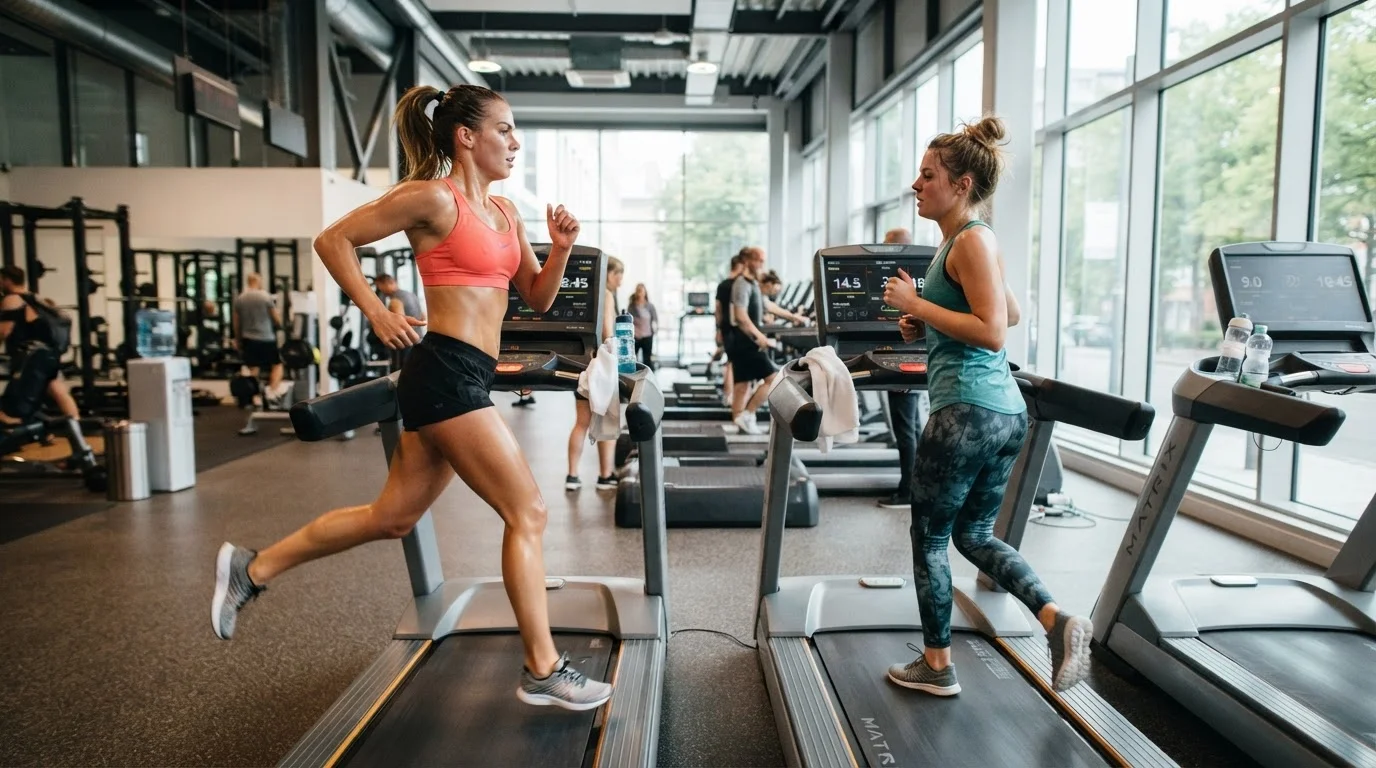
Photo: FeaturingHealth.net | Healthy Living Simplified editorial
Key Takeaways
- HIIT and steady-state cardio produce meaningfully different hormonal and metabolic responses in women.
- Women's estrogen levels influence how efficiently fat is used as fuel during exercise.
- HIIT sessions are shorter but demand more recovery time, which matters across a woman's menstrual cycle.
- Steady-state cardio is generally more sustainable for those managing high stress or hormonal fluctuations.
- Combining both modalities is often more effective than committing exclusively to one approach.
How Women's Physiology Shapes the Cardio Conversation
When comparing high-intensity interval training (HIIT) and steady-state cardio, it's tempting to look for a single winner. But for women, the answer is shaped by biology — specifically by hormonal fluctuations, substrate metabolism, and recovery capacity that differ meaningfully from men's. Understanding these factors is essential before prescribing any cardio protocol.
Estrogen, the primary female sex hormone, plays a direct role in how the body uses energy during exercise. Research suggests estrogen promotes greater reliance on fat as a fuel source compared to carbohydrates, particularly during moderate-intensity, longer-duration activity — the zone where steady-state cardio operates. This is one reason why women's responses to cardio training can differ from what male-centric research predicts. For more on how female physiology shapes exercise outcomes, see why women's muscles respond differently to strength training.
The menstrual cycle also matters. Estrogen and progesterone shift across four phases, influencing energy availability, perceived effort, and recovery speed. A session that feels manageable in the follicular phase may feel considerably harder in the luteal phase — and that's a physiological reality, not a performance failure.
HIIT: Benefits and Considerations for Women
High-intensity interval training alternates short bursts of near-maximal effort with recovery periods. Sessions typically run 20–30 minutes, making HIIT appealing for time-constrained schedules. The cardiovascular and metabolic adaptations are well-documented: improved VO2 max, enhanced insulin sensitivity, and an "afterburn" effect (technically called excess post-exercise oxygen consumption, or EPOC) that continues calorie expenditure after the session ends.
For women, however, HIIT carries specific considerations. High-intensity exercise triggers a significant cortisol response. When cortisol is already elevated — due to poor sleep, chronic stress, or certain phases of the menstrual cycle — adding frequent HIIT sessions can compound hormonal disruption rather than support health. Women experiencing irregular cycles, persistent fatigue, or difficulty recovering between sessions should treat these as signals worth discussing with a healthcare provider.
Watch for Signs of Overtraining
That said, HIIT is not contraindicated for most healthy women. Limiting intense sessions to two or three times per week and aligning harder workouts with the follicular phase (the two weeks following menstruation, when energy and recovery capacity tend to peak) is a practical starting point. This cycle-syncing approach is gaining traction in sports science, though research is still evolving.
Steady-State Cardio: Benefits and Considerations for Women
Steady-state cardio — sustained activity at a consistent, moderate intensity for 30 minutes or more — has long been the default cardio prescription. Walking briskly, cycling, swimming, or jogging at a conversational pace all qualify. For women, this modality aligns particularly well with estrogen's fat-oxidation advantage, making it an effective tool for cardiovascular conditioning and body composition over time.
Steady-state cardio also places a lower demand on the adrenal system, making it more compatible with high-stress periods or hormonal fluctuations. Women navigating perimenopause, in particular, often find that lower-intensity exercise supports mood stability and sleep quality without overtaxing a hormonal system already in flux. Fitness approaches that support women during perimenopause explores this in greater depth.
Time Your Workouts to Your Cycle
The primary limitation is time efficiency. Achieving comparable cardiovascular adaptation through steady-state cardio generally requires longer sessions than HIIT. For women already balancing demanding schedules, this can be a barrier to consistency — and consistency is, ultimately, the most important variable in any training plan. Low-impact exercise and its true cardiovascular benefits offers an honest assessment of what moderate-pace workouts actually deliver.
Building a Cardio Strategy That Fits
| HIIT | Steady-State Cardio | |
|---|---|---|
| Session Duration | 20–30 minutes | 30–60+ minutes |
| Cortisol Response | High — significant stress signal | Low to moderate |
| Fat Oxidation During Exercise | Lower — primarily carbohydrate fuel | Higher — favors fat as fuel |
| Post-Exercise Calorie Burn (EPOC) | Elevated for several hours | Minimal afterburn effect |
| Recovery Demand | Higher — needs 48 hrs between sessions | Lower — can be done daily |
| Hormonal Compatibility | Best in follicular phase | Suitable across all cycle phases |
| Joint Impact | Moderate to high | Low to moderate |
| Long-Term Adherence | Can be harder to sustain | Generally more sustainable |
For most women, the evidence points toward a complementary approach: steady-state cardio as the foundation — providing consistent aerobic stimulus without excessive recovery demands — supplemented by one to two HIIT sessions per week, timed when energy and recovery capacity are highest. This structure supports cardiovascular fitness, metabolic health, and hormonal balance without pushing the body into chronic stress.
It's also worth considering how cardio fits alongside resistance training. Cardio alone — whether HIIT or steady-state — does not fully address the bone density, muscle preservation, and metabolic rate benefits that strength training provides. Strength training vs. cardio for women's long-term health examines why the most effective programmes typically include both. Hormonal health sits at the core of how women respond to exercise stress — explore the broader picture at Women's Hormonal Health.
This article is for general informational and educational purposes only and does not constitute medical advice. Always consult a qualified healthcare professional before beginning or significantly modifying an exercise programme, particularly if you have an existing health condition, hormonal concern, or are pregnant.
The content on this site is for informational purposes only and is not a substitute for professional advice. Always consult a qualified professional for guidance specific to your situation.