
Movement Patterns Worth Prioritising in Any Women's Strength Programme

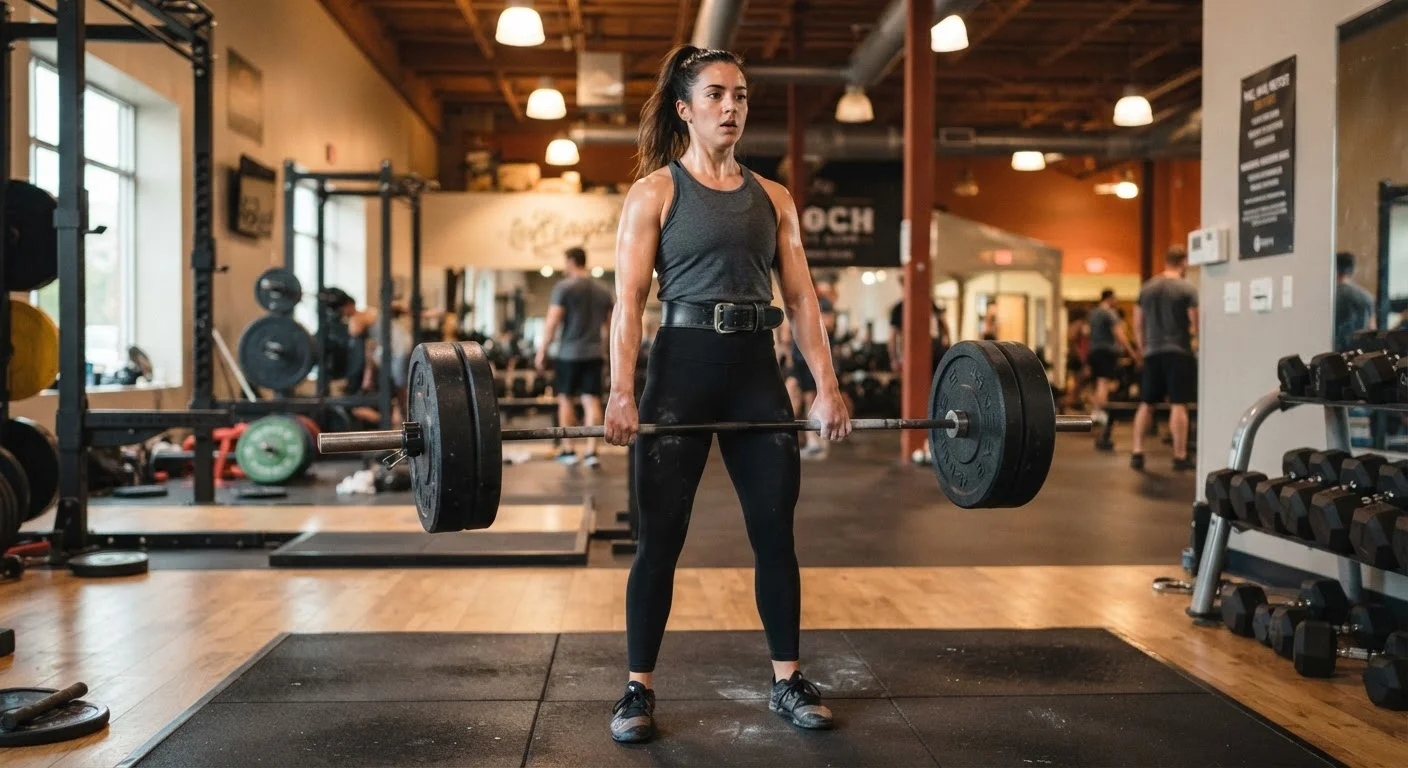
Photo: FeaturingHealth.net | Healthy Living Simplified editorial
Key Takeaways
- Five core movement patterns — hinge, squat, push, pull, carry — cover the full spectrum of functional strength.
- Training these patterns builds resilience against injury and supports long-term bone density and metabolic health.
- Women benefit from emphasising posterior chain and hip-dominant movements, which are frequently undertrained.
- Mastering movement quality before adding load reduces injury risk and accelerates strength gains.
- Pelvic floor considerations are relevant when programming high-load or high-impact variations of these patterns.
Why Movement Patterns Matter More Than Exercises
Ask ten trainers for the best exercises for women and you will get ten different lists. Ask which movement patterns matter most, and the answer converges quickly. Patterns — not individual exercises — are the architectural logic of a well-designed programme. Every squat variation, every row, every loaded carry belongs to a category of movement your body repeats across daily life and sport alike.
Understanding the physiology helps clarify the priority. As explored in our piece on how women's muscles respond to strength training, hormonal profiles, joint laxity, and neuromuscular recruitment patterns create genuine differences in how women adapt to resistance work. Building a programme around fundamental patterns — rather than isolated muscles — accounts for those differences more effectively than copying a generic bodybuilding template.
The five patterns below are not exhaustive, but they are foundational. Together they address the posterior chain, hip mechanics, upper-body pressing and pulling capacity, and real-world load tolerance. If your current programme consistently includes each one, you are building strength that transfers beyond the gym.
The Hip Hinge
The hip hinge is arguably the most important pattern women can develop — and one of the most commonly neglected. It underpins deadlifts, Romanian deadlifts, kettlebell swings, and good mornings. Mechanically, it trains the posterior chain: glutes, hamstrings, and the erector muscles of the lower back.
Women tend to be quad-dominant relative to their posterior chain, a disparity linked to higher rates of knee injury, particularly ACL tears. Prioritising the hinge pattern directly addresses this imbalance. It also builds the hip extensor strength that supports posture, pelvic stability, and bone density at the femoral neck — a clinically relevant site for osteoporosis risk.
Start with a bodyweight or light dumbbell Romanian deadlift to establish the hip-back dissociation before loading a barbell.
The hip hinge directly counters quad dominance — a key injury risk factor for women athletes.
The Squat
The squat pattern — goblet squats, barbell back squats, front squats, box squats — develops the quadriceps, glutes, and core under compressive load. Unlike the hinge, it is knee-dominant and trains the anterior chain alongside the posterior.
For women, squatting builds thigh and hip muscle mass that protects the knee joint, supports pelvic alignment, and contributes to the anabolic stimulus needed to maintain lean mass during hormonal fluctuations across the lifespan. Deep squat variations also demand significant hip mobility, making them a useful diagnostic of lower-body range of motion.
Technique priority: maintain a neutral spine, track knees over toes, and allow natural forward torso lean. Depth should be earned progressively, not forced.
Squat variations build the thigh and hip strength that directly protects the knee joint long-term.
The Vertical and Horizontal Push
Pushing patterns divide into two planes: horizontal (pressing away from the chest, as in a bench press or push-up) and vertical (pressing overhead, as in a shoulder press). Both matter, and both are frequently deprioritised in programmes designed around lower-body aesthetics.
Upper-body pushing strength has practical relevance across the lifespan — from lifting objects above head height to breaking a fall safely. It also maintains shoulder joint integrity and contributes to the upper-body bone density that becomes increasingly important post-menopause.
Women tend to have proportionally less upper-body muscle mass than men, which makes consistent push training a meaningful investment. The push-up — bodyweight, incline, or full — is an underrated benchmarking tool for upper-body relative strength.
Consistent push training maintains shoulder integrity and upper-body bone density across the lifespan.
The Vertical and Horizontal Pull
Pull patterns — rows, lat pulldowns, face pulls, chin-ups — develop the upper and mid back, biceps, and rear deltoids. They are the counterbalance to all pressing movements and are essential for postural health, particularly for women who spend significant time at desks or nursing infants.
Horizontal rows (cable rows, dumbbell rows, inverted rows) target the mid-trapezius and rhomboids, directly opposing the rounded-shoulder posture that chronic sitting promotes. Vertical pulls (lat pulldowns, assisted or full pull-ups) develop the latissimus dorsi — the largest muscle in the back — and build the pulling strength that underpins deadlift performance and core stability.
A useful programming ratio is to match or slightly exceed pull volume relative to push volume across the week, particularly if posture is a concern.
Pull volume should match or exceed push volume to support posture and long-term shoulder health.
The Loaded Carry
Loaded carries — farmer's carries, suitcase carries, overhead carries — are the most functional pattern on this list and one of the most underused in traditional gym programmes. They train the body to resist collapse under load while moving, demanding coordination between the grip, core, shoulder girdle, and hips simultaneously.
For women, the suitcase carry (single-sided load) is particularly valuable. It creates a lateral stability demand on the trunk that directly strengthens the quadratus lumborum and obliques — muscles critical for back health and pelvic control. Overhead carries extend this demand to the shoulder stabilisers and require active engagement of the serratus anterior, a muscle often weak in desk workers.
Carries require no complex technique coaching and can be loaded immediately with dumbbells or kettlebells, making them accessible at virtually any training stage.
The suitcase carry trains lateral trunk stability — a direct investment in long-term back and pelvic health.
Putting It All Together
A balanced programme does not need to train all five patterns in every session, but each should appear with meaningful frequency across the week. For women new to structured lifting — particularly those starting after 40 — our guide to beginning resistance training after 40 offers a practical starting framework that maps well onto these patterns.
Progress Load Gradually and Consistently
One often-overlooked consideration is pelvic floor health. High-load hinges, heavy carries, and certain squat variations place significant intra-abdominal pressure on this muscle group. Understanding how to manage that pressure is part of training safely and sustainably — our overview of pelvic floor health and exercise covers what every active woman should know before progressing intensity.
Strength training and cardiovascular work are not competing priorities — they serve different and complementary functions, a distinction examined in our comparison of strength and cardio for women's long-term health. Anchoring your lifting in these foundational patterns gives that broader fitness picture a strong structural core.
This article is for general informational purposes only and does not constitute medical or personal training advice. Consult a qualified healthcare provider or certified fitness professional before beginning or modifying any exercise programme, particularly if you have existing health conditions or are pregnant or postpartum.
The content on this site is for informational purposes only and is not a substitute for professional advice. Always consult a qualified professional for guidance specific to your situation.