
Why Your Body Absorbs Nutrients Differently Depending on What You Eat Together

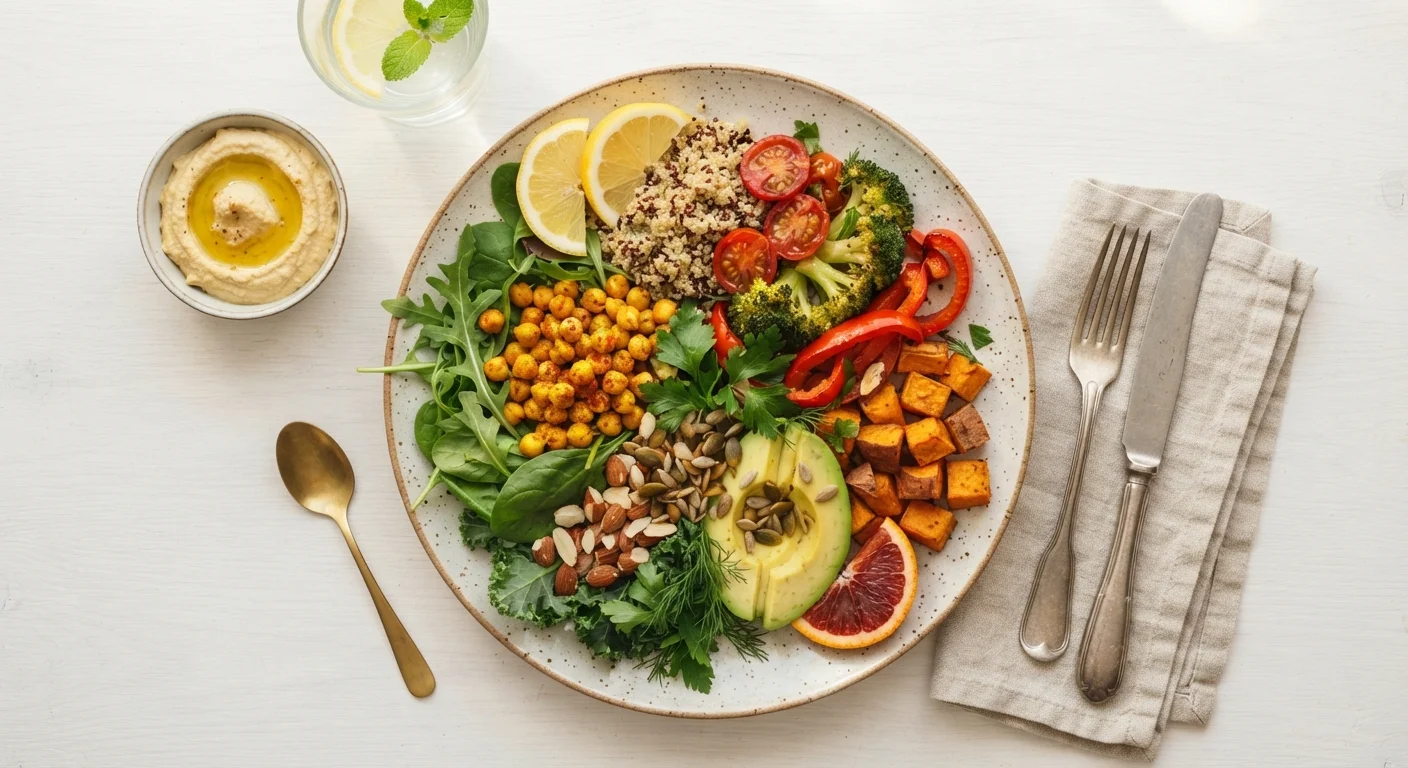
Photo: FeaturingHealth.net | Healthy Living Simplified editorial
Key Takeaways
- Fat-soluble vitamins A, D, E, and K require dietary fat to be absorbed properly.
- Vitamin C significantly boosts the absorption of non-heme iron from plant foods.
- Calcium and iron compete for the same absorption pathways — timing matters.
- Pairing foods strategically can meaningfully improve your micronutrient intake.
Absorption Is Not Automatic
Eating a nutrient-rich food does not guarantee your body absorbs all — or even most — of what it contains. Bioavailability is the term nutritional scientists use to describe how much of a nutrient your body actually takes up and uses. It varies based on the nutrient's form, your individual physiology, and critically, what else you eat at the same meal.
Understanding what vitamins and minerals do in the body is a useful starting point, but knowing how to help your body absorb them effectively is the next practical step. Food pairings can either enhance or inhibit absorption — and some of the effects are substantial.
This Is General Education, Not Medical Advice
Food Pairings That Boost Absorption
Several well-established nutrient interactions work in your favour when you combine the right foods. These are not fringe ideas — they are supported by decades of nutrition research and reflected in mainstream dietary guidance.
Pair non-heme iron sources with vitamin C at the same meal.
Eat fat-soluble vitamins alongside a source of healthy fat.
Separate high-calcium and high-iron foods when iron intake is a priority.
Use oxalate-awareness to choose which greens to rely on for calcium.
Avoid drinking tea or coffee immediately before or after iron-rich meals.
“The bioavailability of nutrients — how much the body actually absorbs and uses — can vary enormously depending on the food matrix and what else is consumed at the same time. Choosing the right combinations is a meaningful, practical lever for better nutrition.”
— Marion Nestle, Professor Emerita of Nutrition, Food Studies, and Public Health
Key Data Points Worth Knowing
The magnitude of some nutrient interactions is significant enough to affect real-world dietary outcomes, particularly for people eating plant-forward diets or managing nutrient gaps. The numbers below illustrate why pairing strategy is worth paying attention to.
Up to 6×
Increase in non-heme iron absorption with vitamin C
Research published in nutritional science literature consistently shows vitamin C can multiply non-heme iron absorption several-fold when consumed together.
~5%
Non-heme iron absorbed without enhancers
The NIH Office of Dietary Supplements notes that non-heme iron absorption averages around 2–20% depending on dietary context, with lower figures typical without absorption enhancers.
For a broader look at factors that reduce how much you absorb — including cooking methods, stress, and medications — see our article on factors that deplete micronutrients even when you eat well.
Start Applying This Today
Improving your nutrient absorption does not require an elaborate meal plan. A handful of well-placed habits — practiced consistently — can make a meaningful difference. Below are actions you can take at your very next meal.
Build Smarter Plates Without Overcomplicating Meals
If you are also evaluating whether your food intake meets your micronutrient needs, our comparison of supplements versus whole foods as micronutrient sources provides useful context for thinking through a food-first approach. And for insight into why vitamin D in particular is difficult to obtain reliably from diet alone, see our article on what affects vitamin D absorption.
This article is for informational purposes only and is not a substitute for personalised medical or nutritional advice. Consult a qualified healthcare provider or registered dietitian for guidance specific to your health situation.
The content on this site is for informational purposes only and is not a substitute for professional advice. Always consult a qualified professional for guidance specific to your situation.