
When Eating Well Still Leaves You Short: Factors That Deplete Micronutrients

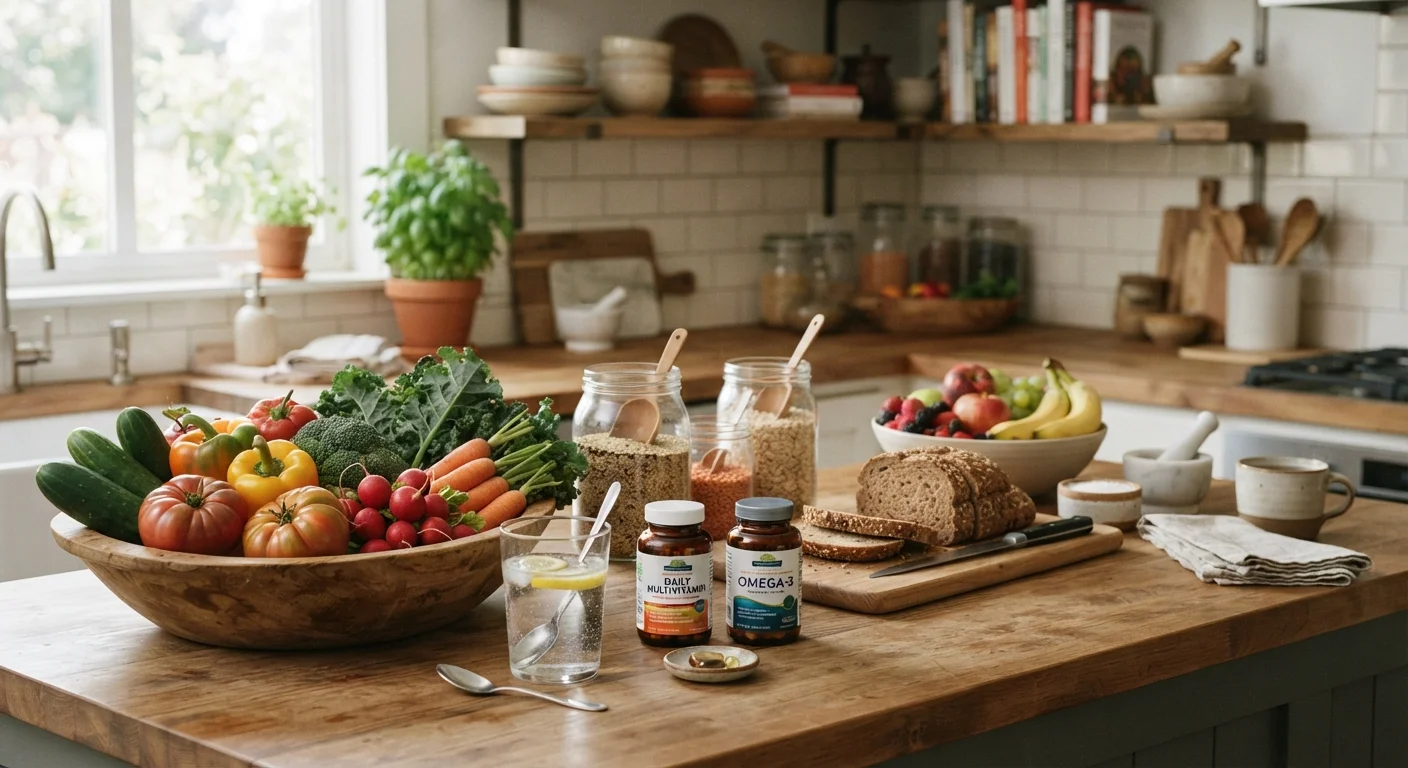
Photo: FeaturingHealth.net | Healthy Living Simplified editorial
Key Takeaways
- Chronic stress raises cortisol, which actively depletes key vitamins and minerals over time.
- Common medications — including antacids and metformin — are known to reduce absorption of specific micronutrients.
- High-heat cooking can destroy a significant portion of heat-sensitive vitamins like vitamin C and folate.
- Poor gut health reduces your ability to absorb nutrients even when your diet looks adequate on paper.
- Absorption depends not just on what you eat, but on competing nutrients, cooking methods, and body conditions.
Why a 'Good Diet' Doesn't Always Guarantee Enough
Most nutrition advice focuses on what to eat — more vegetables, less processed food, adequate protein. That framing is useful, but it overlooks a critical second half of the equation: how much of what you eat actually reaches your cells. Micronutrients (vitamins and minerals your body needs in relatively small amounts) can be consumed in sufficient quantities yet still fall short at the cellular level due to factors that have nothing to do with food choices. For a plain-language grounding in what micronutrients actually do, see our article on vitamins and minerals and what they do in the body.
The mistakes below are common, underappreciated, and correctable. Understanding them helps you move beyond calorie and food-group thinking toward a fuller picture of nutritional status.
Ignoring the effect of chronic stress on micronutrient status.
Overlooking how long-term medications reduce absorption or increase excretion of specific nutrients.
Assuming that boiling vegetables preserves their full vitamin content.
Not accounting for gut health as a determinant of how well nutrients are absorbed.
Treating nutrient content on food labels as equivalent to what the body actually absorbs.
What You Can Actually Do About It
Recognizing these depletion pathways turns a vague sense of 'eating well' into a more precise practice. A few targeted habits make a meaningful difference.
~50%
Vitamin C lost during boiling
Research published in food science literature consistently shows boiling can reduce vegetable vitamin C content by roughly half or more, depending on cooking time.
~30%
Adults with suboptimal magnesium intake
USDA dietary survey data indicate a substantial proportion of American adults fall below the estimated average requirement for magnesium, a mineral vulnerable to both stress and medication depletion.
Pair nutrients strategically. Fat-soluble vitamins (A, D, E, K) need dietary fat to be absorbed — eating a salad with no-fat dressing significantly reduces their uptake. Vitamin C consumed alongside plant-based iron sources enhances iron absorption. Our guide on how food pairings affect nutrient absorption explains the key interactions worth knowing.
Adjust cooking methods thoughtfully. Steaming or microwaving vegetables retains more water-soluble vitamins than boiling. Using cooking water in soups and sauces recovers some of what leaches out. Roasting at moderate temperatures is generally less damaging than prolonged high-heat methods.
Support gut health as a nutrition strategy. Fiber-rich foods, fermented options like yogurt and kefir, and adequate hydration all contribute to an intestinal environment better suited to nutrient absorption. If you have persistent digestive symptoms, consult a healthcare provider — conditions like celiac disease or inflammatory bowel disease significantly compromise absorption and require professional management.
Don't Self-Diagnose a Deficiency
Review your medication list with a clinician. If you take long-term medications, ask your doctor or pharmacist whether they're known to affect specific nutrient levels, and whether monitoring or dietary adjustments are warranted. Do not adjust or discontinue any medication based on nutritional concerns without medical guidance.
For a structured way to audit your own eating patterns for gaps, the micronutrient gap self-assessment is a practical starting point. And if you're wondering whether supplementing makes sense, supplements versus whole foods as micronutrient sources lays out an honest comparison.
This article is for general informational and educational purposes only and is not a substitute for professional medical advice, diagnosis, or treatment. Always consult a qualified healthcare provider with questions about your nutritional status or health conditions.
The content on this site is for informational purposes only and is not a substitute for professional advice. Always consult a qualified professional for guidance specific to your situation.