
The Vitamin D Puzzle: Sun, Food, and What Affects Absorption

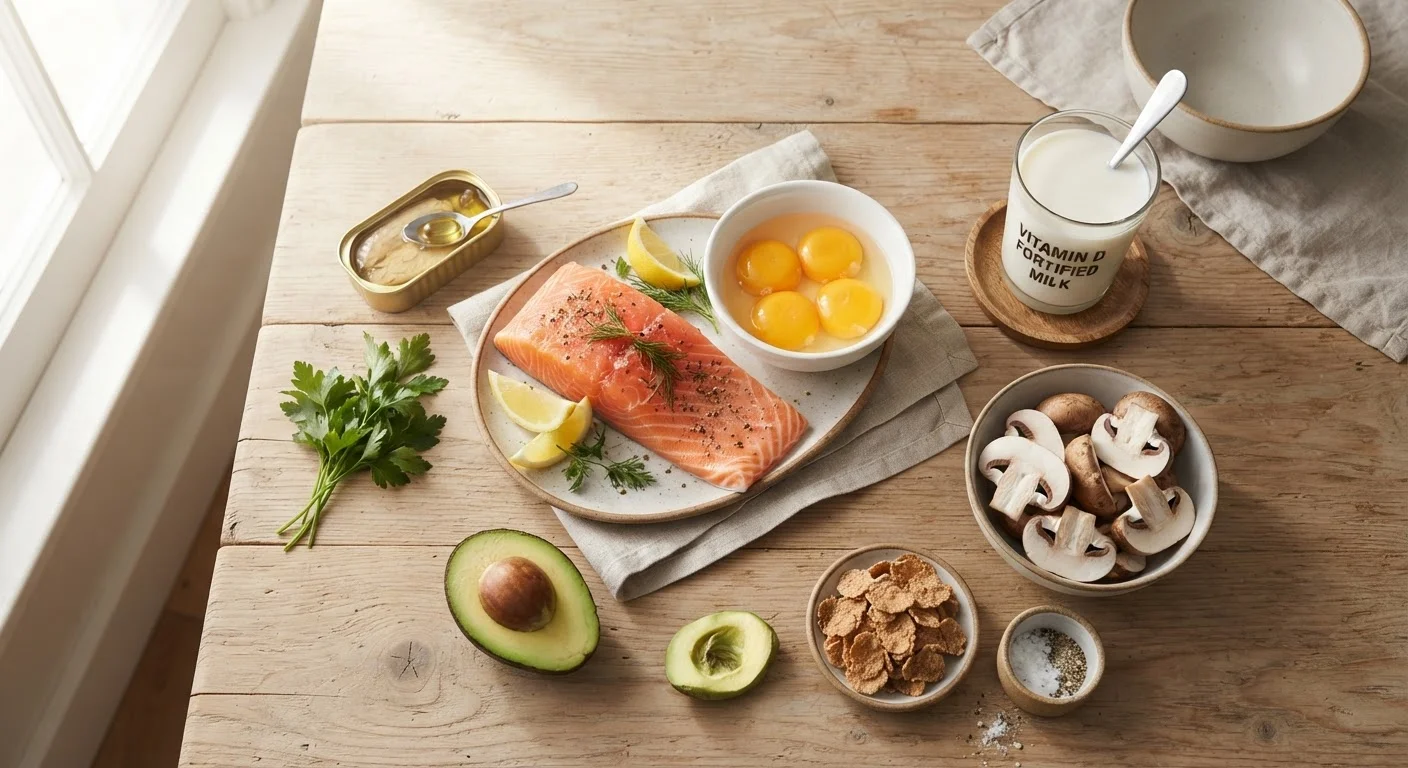
Photo: FeaturingHealth.net | Healthy Living Simplified editorial
Key Takeaways
- Very few foods naturally contain significant amounts of vitamin D, making deficiency surprisingly common.
- Skin tone, age, geographic latitude, and sunscreen use all affect how much vitamin D sunlight produces.
- Vitamin D is fat-soluble, so eating it alongside dietary fat improves absorption meaningfully.
- Fortified foods like milk, orange juice, and cereals are often the most practical dietary sources.
- A healthcare provider can check vitamin D status with a simple blood test if you're concerned.
Why Vitamin D Is Surprisingly Difficult to Get
Vitamin D has an unusual status in nutrition: your body can make it from sunlight, yet deficiency is remarkably common. The reasons are more layered than most people realize. As part of understanding your broader micronutrient needs, vitamin D stands out because it straddles the line between nutrient and hormone.
Unlike vitamins found abundantly across many food groups, vitamin D appears naturally in only a narrow range of foods — and in amounts that often fall short of what the body needs. The USDA and National Institutes of Health list the recommended dietary allowance for most adults at 600 IU (international units) per day, rising to 800 IU for adults over 70. Yet surveys consistently show a large portion of the U.S. population doesn't reach these targets through food alone.
~42%
U.S. adults with vitamin D insufficiency
According to analysis published in the journal Nutrition Research using NHANES data, roughly 42% of American adults have insufficient vitamin D levels.
600 IU
Recommended daily intake for most adults
The National Institutes of Health Office of Dietary Supplements lists 600 IU per day as the recommended dietary allowance for adults aged 19–70.
~570 IU
Vitamin D in 3 oz cooked salmon
The USDA FoodData Central database lists a three-ounce serving of cooked sockeye salmon as providing approximately 570 IU of vitamin D.
Sunlight exposure is theoretically a major source, but real-world conditions make it unreliable for many people. Factors including season, cloud cover, indoor work schedules, and sun protection habits all limit how much UVB radiation actually reaches the skin.
Food Sources: What Actually Contains Vitamin D
Natural food sources of vitamin D are limited to a short list. Fatty fish lead the way: a three-ounce serving of cooked salmon typically provides around 500–600 IU, making it one of the few foods that can come close to meeting daily needs in a single serving. Trout, swordfish, and canned tuna are also meaningful sources. Egg yolks and beef liver contribute smaller amounts.
Because natural sources are so sparse, fortified foods have become a practical pillar of vitamin D intake for most Americans. Cow's milk has been fortified with vitamin D since the 1930s, when rickets — a bone-weakening condition caused by severe deficiency — was a public health concern. Today, fortification extends to many plant-based milk alternatives, some ready-to-eat cereals, and certain orange juice brands.
Mushrooms are a notable exception in the plant world. When exposed to UV light (either sunlight or artificial UV lamps), mushrooms can produce meaningful amounts of vitamin D2. Some commercially produced mushrooms are specifically UV-treated and labeled accordingly.
The Factors That Shape Absorption
Getting vitamin D into your diet is only part of the equation. Several biological and dietary factors determine how much of it your body actually uses.
Fat Content of the Meal
Vitamin D is fat-soluble, meaning it dissolves in fat rather than water. This matters practically: consuming vitamin D — whether from food or a supplement — alongside dietary fat significantly improves how well it's absorbed in the small intestine. For more on how fat-soluble nutrients behave differently from water-soluble ones, see our explainer on fat-soluble vs. water-soluble vitamins. A salad with salmon dressed in olive oil, for instance, is a better vitamin D absorption setup than a fat-free preparation.
Pair Vitamin D Foods With Healthy Fat
Age
As people age, the skin becomes less efficient at synthesizing vitamin D from sunlight. The kidneys, which convert vitamin D into its active form, also become somewhat less effective with age. This is one reason the recommended intake increases for adults over 70.
Skin Pigmentation
Melanin — the pigment that gives skin its color — acts as a natural sunscreen, reducing UVB penetration. People with darker skin tones produce vitamin D more slowly from sun exposure and may need longer exposure times to generate equivalent amounts. This is a physiological reality, not a deficiency of any diet or lifestyle choice.
Body Weight and Fat Distribution
Vitamin D can be sequestered in body fat tissue, potentially reducing its availability in the bloodstream. Research suggests that individuals with higher body fat may have lower circulating vitamin D levels even with equivalent intake.
Gut Health and Absorption Conditions
Certain gastrointestinal conditions — including Crohn's disease, celiac disease, and short bowel syndrome — can impair fat absorption broadly, and vitamin D absorption along with it. If you have a digestive condition, discussing vitamin D status with your healthcare provider is worthwhile. The broader picture of how health and lifestyle factors quietly affect nutrient status is explored in our article on factors that deplete micronutrients.
Putting It Together: A Food-First Approach
No single strategy solves the vitamin D puzzle for everyone, but a food-first approach that accounts for absorption gives you a strong foundation. Prioritize fatty fish a few times per week, choose fortified dairy or plant-based alternatives regularly, and pay attention to meal composition — pairing vitamin D sources with healthy fats supports uptake. Our article on how food pairings affect nutrient absorption goes deeper on this principle.
It's also worth noting that dietary fat itself plays a broader role in nutrient health — beyond just vitamin D. Understanding why your body needs dietary fat helps explain why low-fat diets can sometimes compromise micronutrient status.
“Vitamin D deficiency is one of the most common nutrient deficiencies worldwide, yet it remains underappreciated in clinical practice. Assessing status through blood testing is the only reliable way to know whether an individual's intake is truly sufficient.”
— Michael F. Holick, Professor of Medicine, Physiology, Biophysics and Molecular Medicine, Boston University School of Medicine, and leading vitamin D researcher
If you're unsure whether you're meeting your needs, a simple blood test ordered by your healthcare provider can measure circulating vitamin D levels. This is the most reliable way to understand your individual status and whether dietary changes or supplementation make sense for you.
This article is for informational purposes only and is not a substitute for professional medical advice. Consult a qualified healthcare provider before making changes to your diet, especially if you have an existing health condition.
Frequently Asked Questions
The content on this site is for informational purposes only and is not a substitute for professional advice. Always consult a qualified professional for guidance specific to your situation.