
Building a Meal Routine That Sticks Without Overhauling Your Life

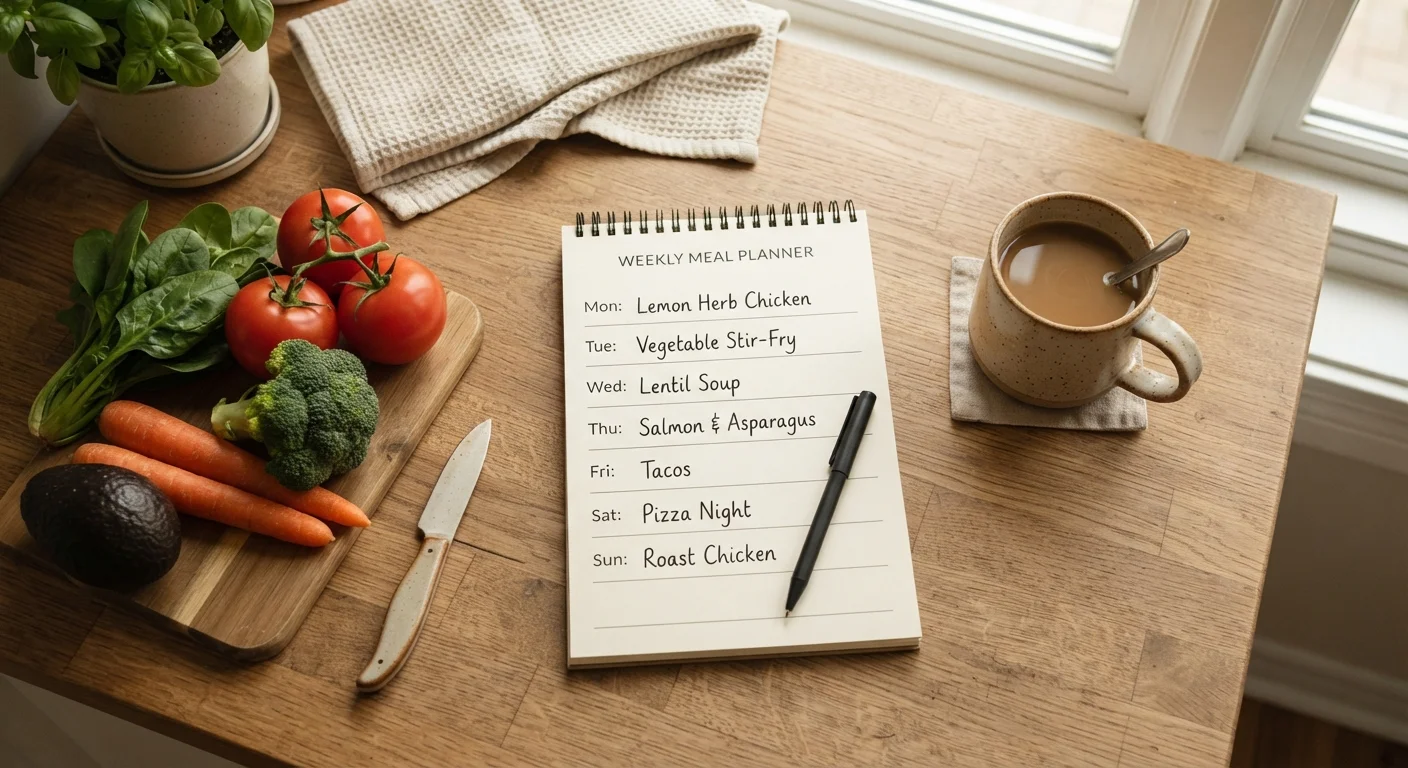
Photo: FeaturingHealth.net | Healthy Living Simplified editorial
Key Takeaways
- Sustainable meal routines are built on small, repeatable behaviors — not perfect eating.
- Anchoring new food habits to existing daily cues dramatically improves consistency.
- Structure reduces decision fatigue, making healthier choices the path of least resistance.
- Flexibility built into a routine prevents one missed day from derailing everything.
- Progress tracking and small wins reinforce the habit loop over time.
Why Most Meal Routines Fail Before They Start
Most people approach eating better the same way they approach a home renovation: tear everything out and start fresh. New grocery list, new recipes, new rules — all at once. Behavioral science consistently shows this approach backfires. When the gap between your current behavior and your new goal is too wide, the effort required feels unsustainable, and most people revert within two weeks. For a closer look at why this pattern repeats, see why new routines fall apart.
A meal routine that sticks isn't built on willpower — it's built on structure. Structure reduces the number of food decisions you need to make each day. Research in behavioral economics describes this as decision fatigue: when you face too many choices, the quality of those decisions declines. A routine automates the low-stakes decisions so your judgment stays sharp for the ones that matter.
The good news is that you don't need a complete lifestyle overhaul. You need a few repeatable anchors — predictable moments in your day when a food behavior occurs automatically, like a morning coffee paired with a consistent breakfast. Before building yours, it helps to understand the underlying mechanics. The habit design checklist covers the conditions most likely to make any new behavior durable.
Start Smaller Than You Think You Should
What You'll Need Before You Begin
No special equipment is required, but a few practical items will make this process easier.
Weekly schedule overview
Helps you identify existing daily cues and time windows where food habits can be anchored.
Simple meal planning template
A one-page or digital grid for mapping out meals across the week without overcomplicating it.
Grocery list (paper or app-based)
Ensures you have the ingredients on hand to execute your planned meals without last-minute decisions.
Food storage containers
Makes batch cooking and grab-and-go meals practical, reducing friction on busy days.
What you will need
How to Build Your Meal Routine Step by Step
Follow these steps in sequence. Each one builds on the last — resist the urge to skip ahead to the meal planning stage before you've mapped your existing schedule.
Map your existing daily schedule
Before adding anything new, write down what your typical weekday actually looks like — when you wake up, leave home, take breaks, and eat. Identify two or three moments that already happen reliably every day. These are your anchor points: the existing behaviors to which you'll attach new food habits.
For example, if you always make coffee at 7 a.m., that's a natural anchor for a consistent breakfast habit. If you always sit down at noon, that's your lunch anchor. Don't invent new time blocks — use the ones already in your life.
Choose two meals to standardize first
Don't try to overhaul every meal simultaneously. Pick two meals — most people find breakfast and lunch are easier to control than dinner — and aim to make each one repeatable with minimal variation. This doesn't mean eating the same thing daily; it means having a small rotating set of go-to options for each slot.
For breakfast, that might mean three options you cycle through: oatmeal with fruit, eggs and whole-grain toast, or yogurt with nuts. The goal is to eliminate the daily question of "what should I eat?" by answering it in advance.
Do a single weekly planning session
Set aside 15–20 minutes once a week — Sunday evening works for many people — to look at the week ahead and assign meals to your anchor points. Note which nights might be busy, and pre-decide a simple fallback for those (a pantry meal, a reliable takeout choice, or a batch-cooked option from the freezer).
Write your grocery list from this plan, not from memory or habit. This step alone prevents the most common mid-week breakdown: standing in the kitchen with no plan and defaulting to whatever requires the least effort, regardless of nutritional value.
Add one small nutritional upgrade
Once your two standardized meals feel automatic — typically after one to two weeks — introduce one targeted improvement rather than a broad overhaul. Examples: add a vegetable to your standard lunch, swap a refined grain for a whole grain at breakfast, or include a protein source you were previously skipping.
Behavioral research on habit formation consistently supports gradual layering over simultaneous change. Each small upgrade compounds over time without the cognitive burden of changing everything at once. For practical strategies on one common upgrade, see approaches to eating more vegetables.
Review and adjust after two weeks
At the two-week mark, look back at your tracking notes. Which meals happened consistently? Which ones didn't? Adjust the plan based on evidence, not assumptions. If Tuesday dinners are always chaotic, stop trying to plan a complex meal for Tuesday — build in a deliberate simple option instead.
This review step is what separates a routine that evolves into a lifestyle from one that quietly fades away. Think of it as a brief systems check, not a judgment of your choices. For a broader framework on what makes routines last past the initial motivation surge, the complete guide to building healthy daily routines covers the full picture.
Avoid Tying Your Routine to Restriction
This article provides general nutrition education and is not a substitute for personalized medical or dietary advice. If you have a health condition, food allergy, or specific nutritional needs, consult a qualified healthcare professional before making significant changes to your diet.
Staying Consistent Without Being Rigid
Consistency doesn't mean perfection. One of the most common structural errors in new routines is building in no room for variation — then treating any deviation as failure. A durable meal routine has a default mode and a flex mode. Your default is what you do on an ordinary Tuesday; your flex mode is what you fall back on when plans change (a quick grain bowl, a reliable takeout order you've pre-decided, a pantry-based backup meal).
The principles behind this kind of durability — anchoring, gradual layering, and self-compassion — apply directly to food habits. The article on making daily health routines durable explores these in depth. For expanding what your routine includes, adding more vegetables without forcing it offers realistic, low-friction strategies that fit naturally into a structured eating pattern.
Track your routine for two weeks using a simple notes app or paper log — not to judge yourself, but to see patterns. Which meals feel automatic? Which feel like effort? That data tells you where to add structure and where you're already succeeding.
The content on this site is for informational purposes only and is not a substitute for professional advice. Always consult a qualified professional for guidance specific to your situation.