
Why Your New Routine Falls Apart After Two Weeks

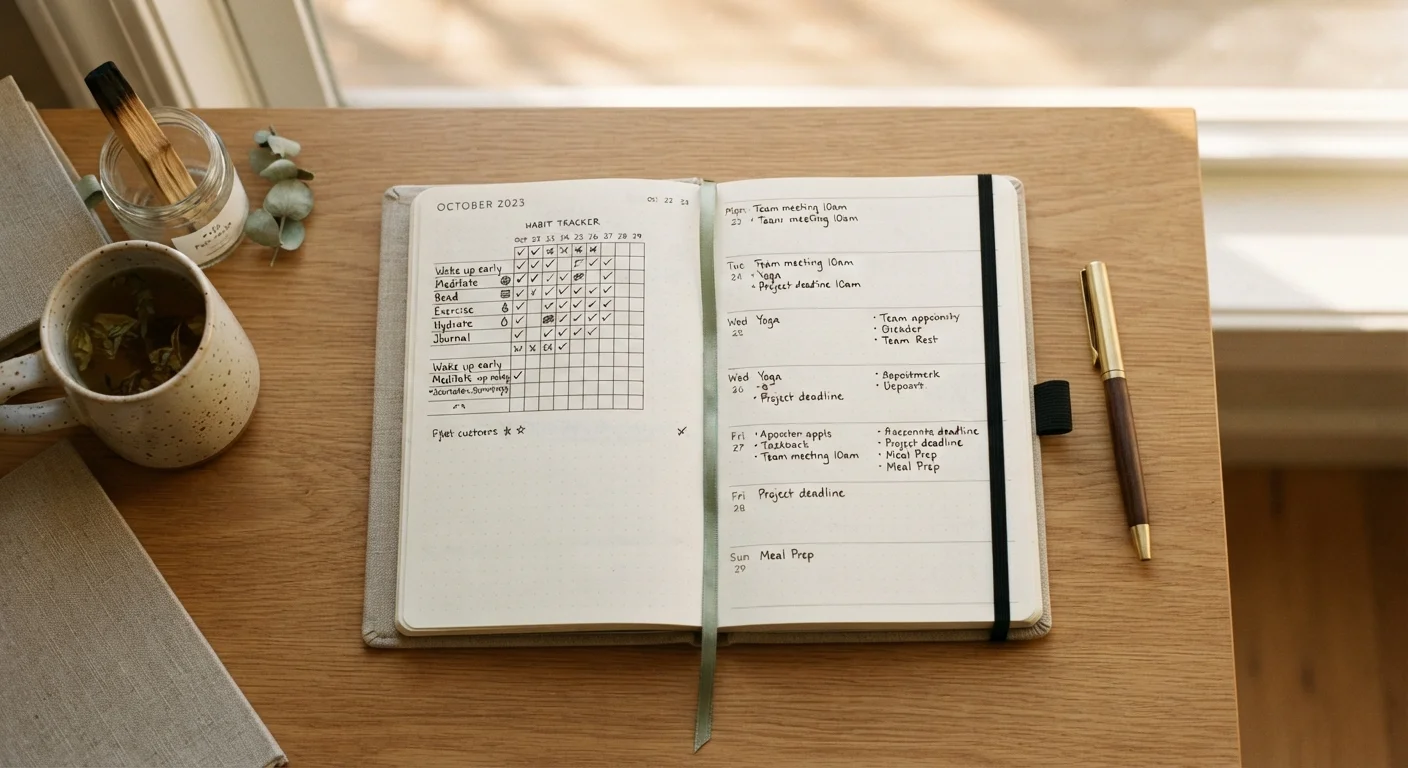
Photo: FeaturingHealth.net | Healthy Living Simplified editorial
Key Takeaways
- Routines typically collapse around the two-week mark due to predictable behavioral and structural errors.
- Starting too large is one of the most common reasons new habits fail quickly.
- Missing a single day isn't the problem — how you respond to that miss determines everything.
- Habit cues and environmental design matter as much as personal willpower.
- Consistency is built through flexibility, not rigid perfectionism.
The Two-Week Wall: Why It Happens
Most people who start a new routine feel energized in the first few days. Motivation is high, the novelty is compelling, and early effort feels manageable. Then, around day ten to fourteen, something shifts. Life interrupts, enthusiasm dips, and the routine quietly disappears.
This isn't a willpower failure — it's a behavioral pattern that researchers have documented consistently. The initial motivation spike fades before a habit has had time to become truly automatic. According to a widely cited study published in European Journal of Social Psychology, habit formation takes an average of 66 days, with a range from 18 to 254 days depending on the behavior and individual. Two weeks is nowhere near enough time to run on autopilot.
Understanding why daily routines support mental and physical health makes it easier to stay committed past the initial motivation dip. But commitment alone isn't enough — you also need to avoid the structural mistakes that make collapse almost inevitable.
Starting with an overly ambitious routine that demands too much time or effort immediately.
Relying on motivation rather than building an environmental cue to trigger the habit.
Treating one missed day as evidence that the routine has failed.
Building a routine that doesn't account for day-to-day variability in schedule or energy.
Never tracking compliance, so there's no feedback loop to learn from.
How to Build a Routine That Survives Real Life
Repairing a broken routine requires more than renewed resolve. It requires redesigning the structure itself. Start by auditing what actually broke down — was it the size of the habit, the missing cue, or a response to one missed day that snowballed into abandonment?
66 days
Average time to form a new habit
A study published in the European Journal of Social Psychology found habit formation averages 66 days, ranging from 18 to 254 depending on the behavior.
40%
Of daily behaviors run on habit, not decision
Research from Duke University suggests roughly 40% of daily actions are habitual, underscoring why environmental design matters more than repeated conscious choice.
Environmental design is one of the most evidence-supported tools available. Research in behavioral science consistently shows that reducing friction — the number of steps between you and a desired behavior — dramatically increases follow-through. Lay out your workout clothes the night before. Keep your journal on your pillow. Prepare tomorrow's meals while tonight's dinner cooks.
If you're working on eating habits specifically, building a meal routine that doesn't require overhauling your life shows how small repeatable actions compound over time without overwhelming your schedule.
Finally, plan for disruption explicitly. Identify two or three scenarios that typically derail you — travel, a late work night, illness — and decide in advance what a "minimum viable" version of your routine looks like in those moments. Doing five minutes instead of thirty isn't failure; it's continuity. And continuity is what eventually produces automaticity.
For a practical framework to apply these principles from the start of your day, see building a morning routine that actually sticks.
This article is for informational purposes only and does not constitute medical advice. Consult a qualified healthcare professional before making changes to your health routine, especially if you have an existing medical condition.
The content on this site is for informational purposes only and is not a substitute for professional advice. Always consult a qualified professional for guidance specific to your situation.