
Vaccine Schedules From Infancy to Later Life

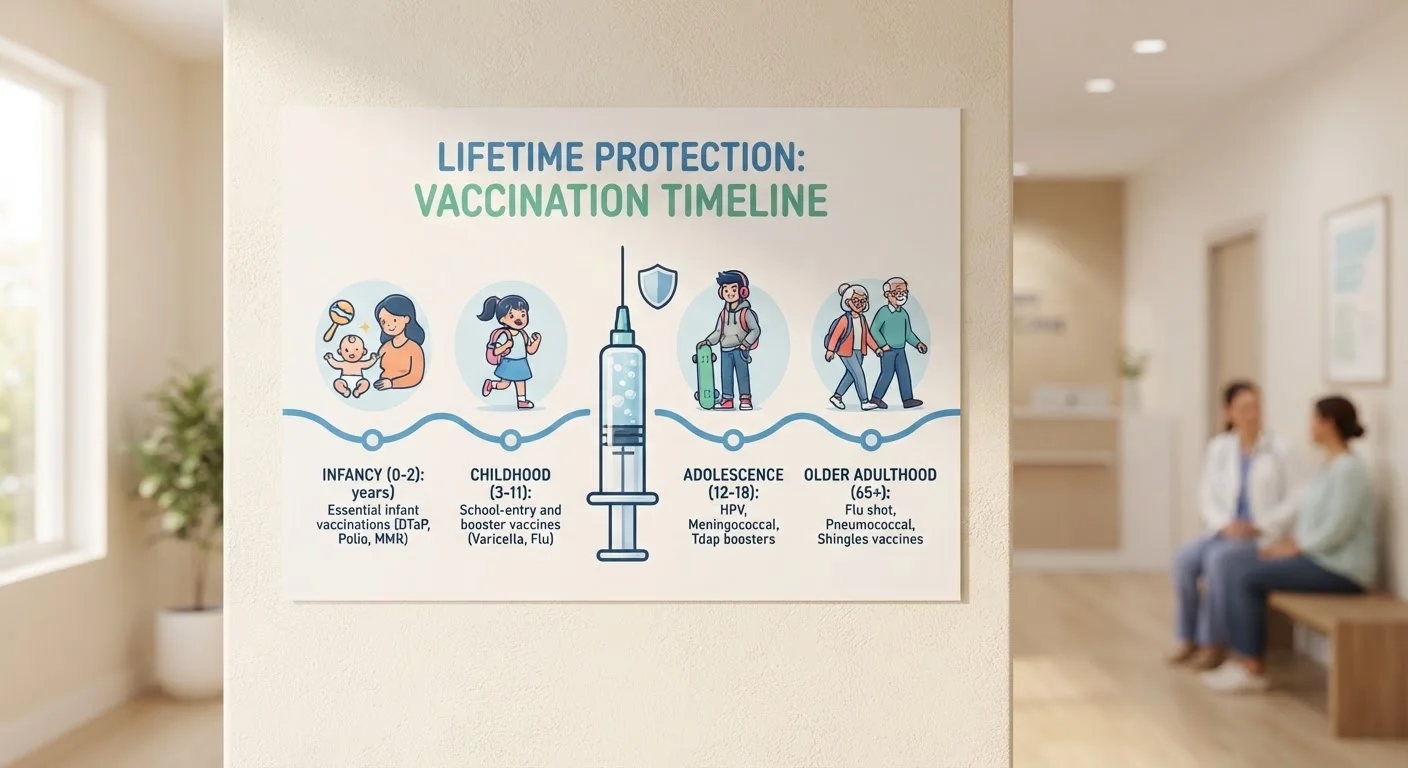
Photo: FeaturingHealth.net | Healthy Living Simplified editorial
Key Takeaways
- The CDC and ACIP publish updated immunization schedules annually for all age groups.
- Many vaccines require multiple doses spaced weeks or months apart to build full protection.
- Adults need boosters and new vaccines throughout life — immunization does not end at childhood.
- People with certain health conditions or pregnancies may follow modified schedules.
- Maintaining accurate vaccination records helps providers fill gaps and avoid missed doses.
Why Timing Matters in Vaccination
Vaccines are most effective when given at the right developmental moment. A newborn's immune system responds differently than a teenager's or a 70-year-old's, and pathogens carry the greatest risk during specific life stages. The Advisory Committee on Immunization Practices (ACIP), which advises the CDC, structures the U.S. immunization schedule around three core principles: protection when vulnerability is highest, adequate time for immunity to develop before exposure, and spacing that maximizes the immune response without interference between vaccines.
Understanding the schedule as a whole — rather than a series of isolated appointments — helps families and individuals make informed decisions and recognize when they may have gaps to address. To understand what is actually happening inside the body after each dose, see our overview of how the immune system responds to a vaccine.
16
Vaccine-preventable diseases targeted before age 2
According to the CDC's childhood immunization schedule, the standard series covers up to 16 diseases in the first two years of life.
50%
Reduction in flu hospitalization with annual vaccination
CDC estimates suggest influenza vaccination reduces flu-related hospitalizations by roughly 40–60% in seasons with a well-matched vaccine.
1 in 3
Adults who will develop shingles in their lifetime
The CDC estimates approximately one in three people in the United States will develop shingles, with risk increasing significantly after age 50.
The Infant and Early Childhood Schedule (Birth to Age 6)
The first six years of life carry the densest concentration of recommended vaccines. Newborns receive a hepatitis B dose within 24 hours of birth, beginning protection before any potential exposure. Over the following months, the schedule incorporates vaccines targeting:
- Rotavirus — a leading cause of severe infant diarrhea
- DTaP — diphtheria, tetanus, and pertussis (whooping cough)
- Hib — Haemophilus influenzae type b, which can cause meningitis
- Pneumococcal conjugate (PCV) — protects against bacterial pneumonia and meningitis
- Inactivated poliovirus (IPV)
- Influenza — annually from age 6 months onward
- MMR — measles, mumps, and rubella
- Varicella — chickenpox
- Hepatitis A
Most of these require two to four doses to build durable immunity. The spacing is deliberate: the immune system needs time between doses to mount a progressively stronger memory response.
Keep a Vaccine Record From Day One
Preteens and Adolescents (Ages 7–18)
The preteen visit at age 11–12 is a key preventive milestone. ACIP recommends three vaccines at this point that are not part of the early childhood schedule:
- Tdap — a booster covering tetanus, diphtheria, and pertussis
- MenACWY — meningococcal disease, with a booster at age 16
- HPV vaccine — human papillomavirus, ideally started at 11–12 when two doses provide full protection; three doses are recommended for those who begin at 15 or older
Adolescents who missed any earlier vaccines should receive catch-up doses at this stage. Additionally, MenB (meningococcal B) vaccination may be recommended for certain teens, particularly those heading to college campuses where close-contact living increases risk.
Do not skip the age-16 MenACWY booster just because your teen received the first dose at 11–12. Protective antibody levels wane substantially by the time students enter college, exactly when meningococcal risk is highest in shared living environments.
When reviewing an adult patient's vaccination history, treat any undocumented childhood vaccine as potentially missing and check current ACIP catch-up guidance rather than assuming prior completion.
Adults in Their 20s Through 50s
Vaccination needs in adulthood are frequently underestimated. Many adults assume childhood immunization was sufficient, yet immunity from certain vaccines wanes, and life circumstances — travel, pregnancy, new chronic conditions — create fresh recommendations.
Core adult considerations include:
- Tdap/Td — a Tdap booster once as an adult if not received in adolescence, followed by a Td booster every 10 years
- Influenza — annually for all adults
- COVID-19 — per current CDC guidance, which is updated regularly
- Hepatitis B — ACIP now recommends hepatitis B vaccination for all adults through age 59 who were not previously vaccinated, and shared decision-making for those 60 and older
- RSV vaccine — recommended for adults 60 and older and certain younger adults with risk factors
Pregnancy introduces additional considerations; timing of Tdap and influenza vaccination during pregnancy is specifically recommended to provide passive protection to the newborn. Consult your provider for individualized guidance — see our article on vaccination in pregnancy for an evidence-based overview.
For a fuller picture of the vaccines most relevant to adults at different life stages, see our adult immunization reference guide.
Vaccine Recommendations Change — Check Annually
Adults 60 and Older
Immunosenescence — the gradual decline in immune function that accompanies aging — means older adults face both greater infectious disease risk and sometimes reduced vaccine responsiveness. Recommendations for this group reflect both of those realities.
- Shingles (Zoster) vaccine (RZV) — two doses for adults 50 and older; particularly important because shingles risk rises sharply with age
- Pneumococcal vaccines — PCV15 or PCV20 for adults 65 and older, with sequencing determined by prior vaccination history
- Influenza — high-dose or adjuvanted formulations are preferred for adults 65 and older
- RSV vaccine — recommended for adults 60 and older
Our dedicated article on immunization for adults over 60 explains how the aging immune system shapes these specific recommendations in greater detail.
High-Dose Flu Vaccine for Older Adults
Tracking and Maintaining Your Immunization Records
Gaps in vaccination history are common, particularly among adults who changed providers or lost records. Most states maintain immunization information systems (IIS) that providers can query. Requesting a copy of your records — and keeping a personal file — is a practical step that pays dividends every time you see a new clinician or need proof of vaccination for travel or employment.
If records are unavailable and prior vaccination status is uncertain, providers can check antibody titers for some diseases or simply administer the recommended series, as receiving an extra dose of most vaccines is generally safe. Our guide on getting your vaccination records in order provides practical steps for consolidating your immunization history.
Some individuals — including those who are immunocompromised, have certain chronic conditions, or experienced gaps in the standard schedule — may need modified timing or additional doses. See why some people need additional or earlier doses for more on those situations. Immunization also fits within the broader framework of preventive care; the lifelong screening calendar offers a complementary view of age-based preventive health milestones.
This article is for general informational and educational purposes only and does not constitute medical advice. Immunization schedules should be reviewed with a qualified healthcare provider who can account for your individual health history, current medications, and specific risk factors.
The content on this site is for informational purposes only and is not a substitute for professional advice. Always consult a qualified professional for guidance specific to your situation.