
How the Immune System Actually Responds to a Vaccine

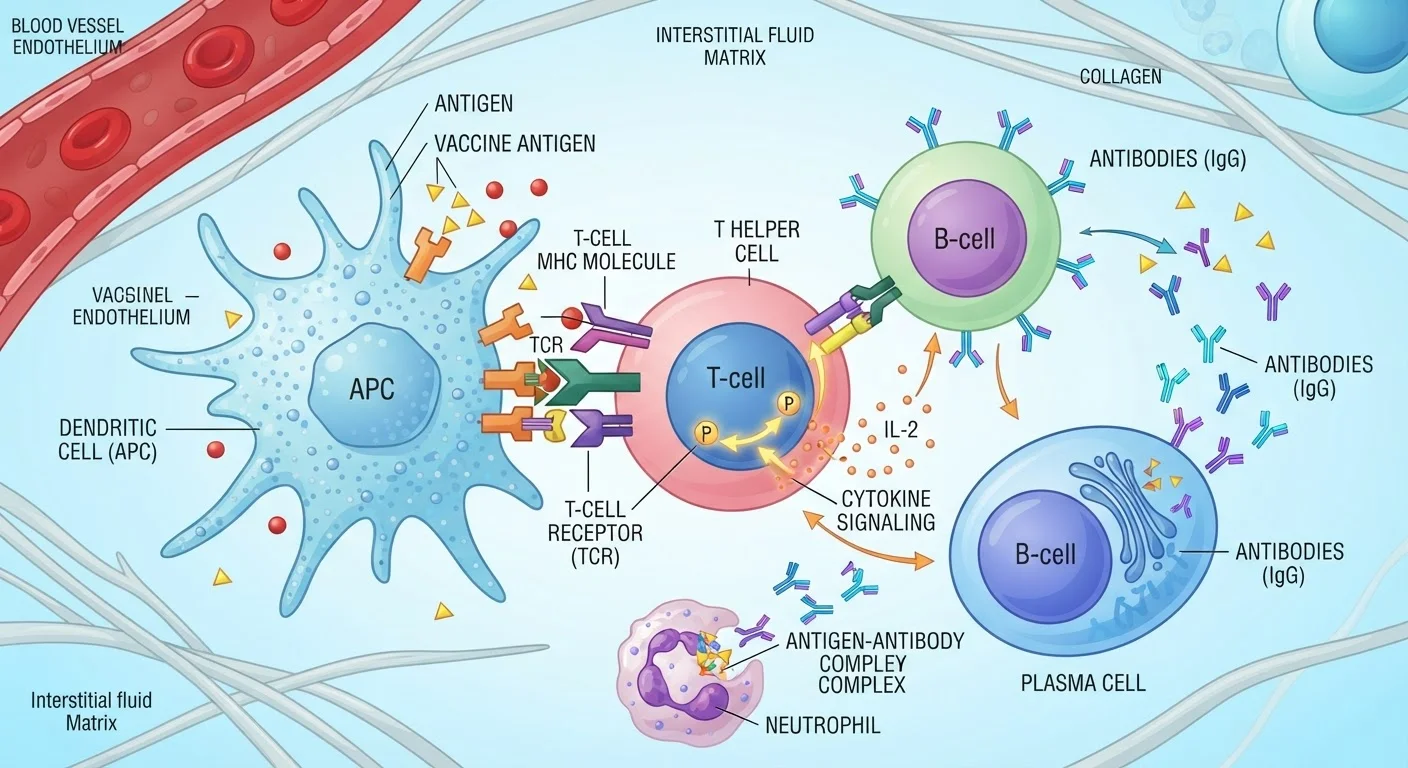
Photo: FeaturingHealth.net | Healthy Living Simplified editorial
Key Takeaways
- Vaccines work by training your immune system to recognize a pathogen before you are ever exposed to it.
- The mild soreness or fatigue after a vaccine is a sign your immune system is actively responding.
- Full protection typically develops one to two weeks after vaccination, with some vaccines requiring multiple doses.
- Memory B and T cells created during the immune response can persist for years, providing long-term defense.
- Booster doses reinforce immune memory, especially when a pathogen evolves or initial immunity wanes over time.
The First Hours: Innate Immunity Takes the Lead
Within minutes of a vaccine being injected into muscle tissue, your body's first line of defense — the innate immune system — is already at work. Immune sentinels called dendritic cells and macrophages detect the vaccine's components as foreign and sound the alarm. Local inflammation begins: blood flow to the area increases, and immune cells start migrating toward the injection site.
This initial response explains the redness and tenderness many people notice after vaccination. It is not a sign that something has gone wrong — it is precisely the intended signal that activates the next, more sophisticated stage of immunity. The innate response also releases chemical messengers called cytokines, which may cause temporary fatigue or mild fever as your body diverts energy toward immune mobilization.
Mild Reactions Are Often a Good Sign
Days 1–7: The Adaptive Immune System Learns
Once innate defenses flag the vaccine's antigen, dendritic cells carry fragments of it to nearby lymph nodes — the processing centers of your immune system. There, they present the antigen to two critical cell types that define adaptive immunity: B cells and T cells.
B cells, when activated, begin producing antibodies — proteins shaped to bind tightly to that specific pathogen. T cells take on complementary roles: helper T cells amplify the immune response and direct B cells; cytotoxic T cells learn to destroy any cell that becomes infected. This coordinated activation is the biological foundation of protection.
~7–14 days
Time to develop protective antibody levels
Most vaccines reach peak antibody response within one to two weeks of the final recommended dose, per published immunogenicity studies and CDC guidance.
2
Major immune cell types vaccines train
Both B cells (antibody producers) and T cells (coordinators and killers) are activated during the adaptive immune response to a vaccine.
Years to decades
Duration of immune memory for select vaccines
Research published in peer-reviewed immunology journals shows that memory cells generated by certain vaccines — such as those for hepatitis B and yellow fever — can persist for decades.
During this window, your immune system also makes a critical investment: it generates memory B and T cells that can survive for years, sometimes decades. These cells remember the pathogen and allow your body to mount a much faster, stronger response if you encounter the real threat later — often neutralizing it before you develop symptoms at all.
Weeks 2 and Beyond: Protection Solidifies
By roughly the second week after vaccination, antibody levels in your bloodstream have typically risen to protective concentrations. This is when most single-dose vaccines reach their peak effectiveness. For vaccines that require multiple doses — such as those for hepatitis B or the primary childhood series — each subsequent dose reinforces and broadens the memory response, a process called immune priming and boosting.
The recommended immunization schedule is designed around this biology: dose intervals are calibrated to maximize immune memory formation rather than arbitrary convenience. Straying significantly from the schedule — particularly with multi-dose vaccines — can reduce the final level of protection.
It is also worth understanding that vaccine effectiveness exists on a spectrum. No vaccine confers 100% protection for every individual, because immune responses vary with age, underlying health conditions, and genetic factors. What vaccines reliably do is reduce the likelihood of severe illness, hospitalization, and death — outcomes supported by extensive surveillance and clinical trial data. For a broader perspective on how your immunity contributes to community protection, see herd immunity explained.
This article is for general informational purposes only and does not constitute medical advice. Consult a qualified healthcare provider for guidance on vaccines appropriate for your personal health situation.
Frequently Asked Questions
The content on this site is for informational purposes only and is not a substitute for professional advice. Always consult a qualified professional for guidance specific to your situation.