
Herd Immunity Explained: Why Individual Vaccination Protects Communities

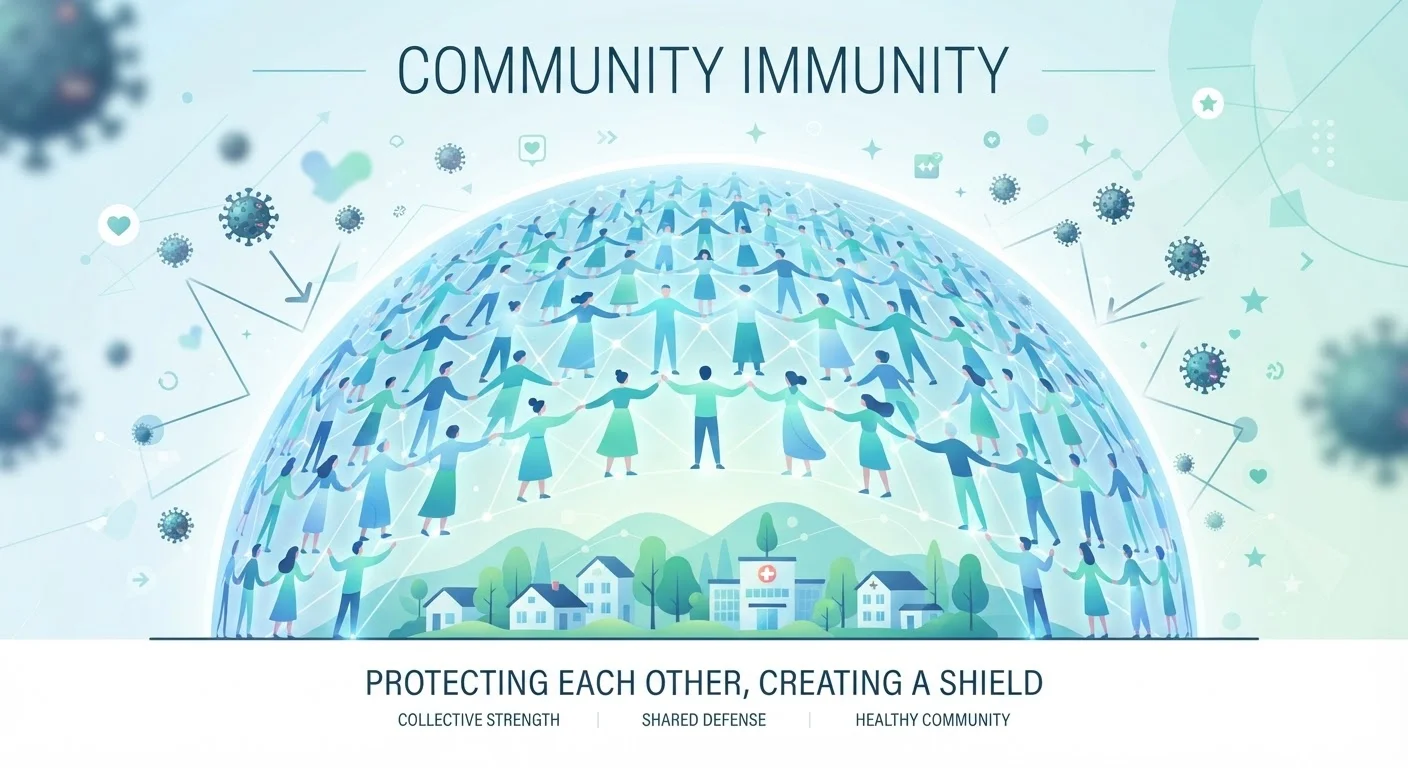
Photo: FeaturingHealth.net | Healthy Living Simplified editorial
Key Takeaways
- Herd immunity protects vulnerable people who cannot receive vaccines themselves.
- Each disease has a different immunity threshold, ranging from roughly 80% to 95% of a population.
- Vaccination is the safest established route to community immunity at scale.
- When vaccination rates fall below the threshold, outbreaks can re-emerge in previously controlled diseases.
- Individual vaccination decisions have measurable effects on community-level disease spread.
How Herd Immunity Works
Every contagious disease spreads through a chain of transmission — an infected person passes the pathogen to susceptible contacts, who each pass it to others. Herd immunity disrupts that chain. When a sufficient proportion of a population is immune, an infected person is statistically unlikely to encounter enough susceptible individuals to sustain an outbreak, and the disease gradually dies out in that community.
Think of immunity as gaps in a network. A few gaps may have little effect on connectivity, but as more gaps appear, the network fragments. Once immune individuals represent enough of the population, the disease cannot travel efficiently from one susceptible person to the next.
To understand what vaccination does inside the body before community-level effects even begin, see our article on how the immune system actually responds to a vaccine.
95%
Measles herd immunity threshold
According to the CDC, approximately 95% of a population must be immune to measles to prevent sustained community transmission.
80–86%
Polio herd immunity threshold
Public health estimates from the WHO indicate polio transmission can be disrupted when roughly 80–86% of a population is immune.
~2–18
Range of R₀ across vaccine-preventable diseases
The basic reproduction number varies widely — from around 2 for influenza to up to 18 for measles — determining how high vaccination coverage must be.
Thresholds Vary by Disease
Not all diseases require the same level of population immunity. The key variable is a disease's basic reproduction number (R₀) — the average number of people one infected person will go on to infect in a completely susceptible population. A higher R₀ means more people must be immune to block transmission.
- Measles: R₀ of 12–18; herd immunity threshold approximately 92–95%
- Polio: R₀ of 5–7; threshold approximately 80–86%
- Mumps: R₀ of 4–7; threshold approximately 75–86%
- Influenza (seasonal): R₀ of 2–3; threshold approximately 50–67%
These thresholds explain why measles is so sensitive to coverage gaps. Even a modest drop in vaccination rates below the 95% threshold can allow the virus to circulate, as has been documented during outbreaks linked to under-vaccinated communities.
Thresholds Are Population Averages
Who Depends on Community Immunity
Certain populations cannot be vaccinated and have no personal option to build immunity through immunization. They depend entirely on the people around them being immune:
- Newborns and very young infants who are too young to have completed vaccine schedules
- Immunocompromised individuals, including those undergoing chemotherapy or living with certain immune disorders
- People with documented allergies to specific vaccine components
- Pregnant individuals for whom some vaccines are contraindicated
For these groups, herd immunity is not a statistical abstraction — it is meaningful, day-to-day protection. When coverage in a community dips, their risk rises directly. Adults may also carry immunity gaps they are unaware of; immunity gaps adults often don't know they have can contribute to these community vulnerabilities.
Why Individual Choices Have Collective Consequences
Vaccine coverage is not a personal metric — it is a community resource. Each vaccinated person both protects themselves and contributes to the shared immunity that guards those who cannot protect themselves. Conversely, each person who remains susceptible reduces the buffer the community has against transmission.
This is why public health agencies including the CDC and the Advisory Committee on Immunization Practices (ACIP) publish immunization schedules designed not just to protect individuals but to maintain population-level thresholds. Following recommended schedules is one of the most direct contributions an individual can make to community health.
If you're navigating conversations with family members who have questions about vaccines, evidence-based strategies are available in our article on talking with hesitant family members about vaccination.
This article is for general informational and educational purposes only and does not constitute medical advice. Consult a qualified healthcare provider for guidance on your personal vaccination needs or those of your family.
Frequently Asked Questions
The content on this site is for informational purposes only and is not a substitute for professional advice. Always consult a qualified professional for guidance specific to your situation.