
A Lifelong Screening Calendar: What to Expect at Every Age

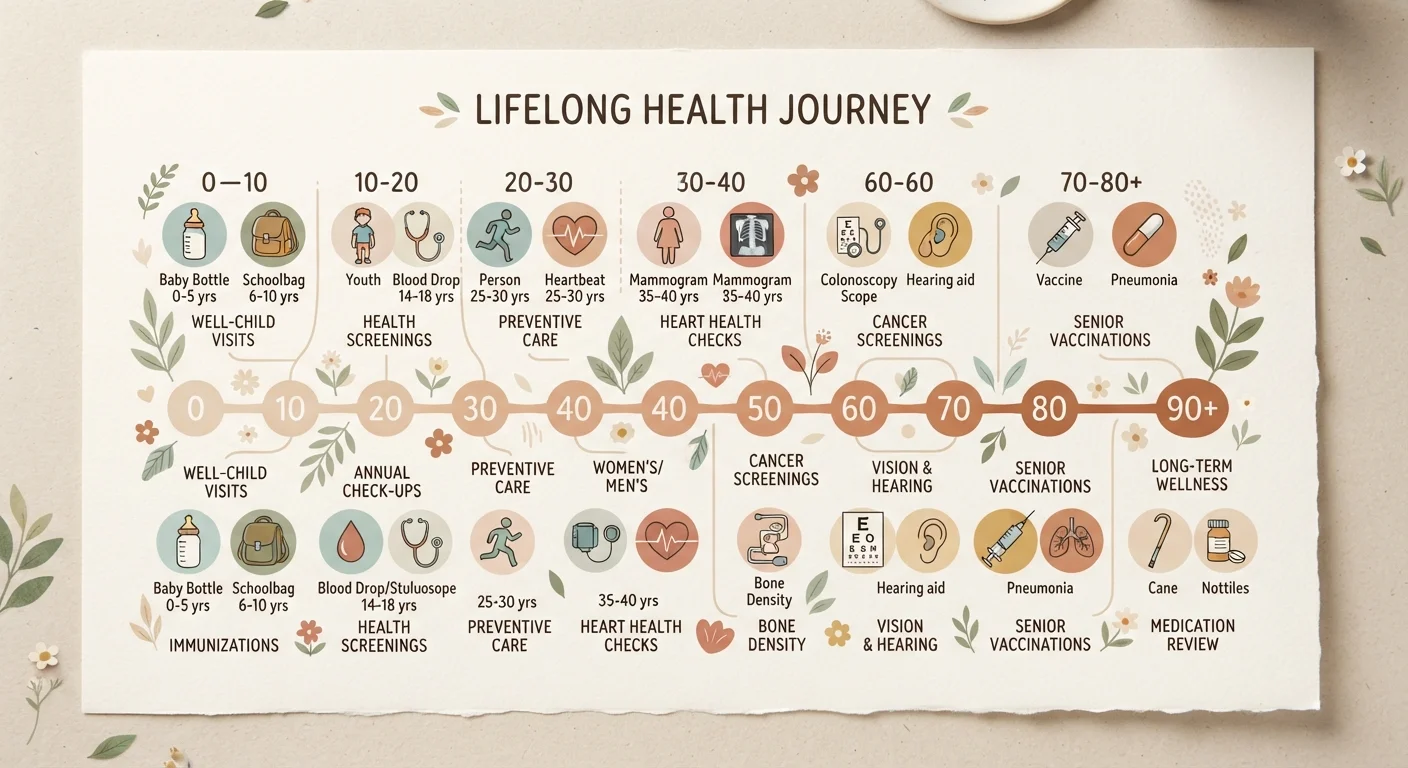
Photo: FeaturingHealth.net | Healthy Living Simplified editorial
Why a Screening Timeline Matters
Preventive health screenings are most effective when they're timed to the biological risks that emerge at specific life stages. A cholesterol check carries different urgency at 25 than it does at 55. Cervical cancer screening doesn't begin in childhood, and dementia risk assessments don't apply at 30. The logic behind a structured calendar isn't bureaucratic — it reflects decades of epidemiological evidence about when conditions are most likely to develop and when early detection yields the greatest benefit.
Understanding what routine screenings actually are — and how they differ from diagnostic tests — is the foundation for using this calendar well. The recommendations below are drawn from USPSTF guidelines and CDC/ACIP schedules and represent general population guidance. Individual risk factors, family history, and clinical judgment can change the timeline significantly. Always consult a qualified healthcare provider about what's appropriate for you personally.
| Newborn screening conditions tested | 35+ conditions (varies by state) (HRSA Recommended Uniform Screening Panel) |
| Age to begin colorectal cancer screening | 45 (average risk) (USPSTF, 2021) |
| Age range for HIV screening | 15–65 (all adults) (USPSTF recommendation) |
| Age to begin mammography | 40 (many guidelines; discuss with provider) (USPSTF, 2024) |
| Age to begin cervical cancer screening | 21 (USPSTF recommendation) |
| Bone density screening starts | 65 for average-risk women (USPSTF recommendation) |
Childhood Through Adolescence (Birth–17)
Preventive care begins at birth. Newborn metabolic screenings — mandated in all 50 states — test for dozens of congenital conditions including phenylketonuria (PKU) and congenital hypothyroidism, when intervention in the first days of life can prevent severe developmental harm. Vision and hearing screenings follow at well-child visits throughout the preschool years.
Immunization is the defining preventive intervention of childhood. The ACIP-recommended schedule covers vaccines for measles, mumps, rubella, hepatitis B, pertussis, varicella, and HPV, among others. Staying on schedule provides protection during the windows of highest vulnerability. For a broader look at how vaccines fit preventive care, see the Vaccines & Immunity hub.
Adolescent screenings add blood pressure measurement, depression screening (USPSTF recommends for ages 12 and up), and STI screening for sexually active teens. Scoliosis checks and dental evaluations are typically part of school or annual pediatric visits.
72%
Adults current with recommended colorectal cancer screening
According to CDC behavioral surveillance data, roughly 72% of U.S. adults aged 50–75 were up to date with colorectal cancer screening as of recent survey cycles.
35+
Conditions detected by newborn metabolic screening
The HRSA Recommended Uniform Screening Panel lists more than 35 core conditions, with most states testing for all or nearly all of them.
Early Adulthood (18–39)
Adults in their 20s and 30s are often the least likely to engage with preventive care — and the most likely to miss slow-developing risks. Blood pressure should be checked at least every three to five years for those with normal readings, and annually if readings are elevated. Cholesterol screening is recommended at least once during this decade for men and women, with more frequent checks if results or risk factors warrant it.
STI screenings, including chlamydia and gonorrhea for sexually active women under 25 and HIV screening for all adults aged 15–65, are standard USPSTF recommendations. Women should begin cervical cancer screening (Pap smear) at age 21, repeated every three years through age 65 or as directed by their provider. For a decade-by-decade view of reproductive screenings, see reproductive health checks by decade.
Mental health screening matters here too — depression and anxiety are among the most prevalent conditions in this age group and are frequently underdiagnosed. Mental and cognitive health screenings belong in routine care, not only crisis response.
Midlife and Beyond (40–74 and Older)
Midlife brings a shift toward cancer and cardiovascular screenings. Mammography for breast cancer is recommended by most guidelines beginning at 40 for average-risk women, though the specific frequency and start age involve nuance worth discussing with your provider. Colorectal cancer screening — via colonoscopy, stool-based tests, or other approved methods — is recommended for average-risk adults starting at age 45. A clear overview of cancer screenings can help you understand your options.
Type 2 diabetes screening is recommended for adults aged 35–70 who are overweight or have obesity. Abdominal aortic aneurysm screening is a one-time ultrasound recommended for men aged 65–75 who have ever smoked. Annual low-dose CT lung cancer screening applies to adults 50–80 with a significant smoking history.
Bone density testing (DEXA scan) is recommended for women 65 and older, or earlier for those with elevated fracture risk. Cognitive assessments become part of preventive conversations in the late 60s and 70s. Note that family history can shift these timelines earlier in meaningful ways — your provider can help assess that risk.
Screenings should be scheduled strategically. Use a preparation checklist to track what you've done and what's coming. And remember that screenings come with real trade-offs — false positives and overdiagnosis are part of an honest conversation about preventive care.
Preventive screening
A test or assessment performed on people without symptoms to identify conditions or risk factors early, before they cause noticeable harm. Screenings differ from diagnostic tests, which are used when symptoms already exist.
USPSTF
The U.S. Preventive Services Task Force — an independent panel of national experts in disease prevention that issues evidence-based recommendations on clinical screenings and preventive interventions for adults and children.
ACIP
The Advisory Committee on Immunization Practices — a CDC advisory group that establishes the recommended vaccine schedules for children, adolescents, and adults in the United States.
DEXA scan
Dual-energy X-ray absorptiometry — an imaging test used to measure bone mineral density and assess fracture risk, most commonly recommended for older women screening for osteoporosis.
Average risk
A clinical designation indicating that a person lacks known factors — such as family history, genetic markers, or prior diagnoses — that would significantly elevate their likelihood of developing a particular condition above the general population baseline.
False positive
A screening result that suggests a condition may be present when it actually is not. False positives can lead to additional testing, anxiety, and, in some cases, unnecessary treatment.
This article is for general health information and educational purposes only. It is not a substitute for personalized medical advice. Consult a qualified healthcare provider to determine which screenings are appropriate for your individual health history and risk factors.
The content on this site is for informational purposes only and is not a substitute for professional advice. Always consult a qualified professional for guidance specific to your situation.