
The Science Behind Deep Breathing and Calm

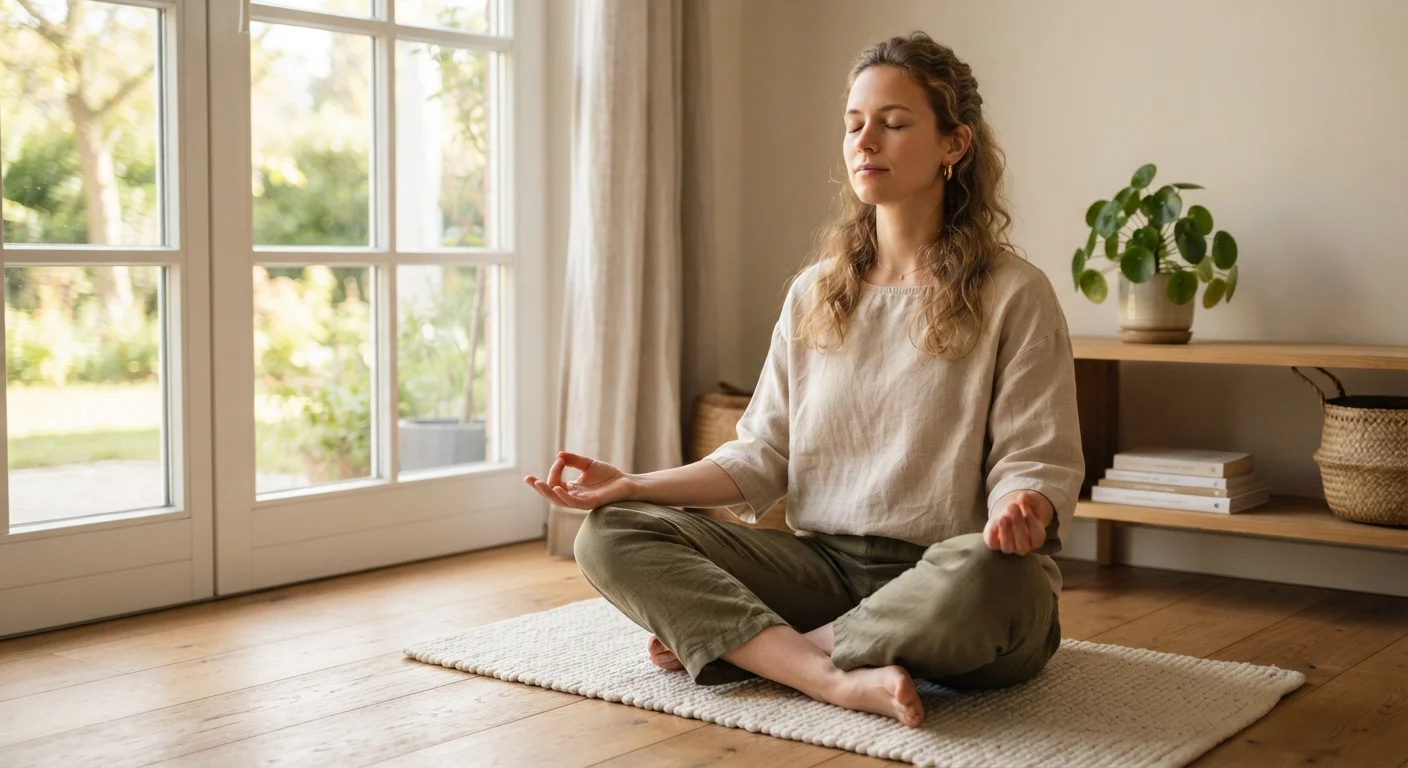
Photo: FeaturingHealth.net | Healthy Living Simplified editorial
Key Takeaways
- Deep breathing directly activates the parasympathetic nervous system, helping your body shift out of stress mode.
- The vagus nerve acts as a key messenger between your breathing pattern and your brain's calm response.
- Research supports controlled breathing as an effective, low-barrier tool for reducing physiological markers of stress.
- Even a few minutes of deliberate slow breathing can produce measurable changes in heart rate variability.
- Deep breathing works best as a regular habit, not just a crisis intervention.
What Happens in Your Body When You're Stressed
When your brain perceives a threat — whether a looming deadline or a heated argument — it triggers the sympathetic nervous system, commonly known as the fight-or-flight response. Stress hormones like adrenaline and cortisol flood the bloodstream. Heart rate climbs. Muscles tighten. Breathing becomes shallow and rapid.
This response is biologically useful in genuine emergencies. The problem is that modern stressors rarely require physical action, yet the body's alarm system activates just the same. Over time, a chronically activated stress response is associated with poorer sleep, increased anxiety, and cardiovascular strain. If you'd like a broader foundation for understanding how stress accumulates, this overview of stress fundamentals is a helpful starting point.
The Nervous System Pathway That Makes Breathing Powerful
Your autonomic nervous system has two primary branches: the sympathetic (stress-activating) and the parasympathetic (rest-and-recovery). Most stress-reduction efforts aim to shift the balance toward the parasympathetic side. Deep, slow breathing is one of the most direct ways to do this — and the mechanism is well understood.
When you breathe slowly and deeply, the diaphragm's movement stimulates the vagus nerve, the body's longest cranial nerve, which runs from the brainstem down through the chest and abdomen. The vagus nerve acts as a two-way communication highway between the body and the brain. When it detects slow, rhythmic breathing, it relays calming signals upward, prompting the heart rate to slow and the stress hormone cascade to ease.
~6 breaths/min
Optimal slow breathing rate in research studies
Studies on resonance frequency breathing suggest that around 5–6 breaths per minute maximizes the parasympathetic response in many adults.
5 minutes
Minimum daily practice linked to HRV improvement
Several controlled trials have found that as little as five minutes of slow breathing daily can produce measurable improvements in heart rate variability over weeks.
~80%
Adults who report stress affecting physical health
According to American Psychological Association survey data, a substantial majority of U.S. adults report that stress has a physical impact on their wellbeing.
This process is measurable through heart rate variability (HRV) — the natural variation in time between heartbeats. Higher HRV is associated with better stress resilience and autonomic flexibility, and research has consistently shown that slow breathing practices can improve HRV in both the short and longer term. For a comparative look at how mindfulness practices work through similar pathways, see the science behind mindfulness and stress.
What the Research Actually Shows
Controlled breathing is among the better-studied behavioral interventions for stress and anxiety. Studies have examined it in clinical populations with anxiety disorders, in healthy adults facing acute stressors, and in high-performance environments like emergency medicine and athletics. Across these contexts, slow diaphragmatic breathing consistently produces reductions in self-reported anxiety and measurable physiological markers such as cortisol levels and heart rate.
“Breathing is the only autonomic function we can consciously control, and that control gives us a direct lever on the nervous system. That's not a small thing.”
— Richard Brown, Associate Clinical Professor of Psychiatry, Columbia University, and co-author of research on breathing practices and the nervous system
Importantly, the evidence also shows that benefits compound with regular practice. Occasional use during a moment of acute stress can provide short-term relief, but individuals who practice daily tend to show more durable changes in baseline HRV and stress reactivity. It is worth noting that most studies involve relatively short practice durations — this is a tool that works with small, consistent investments of time.
Breathing is not a stand-alone solution for every form of stress or mental health challenge. A review of evidence across multiple stress-reduction techniques puts breathwork in context alongside other well-studied approaches. And if you're curious about how physical activity compares, what research says about exercise and stress relief offers a useful counterpoint.
Turning Knowledge Into a Daily Practice
Understanding why deep breathing works can make the practice feel less like a wellness cliché and more like a purposeful intervention. The basic principle is straightforward: slow your breathing rate, breathe from the belly rather than the chest, and give yourself enough time for the parasympathetic response to engage — typically a few minutes of sustained practice.
There are several structured techniques that build on this foundation — from box breathing to the 4-7-8 pattern — each suited to slightly different situations and preferences. A guide to common breathing techniques can help you identify which approach fits different moments in your day.
Start With Just Two Minutes a Day
This article is for general informational and educational purposes only and is not a substitute for professional medical advice, diagnosis, or treatment. If you have concerns about your stress levels, mental health, or any physical symptoms, please consult a qualified healthcare provider.
Frequently Asked Questions
The content on this site is for informational purposes only and is not a substitute for professional advice. Always consult a qualified professional for guidance specific to your situation.