
Your Bedroom Environment Checklist for Better Sleep

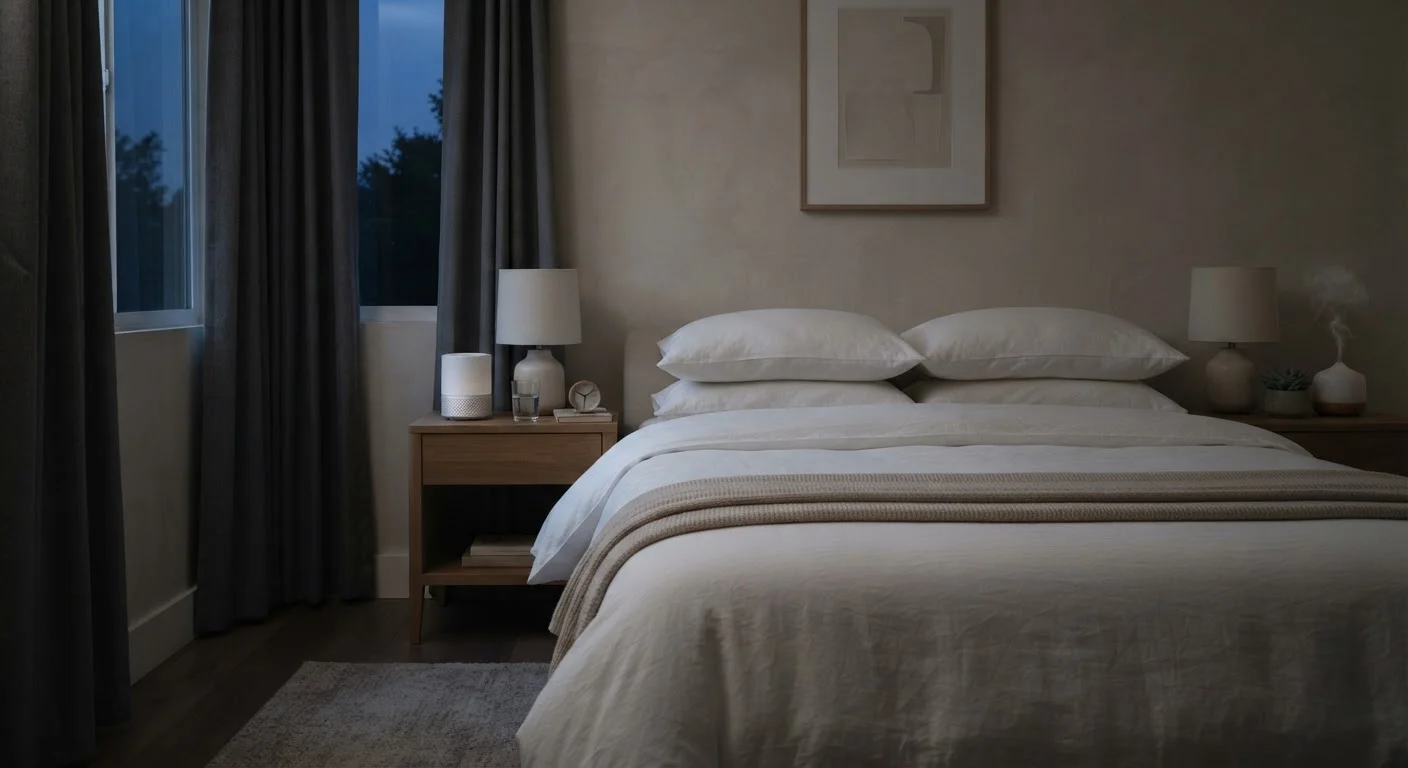
Photo: FeaturingHealth.net | Healthy Living Simplified editorial
Key Takeaways
- Light, temperature, noise, and layout each independently affect sleep quality.
- A bedroom temperature of roughly 65–68°F is broadly associated with better sleep onset.
- Even small light sources can suppress melatonin production and delay sleep.
- Consistent environmental cues train your brain to associate the bedroom with sleep.
- Most bedroom sleep improvements cost little to nothing and can be done today.
Why Your Sleep Environment Matters More Than You Think
Many people focus on when they go to bed or how many hours they sleep — yet the physical space where sleep happens often goes unexamined. Your bedroom environment sends continuous signals to your nervous system: whether it's safe to relax, whether it's time to sleep, whether to stay alert. Getting those signals right is foundational, not optional.
Research in sleep science consistently links environmental factors — light exposure, ambient temperature, noise levels, and room layout — to measurable differences in sleep onset, duration, and depth. As we explore in Sleep and Mental Health: A Two-Way Relationship, poor sleep doesn't just leave you tired — it can compound stress, anxiety, and low mood in ways that become self-reinforcing.
This checklist walks you through an honest audit of your sleep space. Work through it in one session or tackle one category at a time. Either way, the goal is the same: create conditions that genuinely support your body's natural drive toward restorative rest.
Blackout curtains or sleep mask
Eliminates ambient and external light that can suppress melatonin and delay sleep onset.
White-noise machine or fan
Creates a steady sound background to mask unpredictable noises that cause micro-arousals.
Thermometer or smart thermostat
Helps you monitor and maintain a consistently cool bedroom temperature conducive to sleep.
Traditional alarm clock
Allows you to keep your phone out of the bedroom without losing your morning wake-up signal.
Hygrometer
Measures indoor humidity so you can keep it within a comfortable range for undisturbed breathing.
The Full Bedroom Environment Checklist
Use the groups below to evaluate each dimension of your sleep space. Items marked must address the highest-impact factors; should items offer meaningful improvements; nice-to-have items are worthwhile refinements once the essentials are in place.
Light Control
Temperature & Air Quality
Noise Management
Bed & Bedding Setup
Room Layout & Mental Association
Device & Screen Boundaries
Persistent Sleep Problems Need Professional Attention
If you'd like to extend this work into your pre-sleep habits, our Evening Wind-Down guide pairs naturally with this checklist, covering the hour before you even climb into bed.
Putting It All Together
Completing this checklist once is a start — but the real benefit comes from maintaining these conditions consistently. Your brain is remarkably good at learning associations: a cool, dark, quiet room reliably primes it for sleep over time. Disrupting those cues irregularly — even on weekends — can partially undo the conditioning.
If you've never thought systematically about your sleep space before, Starting From Scratch With Sleep offers a gentle, foundational introduction without overwhelm. And if you want to weave better sleep into a broader daily structure, our daily stress-management checklist covers how sleep fits alongside movement, nutrition, and mental habits.
Finally, before making significant changes — especially if you're managing a chronic condition, are pregnant, or are adapting this advice for a child or older adult — please consult a qualified healthcare professional. Environmental adjustments are generally low-risk, but individual circumstances vary.
Don't Overlook Sleep Hygiene Misconceptions
This article is for general informational and educational purposes only and does not constitute medical advice. Always consult a qualified healthcare provider for concerns about sleep disorders or personal health conditions.
The content on this site is for informational purposes only and is not a substitute for professional advice. Always consult a qualified professional for guidance specific to your situation.