
Thinking About Sleep All Wrong: Patterns That Prolong Insomnia

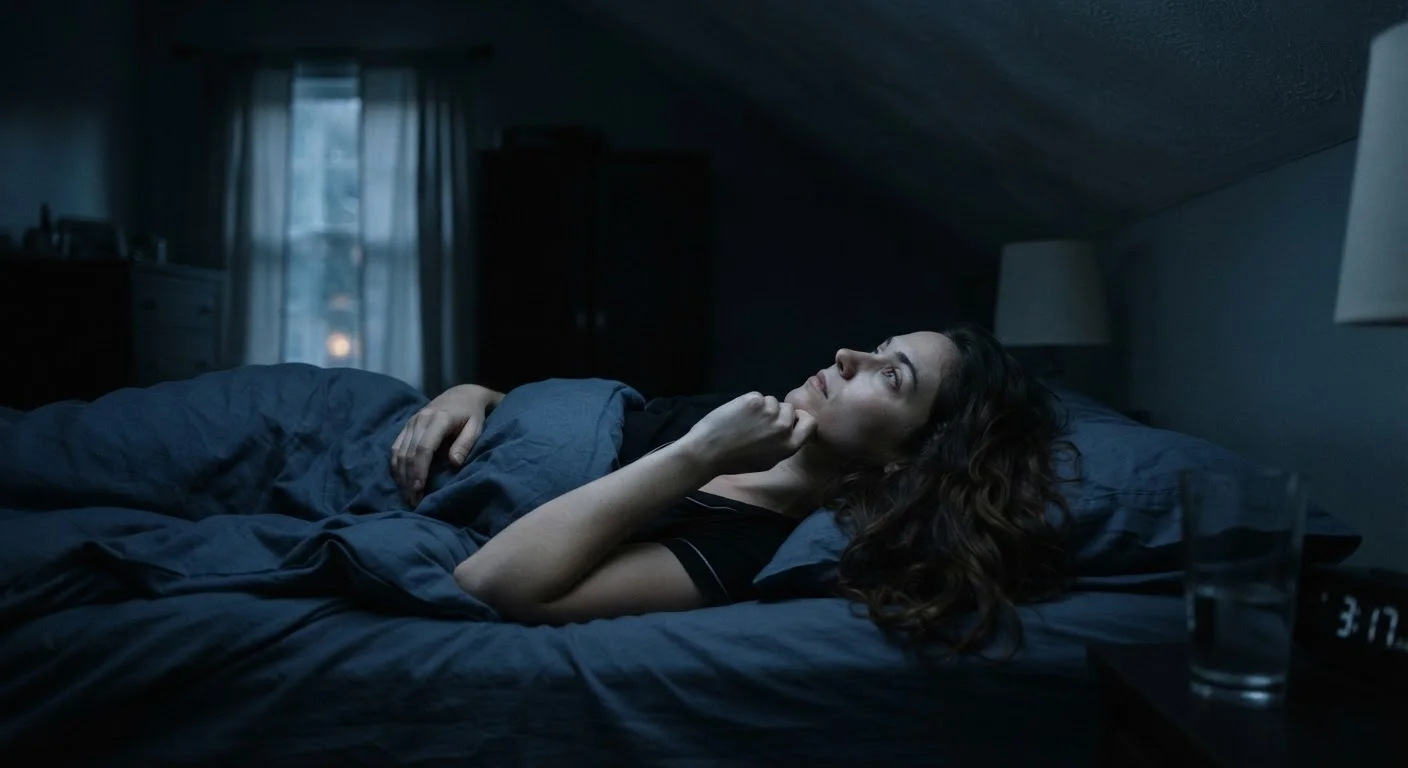
Photo: FeaturingHealth.net | Healthy Living Simplified editorial
Key Takeaways
- Clock-watching during the night amplifies anxiety and actively delays sleep onset.
- Catastrophising a single bad night creates a self-fulfilling cycle of chronic poor sleep.
- Spending too long in bed to compensate for lost sleep often deepens insomnia over time.
- Rigid "sleep rules" and performance pressure around sleep undermine the body's natural sleep drive.
- Cognitive Behavioral Therapy for Insomnia (CBT-I) addresses these thought patterns effectively.
Why Our Instincts About Sleep So Often Backfire
When sleep becomes difficult, most of us rely on common sense: go to bed earlier, try harder to rest, keep tabs on how much sleep we're getting. These responses feel logical. The trouble is that insomnia research — including decades of work supporting CBT-I — shows that many of our instinctive responses actively perpetuate poor sleep rather than resolve it.
The core issue is that sleep is not a skill you can force into performance. It's a biological process that requires a particular mental and physical environment to unfold. When well-meaning habits create pressure, hypervigilance, or conditioned alertness, they disrupt that environment night after night. Understanding which thought patterns and behaviors are working against you is the first step toward change.
It's also worth acknowledging that sleep needs and patterns shift across life stages — something explored in depth in how adult rest needs shift over time. Setting realistic expectations for your age and biology matters enormously.
This Is Information, Not Medical Advice
The Most Common Sleep-Sabotaging Mistakes
The mistakes below aren't signs of weakness or poor discipline — they're deeply human responses to discomfort and uncertainty. Recognizing them is far more useful than judging yourself for them.
Watching the clock repeatedly throughout the night.
Catastrophising the consequences of a bad night's sleep.
Going to bed much earlier or staying in bed far longer to "catch up" on sleep.
Trying harder to force sleep when it won't come.
Using the bedroom for stimulating activities like work, social media scrolling, or emotionally charged television.
Ignoring the connection between daytime mental health and nighttime sleep quality.
~30%
US adults reporting insomnia symptoms
Population surveys consistently estimate that roughly 30% of adults experience insomnia symptoms at some point, with 10% meeting criteria for chronic insomnia disorder.
~80%
CBT-I response rate in clinical studies
Multiple clinical trials and meta-analyses have found CBT-I effective for the majority of participants, often outperforming sleep medications for long-term outcomes.
If you've ever wondered whether your natural sleep timing might itself be part of the picture, it's worth exploring the role of chronotype — your biological sleep-wake preference. Understanding chronotypes can help you work with your body clock rather than against it, which reduces unnecessary sleep pressure.
This article is for general informational and educational purposes only and does not constitute medical advice. If you are experiencing persistent sleep problems, please consult a qualified healthcare provider for personalized guidance.
The content on this site is for informational purposes only and is not a substitute for professional advice. Always consult a qualified professional for guidance specific to your situation.