
Chronotypes Explained: Why Morning People and Night Owls Are Both Right

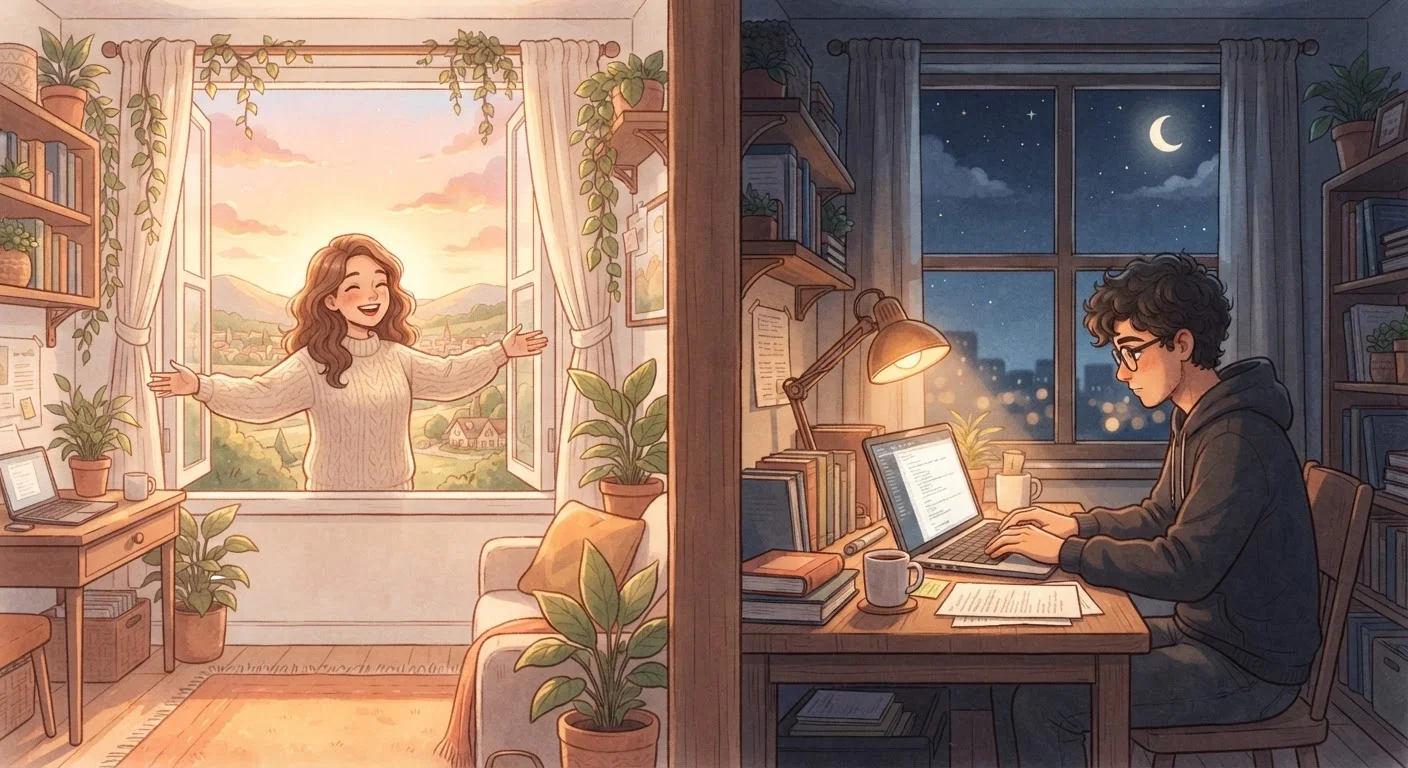
Photo: FeaturingHealth.net | Healthy Living Simplified editorial
Key Takeaways
- Chronotypes are biologically influenced, not simply a matter of discipline or preference.
- Most people fall somewhere in the middle of the morning-evening spectrum.
- Forcing yourself to live against your chronotype can increase stress and impair sleep quality.
- Chronotypes shift across life stages — teenagers naturally lean toward eveningness.
- Working with your chronotype, even partially, can support better focus and mental wellness.
What Actually Determines Your Sleep Timing
If you've ever felt guilty for struggling to wake at 6 a.m. while a colleague bounds in cheerfully, you may be fighting biology more than laziness. Your circadian rhythm — the internal 24-hour clock governing sleep, wakefulness, hormone release, and body temperature — does not run at exactly the same time in every person. Chronotype is the term researchers use to describe where your clock naturally sits on that timeline.
Genetic studies have identified dozens of gene variants associated with morningness or eveningness. Twin research consistently shows that chronotype is moderately to highly heritable, meaning the person next to you who wakes effortlessly at dawn may genuinely be wired differently — not simply more disciplined.
That said, genetics aren't destiny. Light exposure, meal timing, physical activity, and consistent sleep scheduling all interact with your biological baseline and can shift your effective timing to a meaningful degree.
The Spectrum: More Than Just Larks and Owls
Popular culture frames chronotype as a binary — you're either a morning person or a night owl. In reality, research places most people in an intermediate zone, with extreme morning and extreme evening types at the tails of a normal distribution. Researchers sometimes describe four broad categories: lion (early riser), bear (mid-range, following the solar cycle), wolf (evening-oriented), and dolphin (light, irregular sleeper) — though these labels are primarily illustrative rather than clinical classifications.
~25%
People with clearly evening chronotypes
Research estimates roughly one in four adults leans meaningfully toward eveningness, with the majority falling in an intermediate range.
2 hrs
Average social jetlag in industrialized nations
Studies by chronobiologist Till Roenneberg found the average social jetlag across large European and North American samples is approximately two hours.
Peak ~19–21
Age of maximum evening preference
Population data show the shift toward eveningness during adolescence peaks in the late teens to early twenties before gradually reversing.
What matters practically is understanding your own tendencies well enough to organize your day accordingly. Evening types often perform complex cognitive tasks better later in the day; morning types tend to peak mentally in the late morning. Neither pattern is superior — they simply differ.
Social Jetlag: When Your Clock and Your Calendar Clash
One of the more consequential concepts in chronobiology is social jetlag — the chronic misalignment between a person's biological sleep timing and the schedule that society imposes through work, school, and social obligations. For evening-oriented people required to be at a desk by 8 a.m., every weekday functions like flying across time zones and back.
Research suggests social jetlag is associated with poorer sleep quality, elevated fatigue, and increased risk of mood disruption. It's worth distinguishing this from insomnia, which involves difficulty sleeping even when the opportunity exists. Patterns that prolong insomnia — like anxious clock-watching — are a separate phenomenon, though chronotype misalignment can compound sleep difficulties.
Use Morning Light to Gently Shift Your Clock
Working With Your Chronotype in Everyday Life
You may not be able to redesign your work schedule, but small shifts can meaningfully reduce chronotype-schedule friction. Morning light exposure is one of the most evidence-supported tools: bright light in the first hour after waking anchors your circadian clock and can gently advance the timing of evening-oriented people over days to weeks.
Protecting your sleep window — going to bed and waking within the same one-hour range daily — also reinforces your clock's consistency. Morning and evening routines shape health differently, and knowing your chronotype can help you decide where to invest energy first.
The goal isn't to become a different chronotype. It's to stop treating your natural timing as a personal failing and start using it as useful information about how to structure rest and activity.
This article is for general informational purposes only and does not constitute medical advice. If you have concerns about your sleep or mental health, please consult a qualified healthcare professional.
Frequently Asked Questions
The content on this site is for informational purposes only and is not a substitute for professional advice. Always consult a qualified professional for guidance specific to your situation.