
Prostate Health and Sexual Function: Understanding the Connection

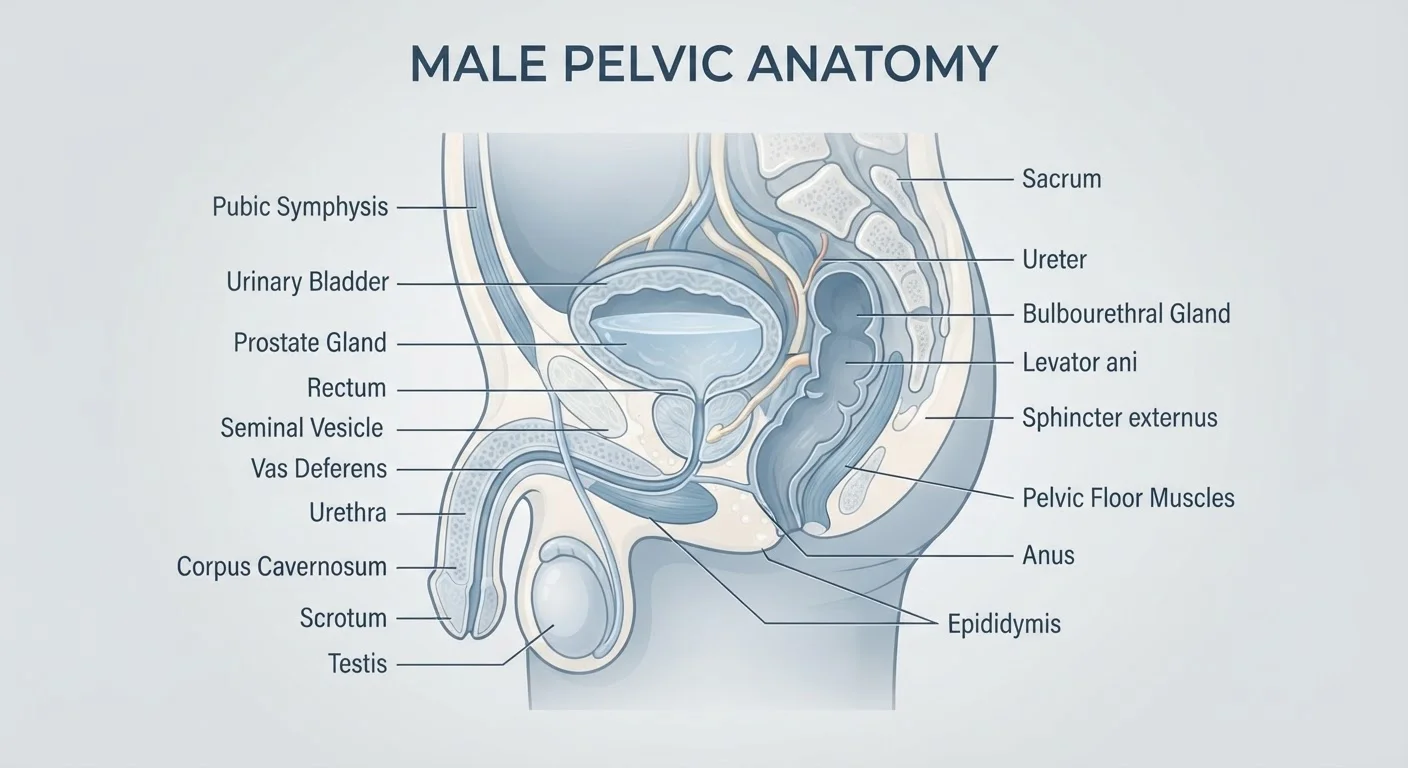
Photo: FeaturingHealth.net | Healthy Living Simplified editorial
Key Takeaways
- The prostate gland directly influences ejaculation, urinary flow, and semen production.
- Common prostate conditions — including BPH and prostatitis — can significantly affect sexual function.
- Prostate cancer treatments often carry sexual side effects that vary by approach.
- Many prostate-related sexual symptoms are manageable with appropriate medical care.
- Regular screening conversations with a doctor are an important part of men's preventive health.
What the Prostate Actually Does
Despite its small size, the prostate gland performs functions that are central to male reproductive health. Its primary job is producing prostatic fluid — an alkaline secretion that forms a significant portion of semen. This fluid helps protect sperm from the acidic environment of the vagina and supports sperm motility. During ejaculation, smooth muscle within the prostate contracts to propel this fluid into the urethra.
The gland also contains a valve-like mechanism that prevents urine from mixing with semen during ejaculation — a function that depends on precise coordination between the bladder neck, prostate, and pelvic floor. For a broader grounding in how male anatomy connects to sexual function, see our introduction to men's sexual health concepts.
~50%
Men over 50 with BPH symptoms
According to the American Urological Association, approximately half of men in their 50s have some degree of benign prostatic hyperplasia.
20–30%
Semen volume from prostatic fluid
Prostatic secretions contribute roughly 20–30% of total ejaculate volume, according to established reproductive physiology literature.
Up to 85%
ED risk after radical prostatectomy
Research published in urology journals suggests erectile dysfunction affects a significant majority of men following radical prostatectomy, with recovery rates varying by nerve-sparing technique and patient age.
Common Prostate Conditions and Their Sexual Impact
Three conditions account for most prostate-related health concerns in men, each affecting sexual and urinary function in distinct ways.
Benign Prostatic Hyperplasia (BPH)
BPH is a non-cancerous enlargement of the prostate that becomes increasingly common after age 50. The enlarged gland compresses the urethra, causing urinary symptoms such as weak stream, frequent urination, and incomplete bladder emptying. While BPH itself does not directly impair erections, the medications used to treat it — particularly 5-alpha reductase inhibitors — can reduce libido and may affect ejaculation in some men.
Prostatitis
Prostatitis refers to inflammation of the prostate and encompasses several subtypes, from acute bacterial infection to chronic pelvic pain syndrome. Painful ejaculation is a hallmark symptom, and many men with chronic prostatitis also report reduced sexual desire and erection difficulties — partly due to the condition itself and partly due to the psychological burden of persistent pelvic pain. Psychological contributors to sexual dysfunction are often underappreciated in these cases.
Prostate Cancer and Its Treatments
Prostate cancer is one of the most commonly diagnosed cancers in men. While early-stage cancer itself may produce no symptoms, the treatments used — surgery, radiation, and hormone therapy — frequently affect sexual function. Radical prostatectomy risks damaging the neurovascular bundles that run alongside the prostate and are essential for erections. Radiation therapy can have similar effects over time. Androgen deprivation therapy (ADT), which suppresses testosterone to slow cancer growth, typically causes significant reductions in libido and erection capacity. Understanding how testosterone interacts with sexual health more broadly is covered in our article on testosterone and men's health.
Talk to Your Doctor Before Adjusting Medications
The Urinary-Sexual Health Overlap
Urinary and sexual function share anatomical infrastructure — the urethra, pelvic floor muscles, and surrounding nerve networks all serve both systems. This overlap means that prostate conditions that disrupt urinary flow can simultaneously affect sexual response, and vice versa.
The pelvic floor muscles, which support the bladder and bowel and contribute to erectile rigidity and ejaculatory control, are directly influenced by prostate health. Inflammation or post-surgical changes in the prostate region can alter pelvic floor tension in ways that affect continence and sexual performance. Our article on pelvic floor health explains the broader physiology of this often-overlooked muscle group.
Men experiencing both urinary and sexual symptoms simultaneously should seek evaluation rather than attributing either symptom set to normal aging. These symptoms are common, but they are not inevitable — and many respond well to targeted treatment.
Managing Prostate-Related Sexual Symptoms
Men dealing with prostate-related sexual difficulties have more options than is often assumed. Effective management typically starts with an accurate diagnosis, since treatment approaches differ substantially between BPH, prostatitis, and post-cancer care.
For erectile dysfunction arising from prostate treatment, a urologist or sexual medicine specialist can discuss evidence-based rehabilitation strategies. Lifestyle factors — including cardiovascular fitness, diet quality, and sleep — also influence erectile health and overall pelvic function. The evidence around everyday habits and sexual wellbeing is explored in our guide to lifestyle habits that support men's sexual wellbeing.
For a broader perspective on how prostate health fits within the wider landscape of men's sexual health, our comprehensive overview of men's sexual health provides useful context. If erectile difficulties are a primary concern, understanding erectile dysfunction is a helpful starting point.
This article is for general informational purposes only and does not constitute medical advice. Always consult a qualified healthcare professional for personal health concerns, symptoms, or before making any decisions about treatment.
Frequently Asked Questions
The content on this site is for informational purposes only and is not a substitute for professional advice. Always consult a qualified professional for guidance specific to your situation.