
Rest and Recovery: The Part of Fitness Most Men Underestimate

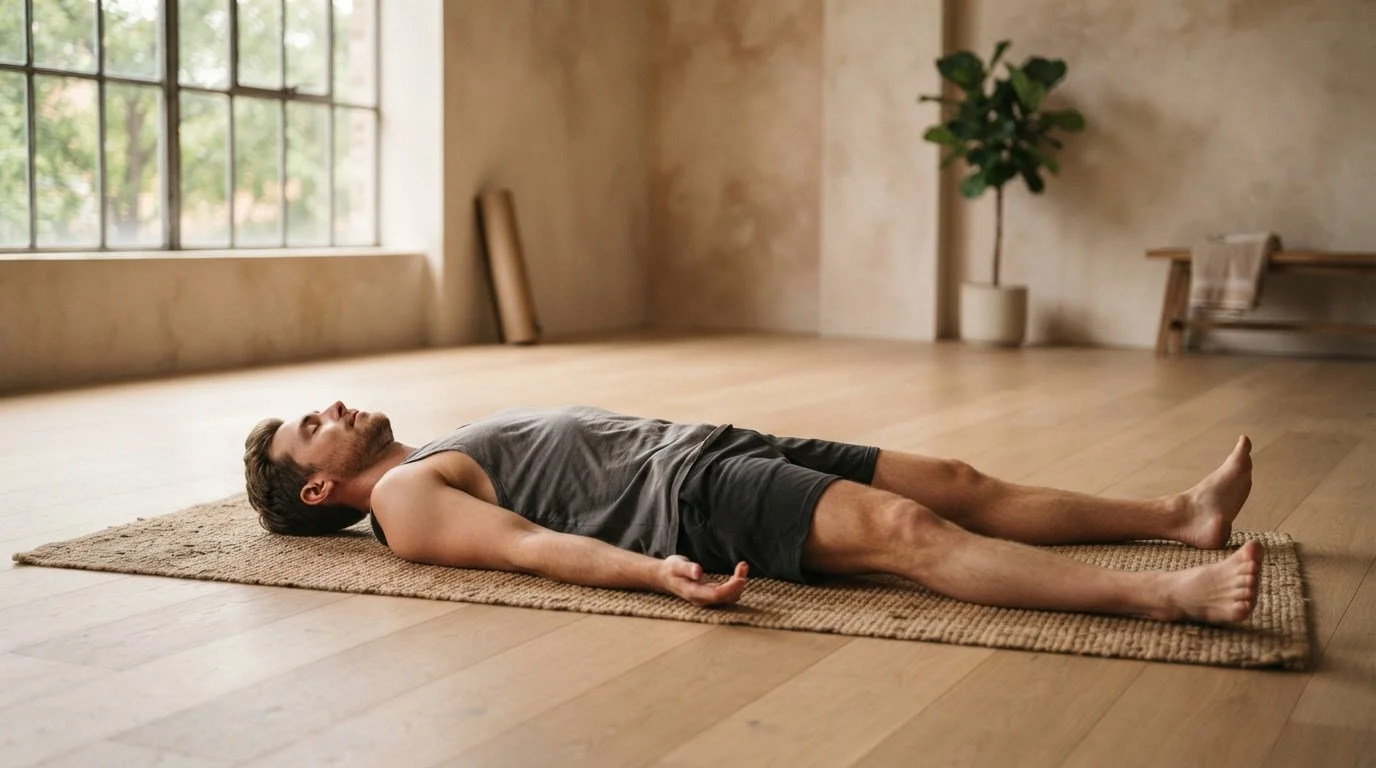
Photo: FeaturingHealth.net | Healthy Living Simplified editorial
Key Takeaways
- Muscle growth happens during rest, not during the workout itself.
- Chronic under-recovery elevates cortisol and suppresses testosterone in men.
- Sleep is the most powerful recovery tool available — and it's free.
- Active recovery (light movement) often outperforms complete inactivity on rest days.
- Overtraining syndrome is a real, diagnosable condition that requires medical attention.
Why Recovery Is a Training Variable, Not a Break From Training
Most men treat rest days as a reluctant concession — time lost that could be spent in the gym. That framing misunderstands basic exercise physiology. Training creates the stimulus; recovery is where adaptation occurs. When you lift weights or push through a hard run, you are generating controlled damage to muscle fibers and taxing your central nervous system. The body's response to that stress — rebuilding tissue stronger, improving neuromuscular efficiency, upregulating enzyme activity — happens entirely during rest.
Skipping or shortening recovery doesn't accelerate progress. It interrupts the adaptation cycle. Over time, training without sufficient rest produces a state of accumulated fatigue that blunts performance, increases injury susceptibility, and in chronic cases, can lead to overtraining syndrome — a condition characterized by prolonged performance decline and systemic hormonal disruption.
Understanding recovery as an active physiological process, not passive idleness, is the first shift in thinking that separates effective training from just working hard. For a broader picture of how these principles fit together, see Men's Fitness from Every Angle.
7–9 hrs
Recommended nightly sleep for active adults
The American Academy of Sleep Medicine and Sleep Research Society recommend 7–9 hours of sleep per night for adults, with athletes often benefiting from the higher end of that range.
~65%
Of growth hormone released during sleep
Research in endocrinology indicates the majority of daily growth hormone secretion occurs during slow-wave sleep, underscoring sleep's central role in physical recovery and muscle repair.
2–3x
Injury risk increase with overtraining
Studies in sports medicine have found that athletes training without adequate recovery have substantially higher rates of overuse injury compared to those following periodized programs with built-in rest.
What Recovery Does to Male Physiology
Recovery affects men's hormonal environment in measurable ways. Intense exercise acutely raises cortisol — a stress hormone that, in short bursts, is adaptive. But chronic training with inadequate rest keeps cortisol elevated, which over time suppresses testosterone production and impairs immune function. Research in exercise endocrinology consistently identifies the training-to-recovery ratio as a key modulator of hormonal balance in male athletes.
Growth hormone — central to muscle repair and fat metabolism — is predominantly released during slow-wave (deep) sleep. Men who consistently get fewer than seven hours of sleep show reduced growth hormone output and elevated cortisol, a hormonal combination that directly undermines body composition goals. This makes sleep not just a lifestyle preference but a biological necessity for anyone training seriously.
For a deeper look at how exercise and hormones interact, Exercise and Male Hormones breaks down what the research actually supports.
“Recovery is not the absence of training — it is training. The body's adaptive response to exercise occurs entirely during rest, and no amount of additional volume can substitute for that process.”
— Dr. Stacy Sims, Exercise physiologist and researcher specializing in athlete recovery and physiology
Active Recovery vs. Full Rest: Choosing the Right Approach
Rest days don't have to mean the couch. Active recovery — low-intensity movement like walking, cycling at an easy pace, or mobility work — offers meaningful physiological benefits. It promotes blood flow to fatigued muscles, accelerates clearance of metabolic byproducts, and supports nervous system downregulation without adding meaningful training stress.
Full rest remains appropriate when fatigue is high, sleep has been poor, or any joint or muscle pain is present. The goal is to match recovery modality to recovery need, not to apply a rigid rule. Most men benefit from a mix: one full rest day and one active recovery day per week, scaled around training volume and life stress.
Build Recovery Into Your Program by Design
Sleep quality deserves particular attention. The Sleep and Recovery hub covers how sleep architecture affects both mental and physical restoration — an often-overlooked connection for men focused primarily on physical training.
Practical Recovery Habits Worth Building
The recovery practices with the strongest evidence base are also the most straightforward. Prioritize seven to nine hours of sleep per night, keeping consistent wake and sleep times even on weekends. Manage training volume progressively — avoid large, sudden increases in load that outpace recovery capacity. Fuel appropriately: protein intake distributed across the day supports ongoing muscle protein synthesis between sessions.
Stress management matters too. Psychological stress activates the same cortisol pathways as physical stress, meaning a demanding work week compounds the recovery debt from hard training. Men who address both training load and life stress tend to recover faster and progress more consistently.
If you're interested in how nutrition fits into recovery, Protein Timing, Volume, and Recovery offers research-grounded guidance on fuelling between sessions.
This article is for general informational and educational purposes only and is not a substitute for professional medical or fitness advice. Consult a qualified healthcare provider before making changes to your exercise or recovery routine, especially if you have an existing health condition.
Frequently Asked Questions
The content on this site is for informational purposes only and is not a substitute for professional advice. Always consult a qualified professional for guidance specific to your situation.