
The Role of Environment Design in Making Good Habits Automatic

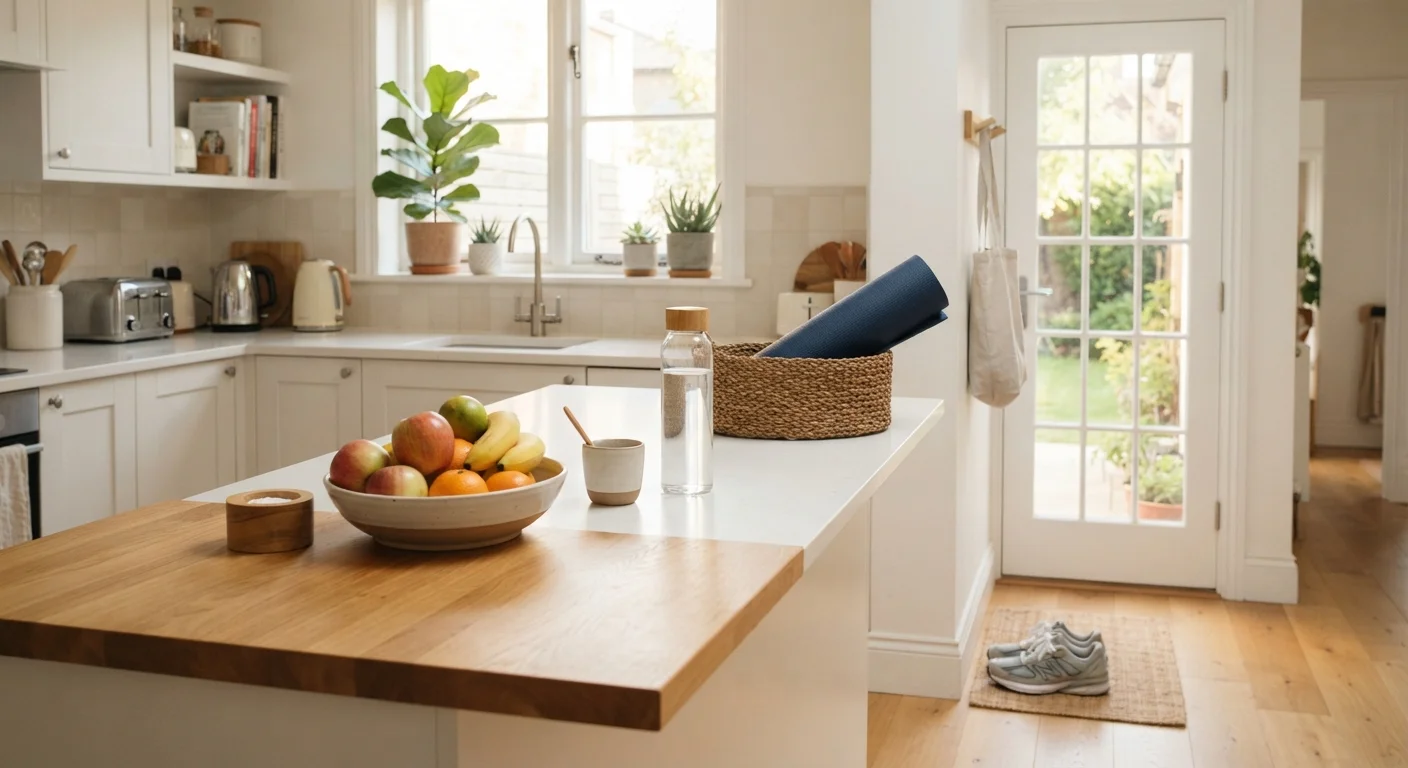
Photo: FeaturingHealth.net | Healthy Living Simplified editorial
Key Takeaways
- Your environment shapes behavior more than willpower does — design it with intention.
- Reducing friction for healthy choices and increasing it for unhealthy ones is a proven behavioral strategy.
- Small, concrete changes to physical spaces can make good habits feel nearly automatic over time.
- Cues placed in your line of sight reliably prompt behavior without requiring conscious decision-making.
- Environment design works alongside — not instead of — habit formation principles.
Why Your Surroundings Are Doing Most of the Work
Most people assume that building a healthy habit is primarily a matter of motivation — wanting it badly enough, pushing through discomfort, or applying stronger discipline. Behavioral science tells a different story. A large share of our daily actions are driven not by conscious intention but by the cues, contexts, and effort levels built into our physical environments.
Psychologist Wendy Wood's research on habit formation estimates that roughly 40–45% of daily behaviors are habitual — performed in the same context, with little deliberate thought. That means nearly half of what you do each day is shaped by your surroundings before you've had a chance to make a choice. Understanding this gives you a practical lever: design the environment, and you change the behavior. To understand the underlying mechanics, see the science behind habit formation and daily structure for a deeper look at cue-routine-reward loops.
“You do not rise to the level of your goals. You fall to the level of your systems.”
— James Clear, Author and behavioral science writer
Core Practices for Intentional Environment Design
Applying environment design isn't about a major home renovation. It's about making a series of small, strategic adjustments that tip the scales toward your intended behavior. The following practices are grounded in behavioral research and can be implemented immediately.
Place healthy items where they are immediately visible and easy to grab.
Pre-load your environment with the tools your habit requires before you need them.
Add visible cues that trigger the behavior you want to repeat.
Increase the effort required to engage in habits you want to reduce.
Designate specific spaces for specific behaviors to strengthen context cues.
These same principles apply directly to nutrition. Explore healthy eating habits for environment-based strategies specific to your kitchen and meal routines.
Start Small: Quick Wins You Can Implement Today
You don't need to redesign your entire living space to benefit from these principles. Start with one environment — your kitchen counter, your desk, your bedroom door — and apply a single adjustment. Small environmental shifts compound over time, and early success builds the confidence to go further.
Once your environment is primed, the next step is anchoring the habit itself to a consistent cue and rhythm. Our step-by-step habit-building guide walks you through that process in detail. You can also use the habit design checklist to verify your setup before you begin.
This Is General Information, Not Medical Advice
Environment design is also a powerful tool for reducing unwanted behaviors — not just building new ones. See redesigning your environment to make unhealthy habits harder for the complementary approach.
This article is for informational purposes only and does not constitute medical advice. Always consult a qualified healthcare professional for guidance specific to your health situation.
The content on this site is for informational purposes only and is not a substitute for professional advice. Always consult a qualified professional for guidance specific to your situation.