
Reproductive Health Across the Lifespan: From Puberty to Menopause

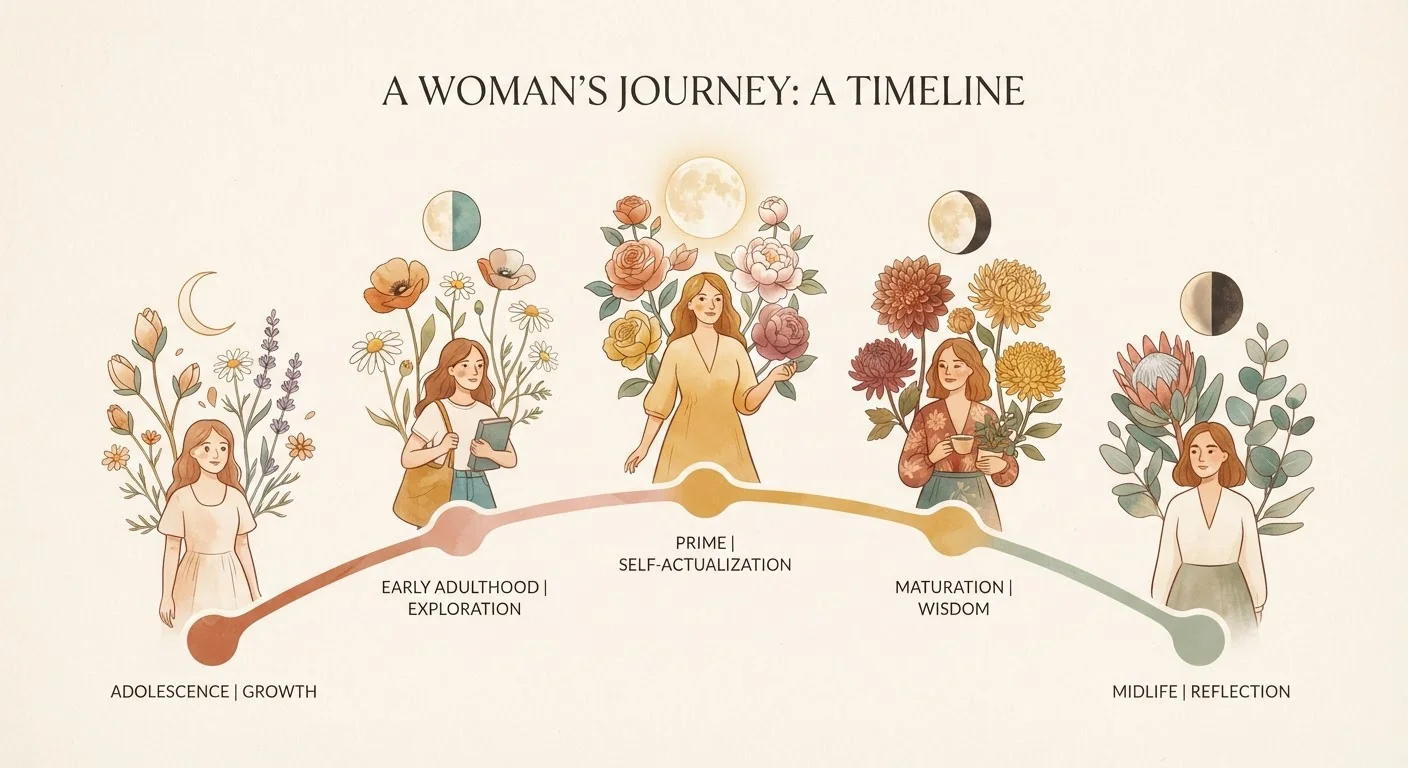
Photo: FeaturingHealth.net | Healthy Living Simplified editorial
Key Takeaways
- Reproductive health changes substantially across puberty, the reproductive years, perimenopause, and menopause.
- Hormones drive most of these transitions and influence mood, bone density, cardiovascular health, and more.
- Routine screenings and open conversations with a clinician are the single most effective preventive tools.
- Many symptoms across life stages are manageable with evidence-based support — medical and lifestyle-based.
- No two reproductive timelines are identical; individual variation is normal and should be discussed with a provider.
Understanding the Reproductive Lifespan
Women's reproductive health is not a single chapter — it is an evolving story shaped by hormonal shifts, physiological changes, and life circumstances that unfold across decades. From the first signs of puberty through the years after menopause, the body passes through distinct biological phases, each carrying its own health considerations and opportunities for proactive care.
Understanding this arc matters because the decisions and habits formed early in reproductive life can have lasting effects. Bone density built during adolescence influences fracture risk in later decades. Menstrual patterns in the twenties can signal underlying conditions worth addressing. And the hormonal changes of midlife touch nearly every organ system, not just the reproductive tract.
This guide offers a grounded, stage-by-stage overview of what to expect — and what to discuss with a qualified healthcare provider. For a deeper look at how hormones underpin each of these stages, see our introduction to hormonal health.
This article is for general informational purposes only and does not constitute medical advice. Always consult a qualified healthcare professional for guidance specific to your health situation.
Puberty: The First Hormonal Shift
Puberty typically begins between ages 8 and 13 in girls assigned female at birth, triggered by a cascade of hormones — primarily estrogen and progesterone — orchestrated by the hypothalamus and pituitary gland. Physical changes include breast development, growth spurts, changes in body composition, and the onset of menstruation (menarche), which usually occurs two to three years after puberty begins.
Early menstrual cycles are often irregular, which is normal as the hormonal feedback loop matures. However, extremely painful periods (dysmenorrhea), very heavy bleeding (HMB), or cycles absent for more than three months after menarche are worth discussing with a clinician, as they can sometimes signal conditions such as endometriosis or polycystic ovary syndrome (PCOS) that benefit from early attention.
If adolescent periods are consistently painful enough to miss school or require strong pain relief, encourage a conversation with a gynecologist — not just reassurance that it is 'normal.' Early investigation can make a meaningful difference in conditions like endometriosis.
Track your menstrual cycle for at least three months before any provider appointment — noting cycle length, flow heaviness, pain levels, and mood changes. This data dramatically improves the quality of clinical conversations.
Adolescence is also a formative period for bone health. Peak bone mass is largely achieved by the mid-twenties, making calcium and vitamin D intake during the teen years genuinely consequential for long-term skeletal strength.
The Reproductive Years: Cycles, Fertility, and Contraception
The reproductive years — roughly the mid-teens through the mid-to-late forties — are defined by regular ovulatory cycles governed by the interplay of estrogen, progesterone, follicle-stimulating hormone (FSH), and luteinizing hormone (LH). A typical cycle ranges from 21 to 35 days, though individual variation is wide.
~10%
Women affected by endometriosis globally
According to the World Health Organization, endometriosis affects approximately 10% of women and girls of reproductive age worldwide.
~8–10 years
Average duration of perimenopause
Research published in clinical menopause literature indicates perimenopause can last between 4 and 10 years, with the transition beginning up to a decade before the final menstrual period.
51
Average age of natural menopause in the U.S.
The Study of Women's Health Across the Nation (SWAN) and other large-scale longitudinal studies consistently place natural menopause onset around age 51 for U.S. women.
Common reproductive health concerns during this phase include:
- PCOS — a hormonal condition affecting ovulation, often associated with irregular cycles, androgen excess, and metabolic changes.
- Endometriosis — where tissue similar to the uterine lining grows outside the uterus, causing pain and sometimes affecting fertility.
- Uterine fibroids — benign growths that can cause heavy bleeding or pelvic pressure in some people.
- Sexually transmitted infections (STIs) — many are asymptomatic and detectable only through screening.
Contraception decisions are deeply personal and influenced by health history, relationship status, and future fertility goals. Options range from barrier methods to hormonal contraceptives to long-acting reversible contraception (LARCs). No single method is right for everyone, and a clinician can help weigh the evidence relative to individual circumstances.
For those considering pregnancy, preconception care — including folic acid supplementation, screening for infectious diseases, and reviewing any medications — is strongly recommended. Individuals with chronic conditions should consult a provider before conceiving. See our full overview of how hormone levels shift across each decade for more context.
Perimenopause: Navigating the Transition
Perimenopause — the transitional phase leading up to menopause — typically begins in the mid-to-late forties, though it can start earlier. It is defined by fluctuating and gradually declining estrogen and progesterone levels, which produce a wide range of symptoms that vary significantly from person to person.
Common experiences include:
- Irregular or skipped menstrual cycles
- Hot flashes and night sweats (VMS)
- Sleep disturbances
- Mood changes, including increased anxiety or low mood
- Changes in libido or vaginal dryness
- Brain fog or difficulty concentrating
Perimenopause Symptoms Are Not Always Obvious
Perimenopause is confirmed retrospectively — menopause is defined as 12 consecutive months without a menstrual period — so clinical guidance is important during this window. Hormone therapy (HT) is one evidence-based option for managing moderate-to-severe vasomotor symptoms, though it is not appropriate for everyone. A qualified provider can discuss the current evidence, individual risk profile, and alternatives.
Menopause and Beyond: Health After Hormone Shifts
The average age of natural menopause in the United States is around 51. After menopause, estrogen levels remain low and stable, which has downstream effects on several body systems beyond the reproductive tract:
- Bone density
- Estrogen plays a protective role in bone remodeling. Its decline accelerates bone loss, increasing the risk of osteoporosis and fracture. Weight-bearing exercise and adequate calcium and vitamin D intake support bone health at this stage.
- Cardiovascular health
- Estrogen has cardioprotective effects, and the post-menopausal period is associated with a shift in cardiovascular risk profiles. Blood pressure, cholesterol, and blood sugar monitoring become increasingly important.
- Genitourinary health
- The GSM — which encompasses vaginal dryness, urinary urgency, and recurrent urinary tract infections — is common and treatable. Many people do not raise these symptoms with their provider, yet effective options exist.
Menopause is not a medical disorder, but it is a significant physiological transition deserving informed, individualized care. For a structured look at what health checks apply at this stage, see our reproductive health self-audit by decade.
Screening and Preventive Care at Every Stage
Preventive screening is the backbone of reproductive health across the lifespan. Recommendations evolve with age and individual risk, but several are broadly applicable:
| Life Stage | Key Screenings to Discuss |
|---|---|
| Adolescence | HPV vaccination, STI screening (if sexually active), menstrual health assessment |
| 20s–30s | Cervical cancer screening (Pap test / HPV co-test per guidelines), STI testing, blood pressure |
| 40s | Mammography (timing per clinical guidance and risk profile), perimenopause symptom discussion, lipid panel |
| 50s+ | Bone density scan (DEXA), colorectal screening, cardiovascular risk assessment, breast and cervical screening per updated intervals |
These are starting points for a conversation with a clinician, not prescriptions. Individual risk factors — family history, underlying conditions, lifestyle — will shape what is appropriate for any given person.
Make Preventive Care a Habit, Not a Crisis Response
Reproductive health does not exist in isolation. It intersects with mental health, nutrition, sleep, and chronic disease management at every stage. Building a relationship with a trusted provider — one who takes your concerns seriously and keeps current with evidence — is among the most valuable investments in long-term wellbeing.
For a comparison of how reproductive health priorities differ between sexes, our editorial team has also covered men's sexual health as a parallel resource.
The content on this site is for informational purposes only and is not a substitute for professional advice. Always consult a qualified professional for guidance specific to your situation.