
Reading the Signs: Physical Symptoms That May Signal a Hormonal Imbalance

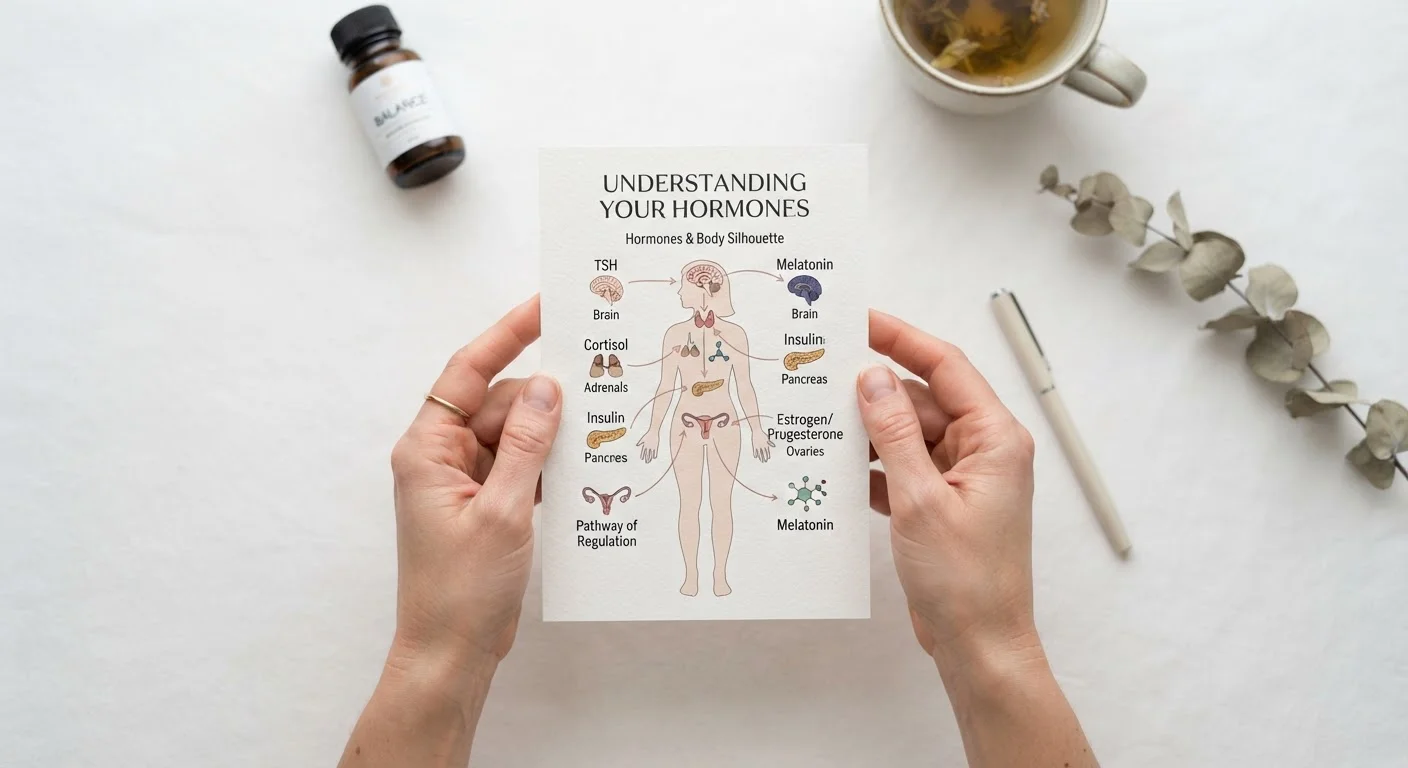
Photo: FeaturingHealth.net | Healthy Living Simplified editorial
Why Hormonal Imbalances Are Easy to Miss
Hormones are chemical messengers that regulate virtually every system in the body — from metabolism and mood to sleep and reproductive function. When levels fall out of their expected range, the effects can appear gradually and mimic everyday complaints, making them easy to dismiss or misattribute.
If you're new to understanding how these systems work, the introduction to hormonal health provides a grounded starting point. For a broader view of how hormones shift across a woman's lifetime, see Hormonal Health From Your 20s to Your 60s.
The symptoms below are not diagnostic criteria — they are patterns that, when persistent or clustered, may warrant laboratory evaluation by a qualified clinician.
| Hormones most commonly implicated | Estrogen, progesterone, testosterone, cortisol, thyroid hormones (T3/T4), insulin |
| Most common hormonal disorder in women of reproductive age | Polycystic ovary syndrome (PCOS), affecting an estimated 8–13% of reproductive-age women (World Health Organization) |
| Average age perimenopause begins | Mid-40s, though it can begin earlier (The Menopause Society (formerly NAMS)) |
| Primary diagnostic method | Blood panel (serum hormone testing) ordered by a clinician based on symptom history |
| Thyroid disorders prevalence in women | Women are 5–8 times more likely than men to develop thyroid disease (American Thyroid Association) |
Key Physical Symptoms and What They May Indicate
The following symptoms are among the most clinically recognized physical signs associated with hormonal dysregulation in women. Each can have multiple causes, so context and professional evaluation are essential.
Irregular or Absent Menstrual Cycles
A cycle that is consistently shorter than 21 days, longer than 35 days, or absent for three or more months (outside of pregnancy) may reflect disruption in estrogen and progesterone signaling. Conditions such as polycystic ovary syndrome (PCOS), hypothyroidism, and hyperprolactinemia are among the more common hormonal causes identified in clinical practice.
Persistent Adult Acne
Acne concentrated along the jawline and chin in adults is frequently linked to elevated androgens — a class of hormones that includes testosterone. Elevated androgen activity can overstimulate sebaceous glands, increasing oil production and pore blockage. This pattern is commonly observed in PCOS and adrenal disorders.
Unexplained Weight Changes
Gaining weight despite no significant dietary changes — particularly around the abdomen — can be associated with insulin resistance, cortisol excess (as seen in hypercortisolism), or underactive thyroid. Conversely, unintended weight loss may accompany an overactive thyroid.
Chronic Fatigue and Brain Fog
Persistent fatigue that does not improve with adequate rest, often accompanied by difficulty concentrating or memory lapses, is a commonly reported symptom in thyroid dysfunction, perimenopause, and adrenal insufficiency. Cycle-related energy crashes have their own hormonal explanation worth exploring separately.
Hair Thinning or Excess Hair Growth
Androgenic alopecia — hair thinning at the crown and temples — can occur when androgen levels are elevated relative to estrogen. On the other end of the spectrum, increased facial or body hair (hirsutism) is a recognized sign of androgen excess and is a core diagnostic feature of PCOS.
Sleep Disruption and Night Sweats
Difficulty falling or staying asleep, and waking with significant sweating, are hallmark symptoms of the estrogen decline that characterizes perimenopause and menopause. These symptoms can also occur with thyroid imbalance. Women who experience these alongside mood changes may also benefit from reading about unrecognised perimenopause symptoms.
Estrogen
A group of sex hormones primarily produced by the ovaries that regulate the menstrual cycle, bone density, and many other physiological processes. Levels fluctuate throughout the menstrual cycle and decline significantly during menopause.
Androgens
A class of hormones, including testosterone and DHEA, present in both women and men. In women, excess androgen activity is associated with acne, hirsutism, and conditions such as PCOS.
PCOS (Polycystic Ovary Syndrome)
A common hormonal condition characterized by elevated androgens, irregular menstrual cycles, and often polycystic ovaries on ultrasound. It is one of the leading causes of hormonal imbalance in reproductive-age women.
Hypothyroidism
A condition in which the thyroid gland does not produce sufficient thyroid hormone. Symptoms can include fatigue, weight gain, hair thinning, and feeling cold. It is diagnosed through blood testing.
Perimenopause
The transitional phase leading up to menopause during which estrogen and progesterone levels fluctuate unpredictably. It can begin years before the final menstrual period and includes symptoms such as irregular cycles, sleep disruption, and mood changes.
Hirsutism
Excess hair growth in areas typically associated with male patterns (face, chest, abdomen) in women. It is a clinical sign of androgen excess and warrants hormonal evaluation.
When to Seek Professional Evaluation
A single symptom experienced briefly and in isolation rarely points to a hormonal condition. However, symptoms that are persistent (lasting several weeks or longer), worsening over time, or appearing in clusters should prompt a conversation with a healthcare provider.
Self-Diagnosis Is Not a Substitute for Testing
Standard evaluation typically includes a detailed symptom history, physical examination, and targeted blood panels assessing levels of relevant hormones such as TSH, free T4, FSH, LH, estradiol, testosterone, and DHEA-S, among others depending on the clinical picture. The specific tests ordered depend entirely on your individual presentation — which is why professional assessment is essential.
This article is for general informational and educational purposes only. It is not a substitute for professional medical advice, diagnosis, or treatment. Always consult a qualified healthcare provider if you have concerns about your health or before making any changes to your care.
The content on this site is for informational purposes only and is not a substitute for professional advice. Always consult a qualified professional for guidance specific to your situation.