
Gut Health and Disease Prevention: Separating Fact from Trend

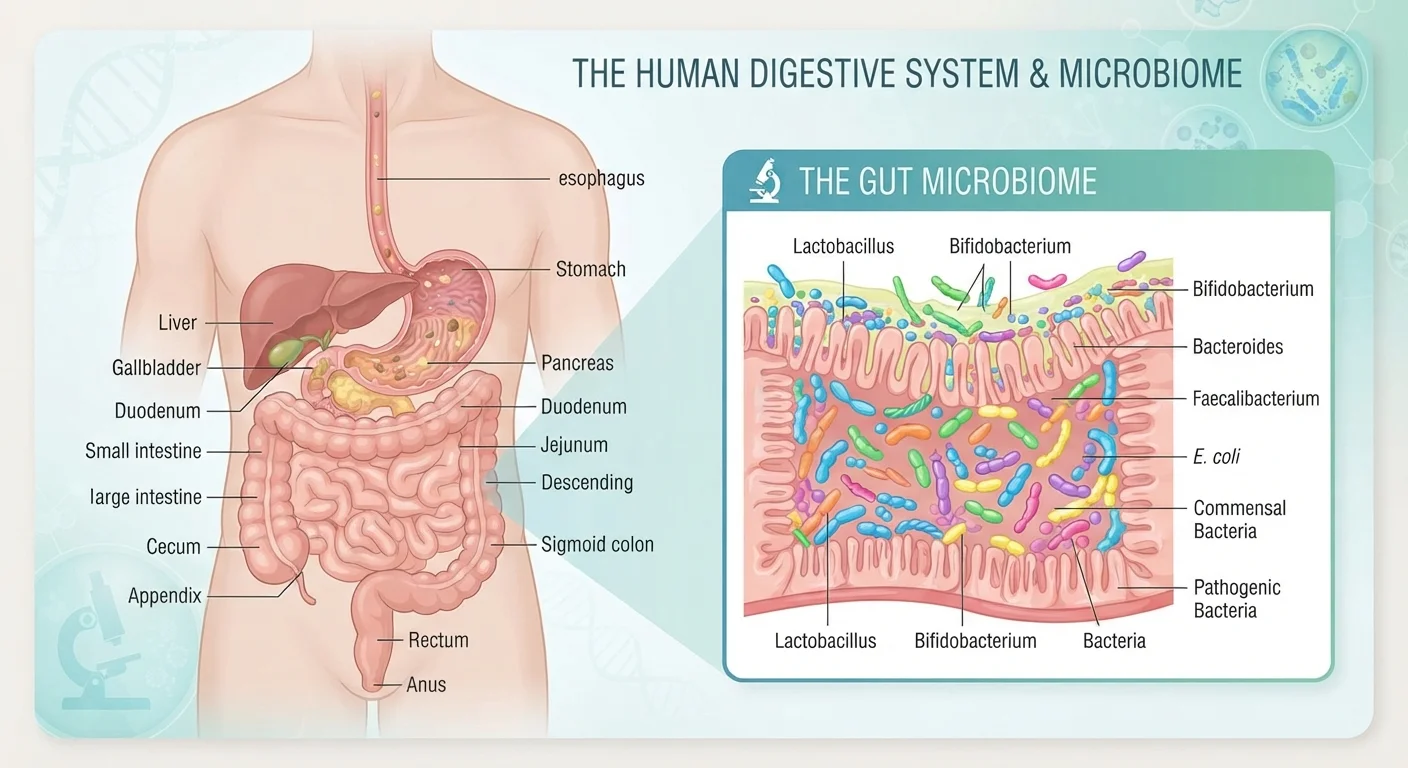
Photo: FeaturingHealth.net | Healthy Living Simplified editorial
Key Takeaways
- The gut microbiome is real and biologically significant, but most consumer-facing claims outpace current evidence.
- Fiber-rich diets, consistent sleep, and physical activity have the strongest documented links to a healthy gut.
- Probiotic supplements are not universally beneficial — their effects are strain-specific and context-dependent.
- No single food or supplement has been shown to 'reset' or fully optimize the gut microbiome.
- Consult a healthcare provider before making significant dietary changes aimed at gut health.
Why Gut Health Claims Deserve Scrutiny
The gut microbiome — the community of trillions of bacteria, fungi, and other microorganisms living in your digestive tract — is one of the most actively researched areas in medicine. That legitimacy has been accompanied by an avalanche of marketing claims, wellness influencer advice, and oversimplified headlines that frequently outrun what the science actually supports.
Understanding what is established, what is emerging, and what is speculation matters — especially for adults trying to make evidence-based choices about chronic disease prevention. As with other contested health topics, separating signal from noise requires looking at what clinical and epidemiological research actually demonstrates. For a parallel exercise in another domain, see our examination of vaccine myths versus medical evidence.
Myth
Taking a daily probiotic supplement will universally improve your gut health.
Fact
Probiotic effects are highly strain-specific and depend on the individual's baseline microbiome, health status, and reason for use.
Not all probiotics are alike. Research published in peer-reviewed journals such as Cell and Gastroenterology consistently shows that the clinical benefit of a probiotic depends on which specific bacterial strain is used, at what dose, and for what condition. A product containing Lactobacillus rhamnosus GG may be well-supported for antibiotic-associated diarrhea but have no demonstrated benefit for, say, irritable bowel syndrome or immune function. For healthy adults without a specific clinical indication, evidence for routine supplementation is limited.
Myth
A 'leaky gut' is the root cause of most chronic illnesses, from autoimmune disease to depression.
Fact
Intestinal permeability is a measurable phenomenon, but its role as a root cause of diverse diseases remains under investigation and is not established medical consensus.
Increased intestinal permeability — informally called 'leaky gut' — does exist as a physiological state and is associated with certain conditions including inflammatory bowel disease and celiac disease. However, the broader claim that it is the singular underlying driver of conditions ranging from rheumatoid arthritis to anxiety is not supported by current clinical evidence. Causality has not been established in most cases, and many wellness products marketed around this concept have no peer-reviewed trials demonstrating efficacy.
Myth
Fermented foods like kombucha and kimchi are clinically proven to treat digestive disorders.
Fact
Fermented foods may support microbiome diversity in healthy people, but they are not established treatments for diagnosed digestive conditions.
A 2021 randomized controlled trial published in Cell found that a high-fermented-food diet increased microbiome diversity and reduced markers of inflammation in healthy adults — a meaningful finding. However, microbiome diversity in healthy individuals is different from treating conditions like Crohn's disease, ulcerative colitis, or small intestinal bacterial overgrowth (SIBO). In some cases, high-fermented-food intake may actually worsen symptoms in people with certain digestive conditions. Anyone managing a diagnosed disorder should consult their gastroenterologist before making dietary changes.
Myth
You can completely 'reset' your gut microbiome with a cleanse or elimination diet.
Fact
The gut microbiome is resilient and shaped by long-term patterns, not short-term interventions — no cleanse has been shown to reset it.
Research consistently shows that the microbiome returns toward its baseline composition within weeks of a short-term dietary intervention. While extreme dietary changes — such as switching from a plant-rich to a purely animal-based diet — can shift microbiome composition within days, these shifts are largely reversible. Long-term dietary patterns, not periodic cleanses, are what durably influence microbial communities. Elimination diets also carry nutritional risks if sustained without medical supervision, particularly for vulnerable populations.
Myth
Gut health only affects digestion — it has no real connection to mental health.
Fact
The gut-brain axis is a legitimate area of neuroscience research, though translating findings into clinical interventions remains early-stage.
The gut and brain communicate through the vagus nerve, immune signaling, and microbially produced neurotransmitter precursors — a bidirectional relationship known as the gut-brain axis. Observational studies have found associations between gut microbiome composition and conditions including depression and anxiety. However, these are associations, not proven causal relationships, and no gut-targeted therapy has been approved as a mental health treatment. Researchers are actively investigating this field; the science is promising but preliminary. Readers experiencing mental health symptoms should seek evaluation from a qualified clinician.
What the Evidence Actually Supports
While many specific gut health products and protocols lack strong evidence, certain behaviors have well-documented associations with microbiome diversity and reduced chronic disease risk. Dietary fiber — found in vegetables, legumes, whole grains, and fruit — consistently emerges as the single most impactful dietary factor for gut microbiome composition across large observational studies and controlled trials. Fiber fermentation by gut bacteria produces short-chain fatty acids, which support colon cell health and have anti-inflammatory properties.
38g
Daily fiber intake associated with reduced colorectal cancer risk
A 2019 meta-analysis in <cite>The Lancet</cite> found each 8g/day increase in dietary fiber was associated with a 5–8% reduction in colorectal cancer risk.
~1,000+
Bacterial species estimated in a healthy human gut
According to the Human Microbiome Project, a healthy gut harbors extraordinary microbial diversity — though individual composition varies significantly.
Only ~20%
Of probiotic products with clinical evidence for specific conditions
A review in <cite>JAMA</cite> found that only a minority of commercially available probiotics have strain-specific evidence supporting their marketed health claims.
Regular physical activity, adequate sleep, and minimizing unnecessary antibiotic use also appear meaningfully protective of microbiome diversity. These are the same behaviors that lower risk for cardiovascular disease, type 2 diabetes, and colorectal cancer — suggesting the microbiome may be one mechanism among several through which lifestyle choices influence long-term health outcomes.
Many of these principles overlap with broader preventive health habits. Our guide to corrected misconceptions about preventive health habits addresses how popular but unsupported practices — like detox cleanses — compare to these evidence-based fundamentals.
Microbiome Research Is Advancing — But Slowly
This article is for general informational purposes only and does not constitute medical advice. Speak with a qualified healthcare provider before making significant changes to your diet or health routine.
The content on this site is for informational purposes only and is not a substitute for professional advice. Always consult a qualified professional for guidance specific to your situation.