
Screening vs. Diagnostic Testing: Understanding the Difference

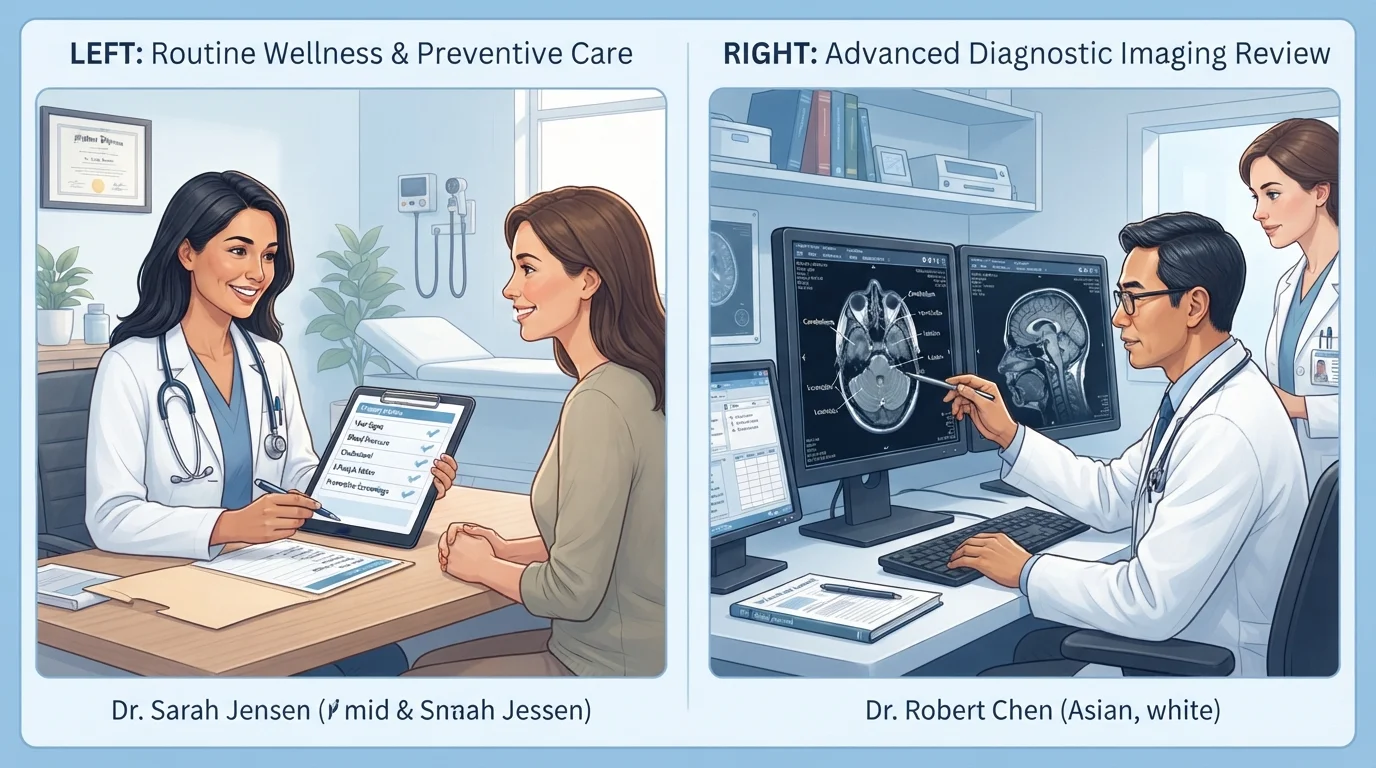
Photo: FeaturingHealth.net | Healthy Living Simplified editorial
Key Takeaways
- Screening tests are designed for people without symptoms; diagnostic tests investigate a specific concern.
- A positive screening result does not mean you have a disease — it means more testing is needed.
- Diagnostic tests are generally more specific and carry a higher pre-test probability of finding disease.
- Insurance coverage and clinical guidelines differ significantly between the two test types.
- Always discuss both screening schedules and diagnostic next steps with a qualified healthcare provider.
Two Different Questions, Two Different Tools
The words "screening" and "diagnostic testing" are often used interchangeably in everyday conversation, but clinically they answer fundamentally different questions. A screening test asks: Is there any sign of a problem in someone who has no reason to suspect one? A diagnostic test asks: What is causing this specific symptom or abnormal finding? That distinction shapes everything — from who gets tested, to how results are interpreted, to what happens next.
Preventive health screenings are designed to be applied broadly to populations, casting a wide net to catch disease early, before symptoms emerge. Diagnostic tests, by contrast, are ordered in response to clinical concern — a symptom the patient reports, a physical finding, or an abnormal screen that needs clarification.
| Criterion | Screening Tests | Diagnostic Tests |
|---|---|---|
| Primary purpose | Detect risk or early disease in healthy people | Identify cause of a symptom or abnormal finding |
| Who it's for | Asymptomatic individuals in target populations | Patients with symptoms or abnormal screens |
| Optimized for | High sensitivity (fewer missed cases) | High specificity (fewer false positives) |
| Common examples | Mammogram, colonoscopy, blood pressure check | Biopsy, CT scan, echocardiogram |
| Result interpretation | Abnormal = further testing needed, not a diagnosis | Result guides direct clinical decision-making |
| Insurance coverage | Often covered as preventive care (ACA guidelines) | Subject to deductibles and cost-sharing |
| Driven by | Age, sex, and population risk guidelines | Clinical symptoms or prior abnormal result |
How Each Test Works in Practice
Because screening tests must work across large, generally healthy populations, they are designed to be highly sensitive — meaning they err on the side of flagging potential problems, even at the cost of some false positives. A mammogram, for example, may identify an area of concern that turns out to be benign tissue. That outcome is not a failure of screening; it is the expected tradeoff. The goal is to avoid missing a real cancer in the broader population.
Diagnostic tests, on the other hand, are optimized for specificity — they aim to confirm or rule out a particular condition with greater precision. After an abnormal mammogram, a targeted biopsy or MRI serves as the diagnostic follow-up. These tests are more invasive, more detailed, and interpreted with the full context of the patient's clinical picture.
71%
Adults aware screening ≠ diagnosis
A CDC health literacy survey found that a significant share of adults conflate screening results with definitive diagnoses, underscoring a widespread gap in public understanding.
~50%
False-positive mammogram rate over 10 years
Research published in JAMA Internal Medicine estimated that roughly half of women screened annually over a decade will receive at least one false-positive mammogram result.
45
Recommended age to begin colorectal screening
The USPSTF updated its colorectal cancer screening guidelines to recommend beginning at age 45 for average-risk adults, broadening access to earlier detection.
Understanding this distinction also has practical financial implications. Under the Affordable Care Act, many USPSTF-recommended screenings are covered without cost-sharing when billed as preventive care. However, if an encounter is billed as diagnostic — because a symptom prompted the test — cost-sharing may apply. Patients are encouraged to confirm billing codes with their insurer and provider before an appointment.
When a Screen Becomes a Diagnosis — and When It Doesn't
One of the most important concepts to internalize: an abnormal screening result is not a diagnosis. It is a signal that warrants further investigation. Many people experience significant anxiety after an abnormal screen, not realizing that the screening process is specifically designed to over-identify so that the subsequent diagnostic step can do the precise work of confirming or excluding disease.
For instance, an elevated prostate-specific antigen (PSA) level on a blood screen can have many causes besides cancer — infection, inflammation, or benign enlargement. A biopsy or imaging study provides the diagnostic clarity. Similarly, a positive fecal immunochemical test (FIT) for colorectal cancer does not mean cancer is present; it means a colonoscopy — the diagnostic follow-up — is warranted. For a broader look at how these tests fit together, see our overview of cancer screenings including colonoscopy and mammography.
It is also worth noting that some tests serve dual roles depending on clinical context. A colonoscopy performed on an asymptomatic 45-year-old following guidelines is a screening procedure. The same colonoscopy performed because a patient reported rectal bleeding is diagnostic. The test itself may be identical, but the clinical intent — and often the insurance classification — is different. Readers who want to explore common misconceptions about this process will find the health screening myths article a useful companion.
Scheduling decisions should always be made in partnership with a qualified healthcare provider who can weigh your individual risk factors, family history, and clinical history. For a candid look at what screening programs can and cannot promise, the trade-offs of routine screening are worth reviewing before making decisions.
This article is for general informational and educational purposes only and does not constitute medical advice. Always consult a qualified healthcare professional for guidance specific to your health circumstances.
The content on this site is for informational purposes only and is not a substitute for professional advice. Always consult a qualified professional for guidance specific to your situation.