
At-Home Health Tests vs. Clinic-Based Screenings: What Each Can and Cannot Tell You

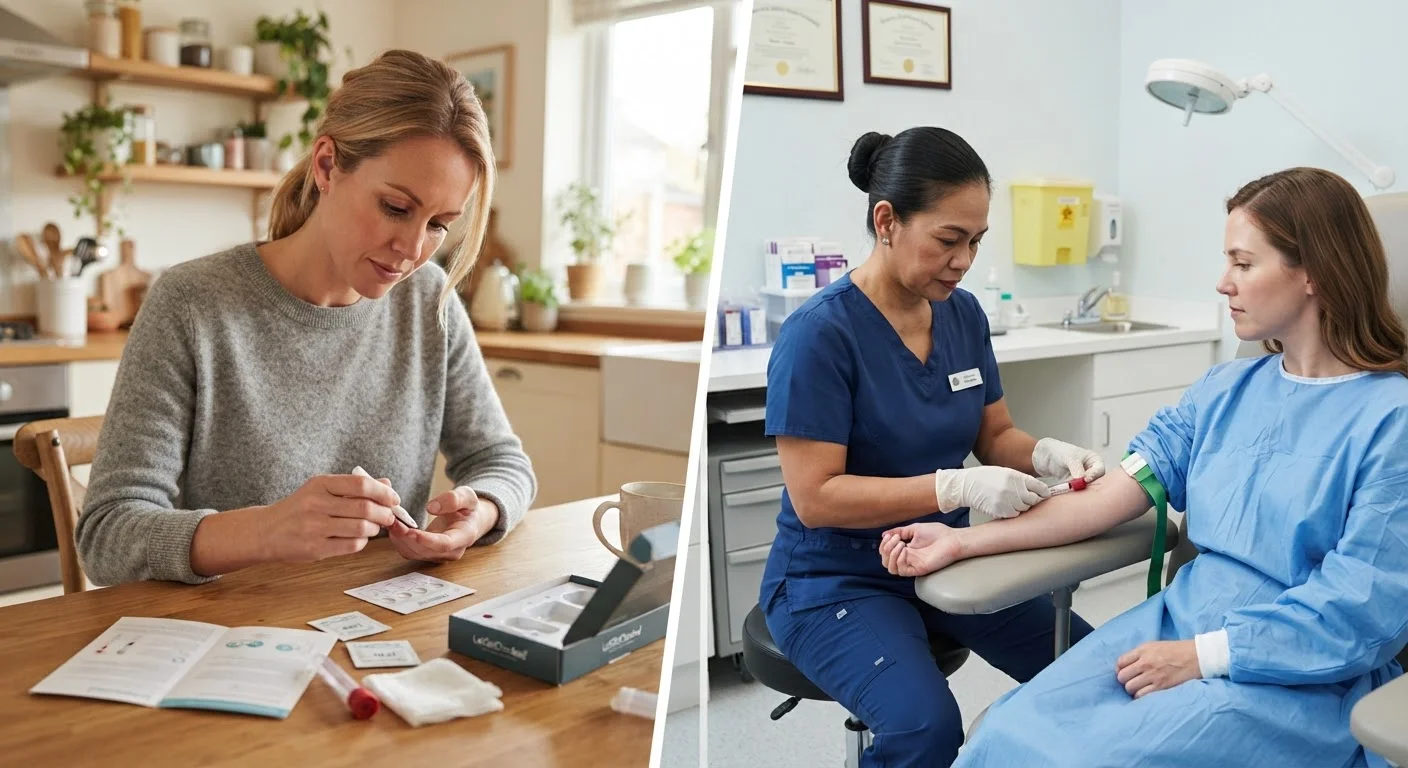
Photo: FeaturingHealth.net | Healthy Living Simplified editorial
Key Takeaways
- At-home tests offer convenience but generally lack the clinical validation and professional interpretation of in-office screenings.
- Clinic-based screenings follow established guidelines (USPSTF, CDC) and include follow-up pathways if results are abnormal.
- Many at-home results still require a clinician's review before any action should be taken.
- The two approaches are often complementary rather than mutually exclusive in a prevention strategy.
- Always discuss screening choices with a qualified healthcare provider, especially if you have risk factors or symptoms.
The Growing Role of At-Home Testing
Consumer health testing has expanded rapidly. You can now collect samples at home for cholesterol panels, blood glucose, sexually transmitted infections, colon cancer markers, and even genetic risk assessments — then mail them to a certified lab or read results within minutes. This convenience has real public health value: it removes barriers like clinic hours, transportation, and cost, and it can prompt people who would otherwise skip screenings to engage with their health.
But convenience is not the same as completeness. At-home tests vary widely in their sensitivity and specificity — the core measures of how reliably a test detects what it claims to detect. Many consumer kits are FDA-cleared rather than FDA-approved, a meaningful distinction that affects the strength of the evidence behind them. Understanding what that label means is a starting point — see our overview of how screenings differ from diagnostic tests for context.
What Clinic-Based Screenings Provide That At-Home Tests Cannot
Clinical screenings are built around established, evidence-based protocols — primarily those set by the USPSTF, the CDC, and specialty medical organizations. This means the right test is recommended at the right interval for the right population, not sold as a one-size product to anyone willing to buy.
| At-Home Tests | Clinic-Based Screenings | |
|---|---|---|
| Convenience | High — no appointment needed | Lower — requires scheduling and travel |
| Professional interpretation | Typically absent or limited | Integrated into the visit |
| Guideline alignment | Varies by product; often absent | Built on USPSTF/CDC protocols |
| Follow-up pathway | Reader must initiate independently | Coordinated referral if result is abnormal |
| Validated accuracy | Variable; FDA-cleared ≠ FDA-approved | Standardized lab or clinical methods |
| Insurance coverage | Rarely covered; out-of-pocket cost | Often covered as preventive care |
| Access for underserved populations | Can reduce geographic/stigma barriers | May be limited by clinic availability |
Critically, clinic-based results come with professional interpretation and, when needed, an immediate referral pathway. An abnormal fasting glucose at a clinic triggers a structured conversation about prediabetes management. An abnormal at-home glucose strip, by contrast, tells you a number with no automatic next step. The trade-offs inherent in screening — including false positives and the anxiety they cause — are best navigated with clinical support rather than alone at a kitchen table.
Do Not Use At-Home Results to Self-Diagnose
Where At-Home Tests Add Genuine Value
At-home testing is not a compromise — in specific contexts, it is the preferred approach. HIV self-testing, for example, is endorsed by the CDC and the World Health Organization as a strategy to reach people who face stigma or access barriers in clinical settings. Similarly, the FDA-approved stool DNA test and fecal immunochemical test (FIT) for colorectal cancer are collected at home and are explicitly included in USPSTF guidelines as acceptable alternatives to colonoscopy for average-risk adults.
At-home blood pressure monitors — when properly validated and used correctly — are recommended by major cardiology guidelines as a complement to office measurements, helping to identify white-coat hypertension and improve medication management. The key phrase across all these examples is complement: these tools extend clinical care rather than replace it. For a fuller picture of which tests matter at each stage of life, the lifelong screening calendar maps out recommended intervals by age.
Check the Label Before You Trust the Result
Making an Informed Choice
Deciding between an at-home kit and a clinical screening is rarely an either/or question. The more useful framework is to ask: What will I do with this result? If a positive at-home result would simply prompt you to schedule a clinic visit anyway, that is a coherent workflow — provided you follow through. If a negative result would give you false confidence that delays a guideline-recommended screening, that is a genuine risk worth acknowledging.
45%
Adults who skip recommended screenings
CDC data indicate that roughly 45% of U.S. adults are not current on at least one recommended preventive screening.
~1 in 3
Colorectal cancers caught via stool-based tests
USPSTF notes that stool-based home tests, when used consistently, are a clinically valid alternative for colorectal cancer detection in average-risk adults aged 45–75.
People with personal or family risk factors for conditions such as heart disease, diabetes, or hereditary cancers should be especially cautious about substituting consumer tests for clinical evaluations. If you are unsure whether an at-home test is an appropriate first step for your situation, the best source of guidance is a licensed healthcare provider who knows your history. Common misconceptions about when and why screening is necessary — including the idea that feeling healthy means testing is unnecessary — are addressed in our piece on health screening myths.
This article is for general informational and educational purposes only and does not constitute medical advice. Always consult a qualified healthcare professional for guidance about screenings, symptoms, or health decisions specific to your circumstances.
The content on this site is for informational purposes only and is not a substitute for professional advice. Always consult a qualified professional for guidance specific to your situation.