
Zinc, Selenium, and Iodine: The Trace Minerals Worth Understanding

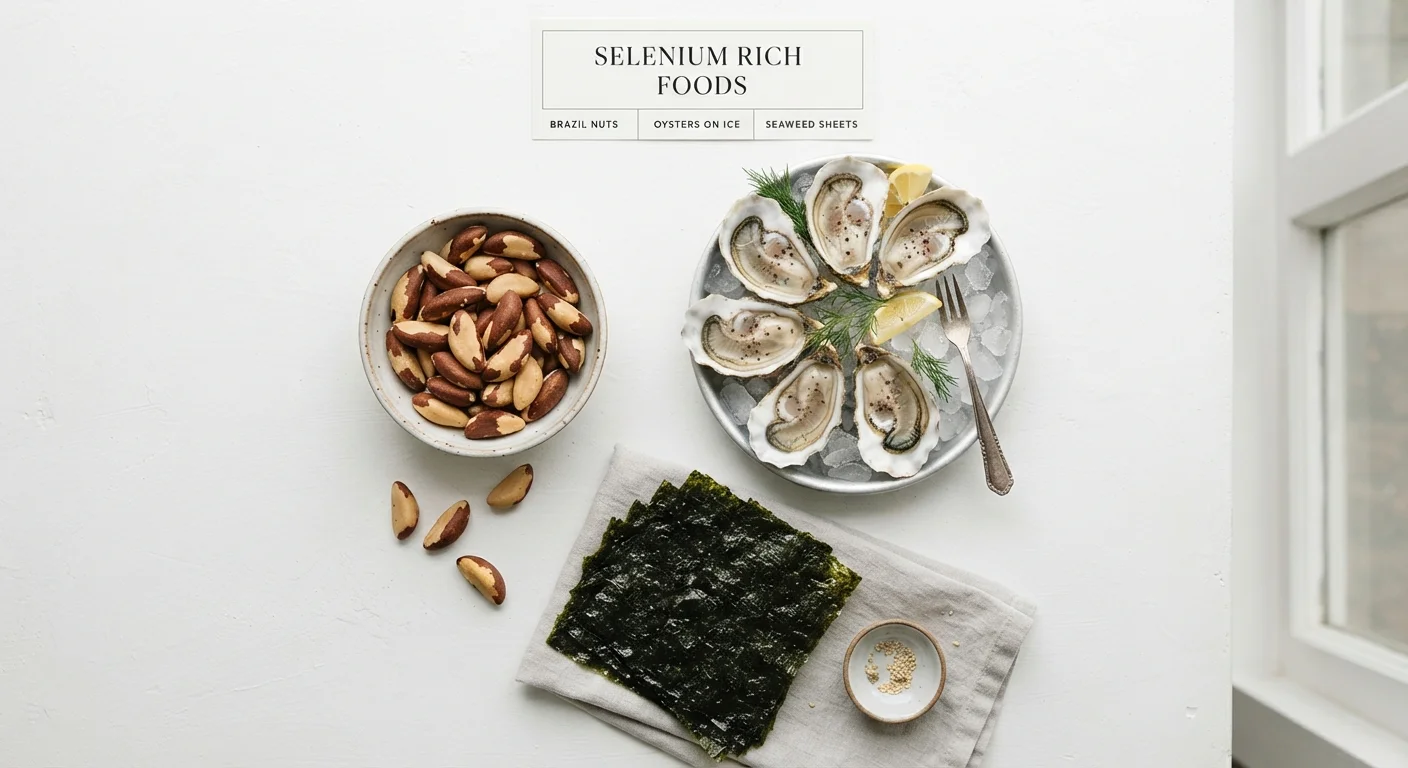
Photo: FeaturingHealth.net | Healthy Living Simplified editorial
What Makes a Mineral a 'Trace' Mineral?
Not all minerals are needed in equal amounts. While calcium and magnesium are sometimes called macromininerals because the body requires them in relatively larger quantities, trace minerals — also called microminerals — are only needed in milligrams or micrograms per day. That small requirement doesn't reflect small importance. Zinc, selenium, and iodine each support processes the body cannot manage without them.
For a broader overview of how these fit into the full micronutrient picture, see The Everyday Eater's Reference to Essential Micronutrients.
| Zinc RDA (adult men) | 11 mg/day (National Academies of Sciences, Engineering, and Medicine) |
| Zinc RDA (adult women) | 8 mg/day (National Academies of Sciences, Engineering, and Medicine) |
| Selenium RDA (adults) | 55 mcg/day (National Academies of Sciences, Engineering, and Medicine) |
| Iodine RDA (adults) | 150 mcg/day (National Academies of Sciences, Engineering, and Medicine) |
| Selenium Tolerable Upper Intake Level | 400 mcg/day (National Academies of Sciences, Engineering, and Medicine) |
| Iodine Tolerable Upper Intake Level (adults) | 1,100 mcg/day (National Academies of Sciences, Engineering, and Medicine) |
Zinc: Far More Than an Immune Booster
Zinc is involved in over 300 enzymatic reactions — meaning it acts as a helper molecule for enzymes that carry out functions ranging from DNA synthesis to protein production to wound healing. It also plays a documented role in immune cell development and sensory function, including taste and smell.
Key food sources: Oysters are the single richest source of zinc in the food supply. Red meat, poultry, beans, nuts, whole grains, and fortified breakfast cereals also contribute meaningfully. Plant-based eaters should be aware that compounds called phytates in legumes and grains can reduce zinc's bioavailability, so variety and adequate overall intake matter more for this group.
~17%
U.S. adults with low zinc intake
Analysis of NHANES dietary data suggests a notable portion of American adults fall below recommended zinc intake levels.
1–2 nuts
Brazil nuts needed for a full selenium day
A single Brazil nut can contain roughly 70–90 mcg of selenium, making it one of the most concentrated food sources available.
~1 billion
People globally at risk of iodine deficiency
According to the World Health Organization, iodine deficiency remains one of the most common preventable nutritional problems worldwide.
Selenium: A Trace Mineral With Antioxidant Duties
Selenium is incorporated into a family of proteins called selenoproteins, which perform antioxidant and anti-inflammatory functions inside cells. One well-known example is glutathione peroxidase, an enzyme that helps protect cells from oxidative damage. Selenium also supports thyroid hormone metabolism.
Key food sources: Brazil nuts are remarkably concentrated — even one or two per day can meet the daily RDA. Seafood, organ meats, muscle meats, eggs, and grains grown in selenium-rich soil are also reliable sources. Soil selenium content varies significantly by region, which affects the selenium content of plant foods.
More Is Not Always Better
Needs can shift across life stages — the guide to micronutrients across a lifetime covers how selenium and other requirements evolve from childhood onward.
Iodine: Essential for Thyroid Function
Iodine's primary role is structural: it is literally built into thyroid hormones (thyroxine and triiodothyronine), which regulate metabolism, energy production, and normal development. Adequate iodine intake is particularly critical during pregnancy and early childhood, when thyroid hormones guide brain and nervous system development. Individuals who are pregnant or breastfeeding have higher iodine needs and should consult a healthcare provider about appropriate intake.
Key food sources: In the United States, iodized salt has been a major source of iodine since the 1920s, effectively reducing deficiency. Dairy products, seafood, and eggs also supply meaningful amounts. Many specialty or artisanal salts are not iodized, so relying exclusively on them without compensating through other sources could reduce iodine intake over time.
Trace mineral
A mineral the body requires in very small amounts — typically less than 100 mg per day — but cannot produce on its own. Despite the tiny quantities needed, trace minerals are essential for normal biological function.
Recommended Dietary Allowance (RDA)
The average daily intake level sufficient to meet the nutrient requirements of nearly all healthy individuals in a specific life stage and sex group, as established by the National Academies of Sciences, Engineering, and Medicine.
Tolerable Upper Intake Level (UL)
The maximum daily intake of a nutrient unlikely to cause adverse health effects for most people. Regularly exceeding the UL — often through supplements — can lead to toxicity.
Thyroid hormone
Hormones produced by the thyroid gland that regulate metabolism, growth, and development. Iodine is a structural component of these hormones and is essential for their synthesis.
Antioxidant
A compound that neutralizes reactive molecules called free radicals, which can damage cells. Selenium, for example, functions as a component of antioxidant enzyme systems in the body.
Bioavailability
The proportion of a nutrient from food or supplements that is absorbed and used by the body. Animal-based food sources often have higher bioavailability for trace minerals compared to plant sources.
If you want to assess how your overall eating pattern stacks up on micronutrients, the micronutrient gap self-assessment offers a practical checklist approach.
This article is for general informational and educational purposes only and does not constitute medical or dietary advice. For questions about your individual nutritional needs, consult a qualified healthcare professional or registered dietitian.
The content on this site is for informational purposes only and is not a substitute for professional advice. Always consult a qualified professional for guidance specific to your situation.