
Vitamin B12: What Vegans and Vegetarians Need to Know

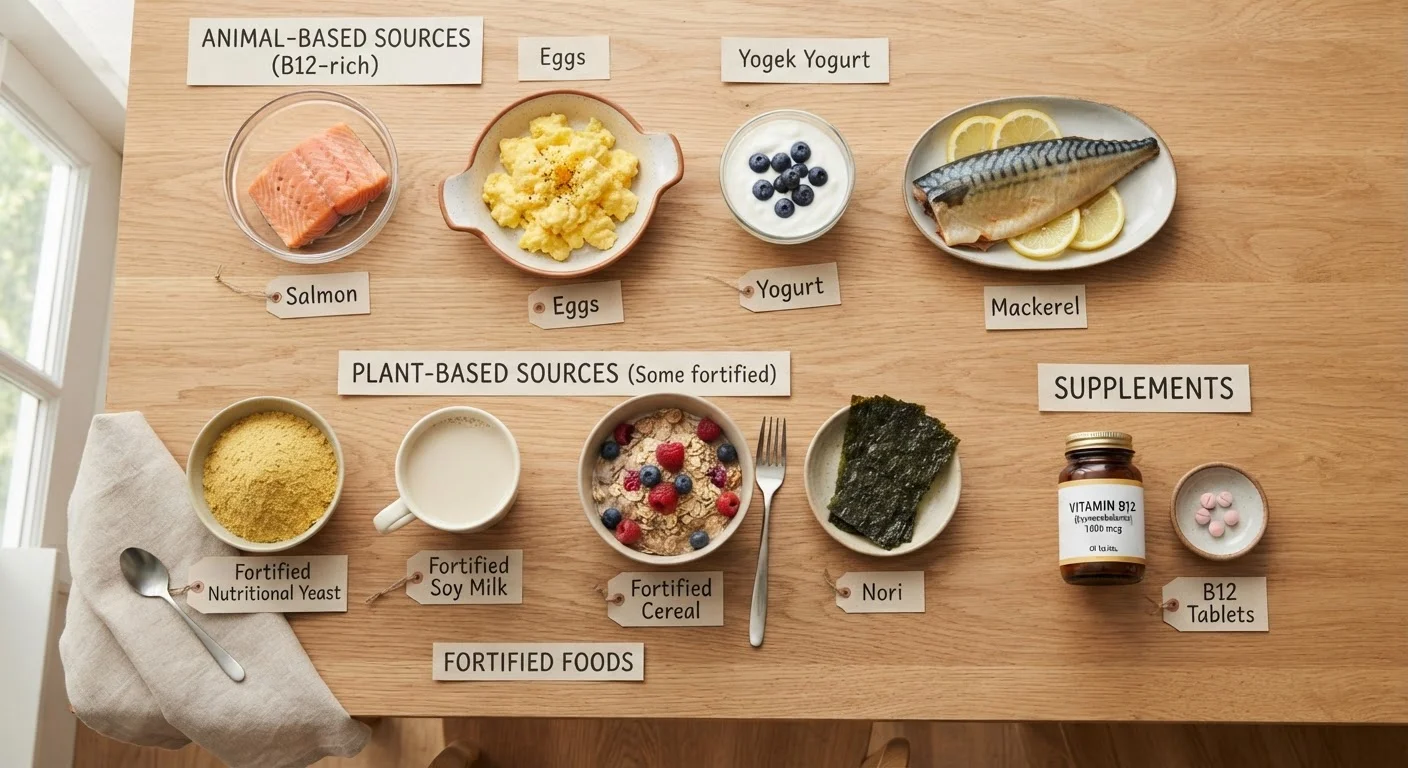
Photo: FeaturingHealth.net | Healthy Living Simplified editorial
Key Takeaways
- Vitamin B12 is found almost exclusively in animal-derived foods, making supplementation essential for most vegans.
- B12 deficiency develops slowly but can cause irreversible neurological damage if left untreated.
- Fortified foods and supplements are the most reliable B12 sources for plant-based eaters.
- Lacto-ovo vegetarians may get some B12 from dairy and eggs, but levels should still be monitored.
- A blood test is the only way to confirm whether your B12 status is adequate.
What Is Vitamin B12 and Why Does It Matter?
Vitamin B12, also called cobalamin, is a water-soluble vitamin that the body cannot produce on its own. It plays a central role in two critical processes: forming healthy red blood cells and maintaining the protective sheath (myelin) that surrounds nerve fibers. B12 is also involved in DNA synthesis and converting food into usable energy.
Vitamin B12 (Cobalamin)
A water-soluble vitamin essential for nerve function, red blood cell production, and DNA synthesis. It must be obtained from food or supplements because the body cannot make it.
Myelin
A protective coating that surrounds nerve fibers and helps electrical signals travel efficiently. B12 is required to maintain it.
Megaloblastic anemia
A blood disorder in which the body produces abnormally large, poorly functioning red blood cells. It is one result of insufficient B12 (or folate).
B12 Analogues
Compounds found in some plant foods that resemble B12 in structure but are not biologically active in humans and cannot substitute for true B12.
Methylmalonic Acid (MMA)
A compound that builds up in the blood when B12 is insufficient. Measuring MMA is a more sensitive indicator of B12 status than serum B12 alone.
Bioavailability
The proportion of a nutrient the body actually absorbs and uses from food or supplements. Even if a food contains a nutrient, low bioavailability means less of it reaches your cells.
Because the consequences of deficiency — including megaloblastic anemia and neurological damage — can be serious and, in some cases, irreversible, getting sufficient B12 consistently is not optional. The challenge for plant-based eaters is that nature concentrates this vitamin almost entirely in animal tissues and byproducts.
Why Plant-Based Eaters Are at Higher Risk
B12 is produced by microorganisms (bacteria and archaea) and accumulates in the tissues of animals that consume those organisms or the soil and water they inhabit. Meat, poultry, fish, shellfish, dairy products, and eggs are all meaningful dietary sources. Whole plant foods — vegetables, fruits, legumes, grains, and nuts — contain negligible amounts of bioavailable B12.
Some plant advocates point to spirulina, tempeh, or nori as B12 sources. However, research indicates these foods largely contain B12 analogues — compounds structurally similar to B12 but not biologically active in humans. Relying on them is not a sound strategy.
Don't Rely on Unfortified Plant Foods for B12
Vegans who eat no animal products are at the highest risk. Vegetarians who include dairy and eggs have more options but are not fully protected. If you are also navigating protein needs on a plant-based diet, understanding which nutrients require intentional planning — B12 chief among them — is an important foundation.
Signs of B12 Deficiency to Watch For
Deficiency often develops silently because the liver stores several years' worth of B12. By the time symptoms appear, depletion may be significant. Common signs include:
- Persistent fatigue and weakness
- Tingling or numbness in hands and feet
- Balance or coordination problems
- Pale or yellowed skin
- Memory difficulties or cognitive fog
- Swollen, inflamed tongue (glossitis)
These symptoms overlap with many other conditions, so self-diagnosis is not reliable. A blood test measuring serum B12 — and sometimes methylmalonic acid (MMA) or homocysteine levels for a more sensitive picture — is the only way to assess your status accurately. Speak with a healthcare provider if you have concerns.
Reliable B12 Sources for Vegans and Vegetarians
For plant-based eaters, two strategies are well-supported by evidence:
- Fortified foods: Many plant milks, breakfast cereals, meat analogues, and nutritional yeast products are fortified with B12. Check nutrition labels carefully — not all products in these categories are fortified, and amounts vary. Consuming fortified foods multiple times per day can help meet needs, but consistency matters.
- Supplements: B12 supplements are widely available and are generally considered the most reliable route for vegans. Both cyanocobalamin and methylcobalamin forms are used. Dosing frequency and amount should be discussed with a registered dietitian or physician, as the body absorbs B12 less efficiently in larger doses than in smaller, more frequent ones.
Read Labels on Fortified Foods
Lacto-ovo vegetarians benefit from dairy and eggs as moderate sources. Cow's milk and yogurt provide well-absorbed B12; eggs provide less per serving and with somewhat lower bioavailability. Even so, these groups benefit from periodic blood level monitoring rather than assuming intake is sufficient.
Talking to Your Healthcare Provider
If you follow a vegan or vegetarian diet, proactively discussing B12 with your doctor or registered dietitian is worthwhile — ideally before deficiency has a chance to develop. Routine bloodwork can establish a baseline and catch falling levels early, when they are easiest to address.
Certain populations carry added risk and should be especially diligent: older adults (absorption declines with age), people with gastrointestinal conditions affecting absorption (such as celiac disease or atrophic gastritis), and those taking medications known to interfere with B12 absorption, such as metformin or long-term proton pump inhibitors.
Special Populations Need Extra Attention
This article is for general informational and educational purposes only and does not constitute medical advice. Individual nutrient needs vary. Consult a qualified healthcare professional for guidance tailored to your health history and circumstances.
Frequently Asked Questions
The content on this site is for informational purposes only and is not a substitute for professional advice. Always consult a qualified professional for guidance specific to your situation.