
Getting Enough Iron Without Eating Red Meat Every Day

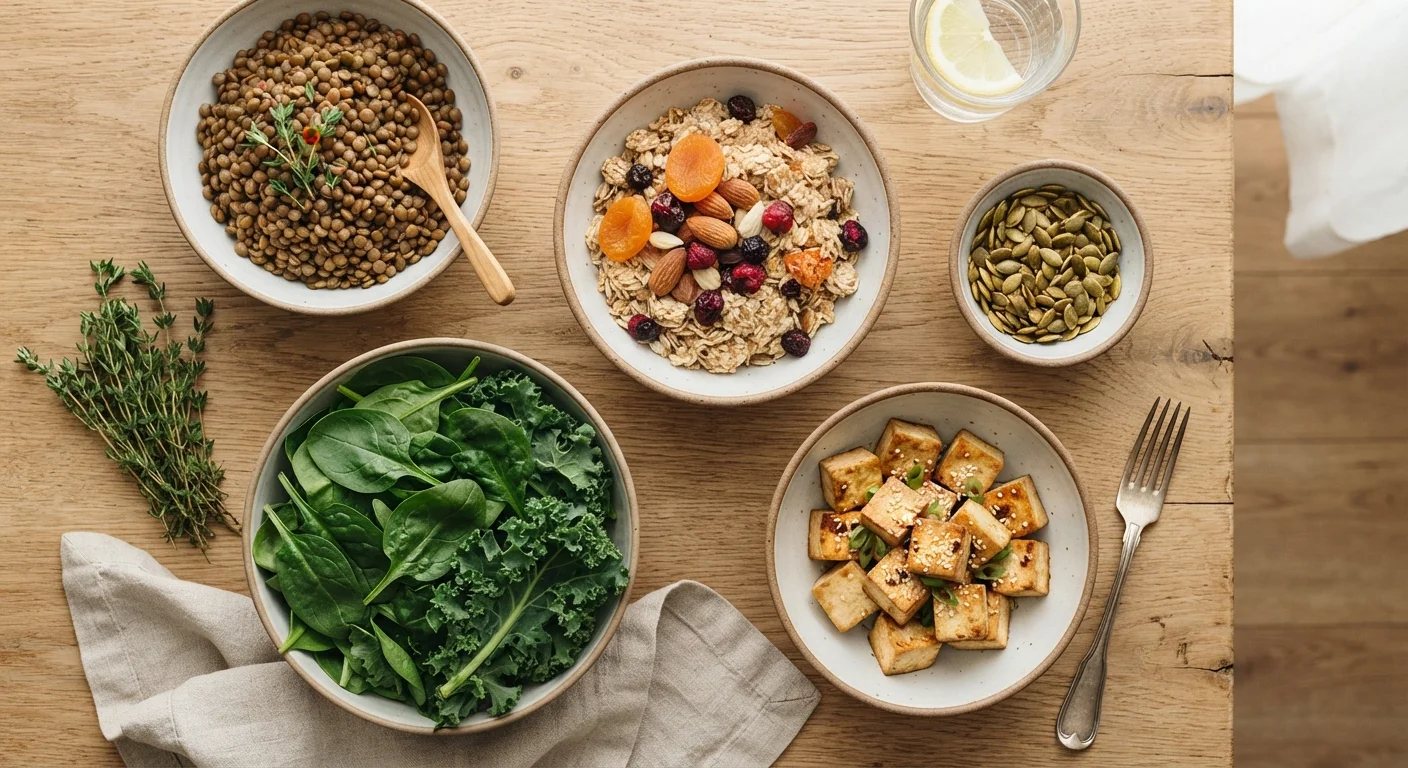
Photo: FeaturingHealth.net | Healthy Living Simplified editorial
Key Takeaways
- Iron comes in two forms — heme (meat) and non-heme (plants) — and both can contribute to meeting your daily needs.
- Pairing non-heme iron foods with vitamin C significantly improves how much iron your body absorbs.
- Legumes, tofu, dark leafy greens, seeds, and fortified foods are reliable non-meat iron sources.
- Certain foods and beverages like coffee and tea can reduce iron absorption when consumed alongside meals.
- Getting bloodwork done is the most reliable way to know whether your iron levels need attention.
Why Iron Matters — and Why Red Meat Isn't the Only Answer
Iron is a mineral your body uses to make hemoglobin, the protein in red blood cells that carries oxygen from your lungs to the rest of your body. Without adequate iron, oxygen delivery becomes less efficient, which can lead to symptoms like fatigue and reduced concentration. Iron also plays a role in immune function and energy metabolism.
Red meat has a reputation as the go-to iron source largely because it contains heme iron, which the body absorbs at a higher rate than the non-heme iron found in plant foods. But heme iron is far from the only viable source — and for people who eat meat rarely, occasionally, or not at all, a well-planned diet built around plant and fortified foods can reliably cover iron needs.
If you're still building your foundational nutrition knowledge, our introduction to macronutrients is a helpful starting point before diving into micronutrients like iron. For a broader look at how iron fits among other essential vitamins and minerals, see the Everyday Eater's Reference to Essential Micronutrients.
What you will need
Step-by-Step: Building Iron Into Your Meals
The following steps walk you through a practical, food-first approach to improving iron intake — from understanding your sources to timing your meals more strategically. No extreme dietary overhauls are needed; small, consistent changes are what add up over time.
Food journal or nutrition tracking app
Helps you identify which meals regularly include iron-rich foods and where gaps may exist.
Vitamin C-rich foods (citrus, bell peppers, strawberries)
Used as absorption enhancers when paired with non-heme iron foods at the same meal.
Cast iron skillet
Can contribute trace dietary iron when used to cook acidic foods.
Understand the two types of dietary iron
Dietary iron comes in two forms. Heme iron is found in animal products — particularly red meat, poultry, and seafood — and is absorbed efficiently by the body. Non-heme iron is found in plant foods and some fortified products and is absorbed less efficiently, but it can absolutely meet your needs when you eat enough of the right foods consistently.
Knowing this distinction matters because it shapes your strategy. If you eat meat occasionally, you're already getting some heme iron. If you eat little or no meat, you'll rely more heavily on non-heme sources and absorption-boosting techniques.
Identify your best non-heme iron food sources
Several plant foods deliver meaningful amounts of iron per serving. Build your meals around these regularly:
- Legumes: Lentils, chickpeas, kidney beans, and soybeans are among the highest plant sources of iron.
- Tofu and tempeh: Both soy-based proteins offer substantial iron alongside plant protein.
- Dark leafy greens: Spinach, Swiss chard, and cooked beet greens contain iron, though their bioavailability (how well your body absorbs them) benefits greatly from vitamin C pairing.
- Seeds: Pumpkin seeds and hemp seeds are particularly iron-dense per ounce.
- Fortified foods: Many breakfast cereals and plant-based milks are fortified with iron — check the nutrition label for percent daily value.
- Whole grains: Oats, quinoa, and amaranth provide moderate amounts of iron alongside fiber and other nutrients.
Pair iron-rich foods with vitamin C at the same meal
Vitamin C (ascorbic acid) chemically converts non-heme iron into a form your body absorbs more readily. Research consistently shows this pairing can substantially increase absorption from plant sources. Practical combinations include:
- Lentil soup with a squeeze of lemon juice stirred in before serving
- A spinach salad topped with sliced strawberries or orange segments
- Black bean tacos with salsa made from tomatoes and bell peppers
- Oatmeal served with fresh kiwi or a small glass of orange juice
You don't need large amounts of vitamin C — even a modest portion of a vitamin C-rich food at the same meal can make a difference.
Time certain beverages and foods away from iron-rich meals
Some compounds naturally found in foods and beverages bind to non-heme iron in the digestive tract and reduce how much is absorbed. The most significant ones to be aware of include:
- Tannins in black tea and coffee
- Phytates in raw bran and unsoaked legumes (soaking and cooking legumes reduces phytate content)
- Calcium in dairy products and calcium-fortified foods when consumed in the same meal
You don't need to eliminate any of these — they're part of a healthy diet — but spacing your coffee or tea to at least an hour after an iron-rich meal is a practical, low-effort adjustment.
Audit your current eating pattern for iron gaps
A simple self-check helps you see where iron may be missing from your routine. Look at a typical week of eating and ask: How many meals include a legume, a seed, dark leafy greens, or a fortified grain? If the answer is fewer than once per day, there's likely room to improve consistency. The Self-Assessment Approach to Micronutrient Gaps offers a practical checklist to work through this systematically.
You can also use a nutrition tracking app for a few days — not as a long-term habit, but as a snapshot — to see whether your estimated iron intake aligns with general dietary reference values.
Get bloodwork if you have ongoing concerns
Dietary adjustments are a sound first step, but if you frequently feel fatigued, have trouble concentrating, or have reason to think your iron intake has been low for a long time, the most reliable next step is a blood test ordered by your doctor. A standard panel can measure serum ferritin (your body's iron stores) and hemoglobin, giving your provider a clear picture of your actual iron status.
This is especially relevant for people with higher iron needs, including those who menstruate, are pregnant, are highly active, or have certain gastrointestinal conditions that may affect absorption. Consult a qualified healthcare provider before starting any iron supplement.
Cast Iron Cookware Can Add a Small Boost
Iron Supplementation Requires Professional Guidance
Inhibitors Can Quietly Reduce Iron Absorption
If you're also working toward getting more plant-based protein alongside your iron, our guide on getting enough protein on a plant-based diet covers complementary strategies that pair naturally with the approach above. For more on building consistent nutritional habits day to day, explore the Healthy Eating Habits hub.
This article is for general informational and educational purposes only and does not constitute medical advice. Always consult a qualified healthcare professional with questions about your personal health, nutrition needs, or before making significant changes to your diet or beginning any supplement.
The content on this site is for informational purposes only and is not a substitute for professional advice. Always consult a qualified professional for guidance specific to your situation.