
Why Cortisol Keeps Stealing the Spotlight in Men's Health Conversations

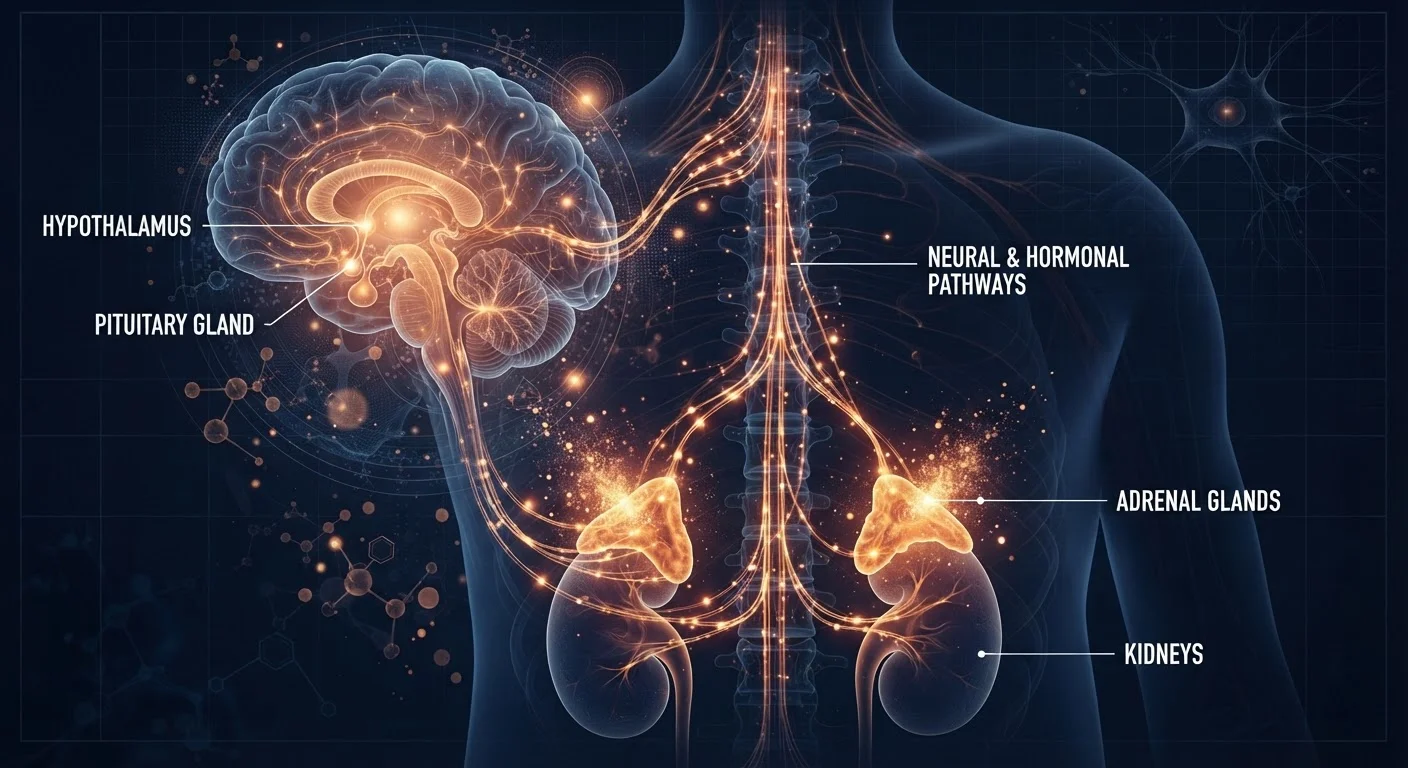
Photo: FeaturingHealth.net | Healthy Living Simplified editorial
Key Takeaways
- Cortisol is essential for daily energy regulation, metabolism, and immune defense — not just stress responses.
- Chronically elevated cortisol can suppress testosterone, disrupt sleep, and promote fat storage around the abdomen.
- The body's stress hormone system follows a natural daily rhythm that modern lifestyles frequently disrupt.
- Lifestyle factors — sleep quality, exercise intensity, and chronic psychological stress — all measurably influence cortisol output.
- Persistent symptoms of hormonal imbalance warrant evaluation by a qualified healthcare professional.
More Than a Stress Hormone
Cortisol has earned a reputation as the body's alarm bell — the hormone that floods your system during a near-miss on the highway or a high-stakes deadline. That framing isn't wrong, but it's incomplete. Cortisol is a core regulator of nearly every major physiological system in the male body, operating around the clock whether you feel stressed or not.
To understand why cortisol keeps dominating men's health conversations, it helps to see the full picture. Cortisol is produced by the adrenal cortex in response to signals from the hypothalamus and pituitary gland — a communication pathway known as the HPA axis. This axis doesn't just react to danger; it orchestrates your daily hormonal rhythm. For a broader look at how these hormones interact, see how men's key hormones work together.
Every morning, cortisol peaks to mobilize energy, sharpen alertness, and prepare the body for the demands of the day. By evening, it should taper significantly, clearing the way for testosterone's overnight rise and the restorative processes of sleep. When this rhythm holds, cortisol is an asset. When it doesn't, the downstream effects are wide-ranging.
~30–45 min
Time after waking when cortisol peaks
The cortisol awakening response (CAR) is a well-established physiological phenomenon documented across sleep and endocrinology research.
50%
Potential testosterone suppression under chronic stress
Animal and human studies suggest that sustained HPA axis activation can significantly reduce gonadal hormone output, though individual variation is substantial.
3–5x
Greater visceral fat risk with elevated cortisol
Research published in peer-reviewed endocrinology journals links chronically elevated glucocorticoids to preferential fat deposition in the abdominal region.
What Chronic Elevation Actually Does to Men
A single stressful event produces a cortisol spike that resolves within hours. The body is built for that. The problem modern men face is rarely a single acute stressor — it's persistent, low-grade activation of the stress response that keeps cortisol above its optimal baseline for weeks or months at a time.
Chronically elevated cortisol has several well-documented effects on male physiology. It suppresses the hormonal signaling chain that drives testosterone production, contributing to reduced libido, lower energy, and impaired muscle recovery. It promotes visceral fat accumulation — the metabolically active fat stored around the abdomen — by influencing how the body partitions energy. It blunts immune function over time, making the body more susceptible to illness. And it directly interferes with sleep architecture, reducing restorative slow-wave sleep even when total sleep hours appear adequate.
This sleep-cortisol relationship is particularly self-reinforcing. Elevated evening cortisol delays sleep onset and reduces sleep quality; poor sleep, in turn, dysregulates cortisol the following day. The connection between sleep and male hormones runs deeper than most men realize. For a closer look at the specific loop, stress, cortisol, and disrupted sleep explores the mechanism in detail.
Support Your Cortisol Rhythm With Consistency
What Influences Cortisol Day to Day
Cortisol responds to a wide range of inputs, many of which are directly modifiable through daily habits. Understanding these levers is more useful than treating cortisol as something that simply happens to you.
- Sleep quantity and quality: Insufficient sleep is one of the most reliable drivers of dysregulated cortisol. Even a few nights of poor sleep measurably alters the diurnal cortisol curve.
- Exercise intensity and recovery: Moderate, consistent exercise supports healthy cortisol regulation. Chronic overtraining without adequate rest can sustain elevated levels. Recovery is not optional — it's where adaptation occurs.
- Psychological stress load: Persistent work pressure, relationship conflict, financial strain, and unresolved anxiety all activate the HPA axis. The body does not distinguish between physical and psychological threats.
- Nutrition timing: Skipping meals and prolonged caloric restriction can trigger cortisol release as the body attempts to maintain blood glucose. Consistent, balanced eating patterns provide a stabilizing effect.
- Caffeine intake: Caffeine stimulates cortisol secretion, particularly when consumed in large quantities or in the afternoon when cortisol should naturally be declining.
The long-term trajectory matters too. Research indicates that sustained stress reshapes the HPA axis itself, not just its outputs. What chronic stress does to men's hormonal profile over time examines how prolonged activation leads to measurable changes in the hormonal environment.
When to Take It Seriously
Most men will experience periods of elevated cortisol without lasting consequence. The body is resilient and designed to recover from acute stress. Concern is warranted when symptoms are persistent, cluster together, or significantly affect quality of life — particularly fatigue that doesn't resolve with rest, unexplained abdominal weight gain, sleep that feels chronically unrefreshing, or a noticeable decline in motivation and sexual function.
These symptoms don't confirm a cortisol problem on their own — they overlap with thyroid dysfunction, low testosterone, depression, and other conditions. Self-diagnosing based on a single hormone's reputation is a mistake. A qualified healthcare provider can order appropriate tests, interpret results in context, and rule out conditions like Cushing's syndrome, which involves pathologically elevated cortisol from a medical cause rather than lifestyle factors.
Cortisol Testing Has Important Limitations
This article is for informational purposes only and does not constitute medical advice. Always consult a qualified healthcare professional regarding any health concerns, symptoms, or before making changes to your health regimen.
Frequently Asked Questions
The content on this site is for informational purposes only and is not a substitute for professional advice. Always consult a qualified professional for guidance specific to your situation.